The FT and Footballco are growing revenue sources through new offerings, events and more
By Chris Sutcliffe
The Financial Times is an institution, an incredibly well respected news publisher that has ably made the leap to digital-first publishing. Footballco is a rising digital giant, capturing more than 2 billion monthly video views across its portfolio of sports titles.
Despite their differences, these two media businesses face a similar need: revenue diversification.
It is the same story across the media landscape. Per WAN-IFRA’s World Press Trends report, alternative revenue sources – from events to licensing – account for over a quarter of publishers’ income. It is at least partly defensive, an attempt to transition away from over-dependence on advertising and circulation revenue.
However, as representatives for the Financial Times and Footballco demonstrated at Digital Media Europe in London, revenue diversification can also be proactive, based on recognition of a publication’s core appeal.
The FT has spent considerable resources in growing a mixed set of businesses delivering significant results.
In 2024, revenues surpassed £540 million with an operating profit exceeding £40 million. Its global paying audience across all titles and events reached more than 3 million, including the 1.9 million paying subscribers to the FT.
Aled John is Managing Director, Group Strategy at Financial Times UK. He acknowledged that the Financial Times has a well known international brand on which to build, but said that how the group thinks about its constituent publications has changed:
“We celebrate the fact we have an amazing portfolio of businesses. We have four main engines: consumer and enterprise subscriptions – for both FT and our Specialist titles –, advertising, events, and licensing, as well as other b2b services. Our CEO [Jon Slade], on his first day, announced the creation of one major division focused specifically on reader revenue, deploying the power of our sales and marketing capabilities across the entirety of our portfolio of titles.… “We are also undertaking a group-wide review of the FT’s products and services to target resources at the highest-growth sectors and demographics while directing investment into strategic growth markets.”
Synergies and core competencies
It is leading, John said, to a change in the way in which the FT team thinks about its publications, as part of a whole instead of as separate entities. As an example, it will open the doors to cross-selling and bundling across those brands that did not exist to the same extent beforehand. This new ‘flywheel’ approach enables the core brand to support each of its 17 Specialist publications, with the Financial Times itself as the “base,” and the Specialist titles as an “overlay,” John said.
“For us diversification is inherent in who we are,” he added. “The focus is… making sure these things are working very coherently together. You can look at KPIs like ‘how many times does one company buy from the breadth of our portfolio?’”
Even with the FT Group’s long history of launching new products and services, John said it does occasionally diversify through acquisitions: “It’s a mixed bag. Our Specialist division has grown through both organic and inorganic means over time. Would I back our chances to develop profitable niches ourselves? We’ve proven we can do that. It’s of course sometimes quicker if we want to accelerate through acquisition … Speed to market and penetration rates are normally front of mind.”
‘Understanding the intent of the user’
For Footballco, the focus is very much on expanding into areas that complement its sports coverage.
Guy Anker, UK VP of Affiliate, explained: “We’ve made great strides with betting, scaled up the elements like ticket [sales], how to watch sports… We’re also dabbling in some areas of financial services where there’s a link to sports. It’s really about understanding the intent of the user.”
In line with other publishers who spoke at Digital Media Europe, the World Cup was an enormous opportunity for Footballco to activate that intent with its audiences, so “we planned the World Cup to an inch of our lives,” Anker said.
The FT, too, is activating audiences by providing new opportunities for them to engage with the brands that represent its core areas of competency.
‘People come for the content, but stay for the networking’
Aled John also discussed FT Live, which now accounts for around 10 percent of the group’s revenue, earning £60m in revenue in the past year.
“It’s akin to how I described the Specialist division; they are very, very tight on their focus on profitable niches, verticals, where the team have a really good sense of the two sides of the market any given event exists in,” John said.
WAN-IFRA Members can replay this session and others from Digital Media Europe on our Knowledge Hub.
For the FT, building a successful events business requires actively managing its portfolio, focusing investment on scalable opportunities while being prepared to discontinue or reposition underperforming initiatives. John noted they “look for opportunities to build franchises with repeatable economics, strong brands and network effects. The best events become more valuable as the right audiences grow.”
A strong editorial and compelling proposition is important, but what drives loyalty is networking: “People come for the content, but stay for the networking. Great content establishes credibility and attracts an audience, but meaningful connections, access and a sense of community drive loyalty and repeat attendance.”
The FT sees their commercial offering organised by sector rather than product line, allowing them to better serve the sponsors across the portfolio. Underpinning this approach, there is a team of specialised professionals working towards shared objectives… “Event content, sponsorship sales, delegate sales, marketing and operations are distinct disciplines. Success requires expertise in each, working together around a shared commercial objective.”
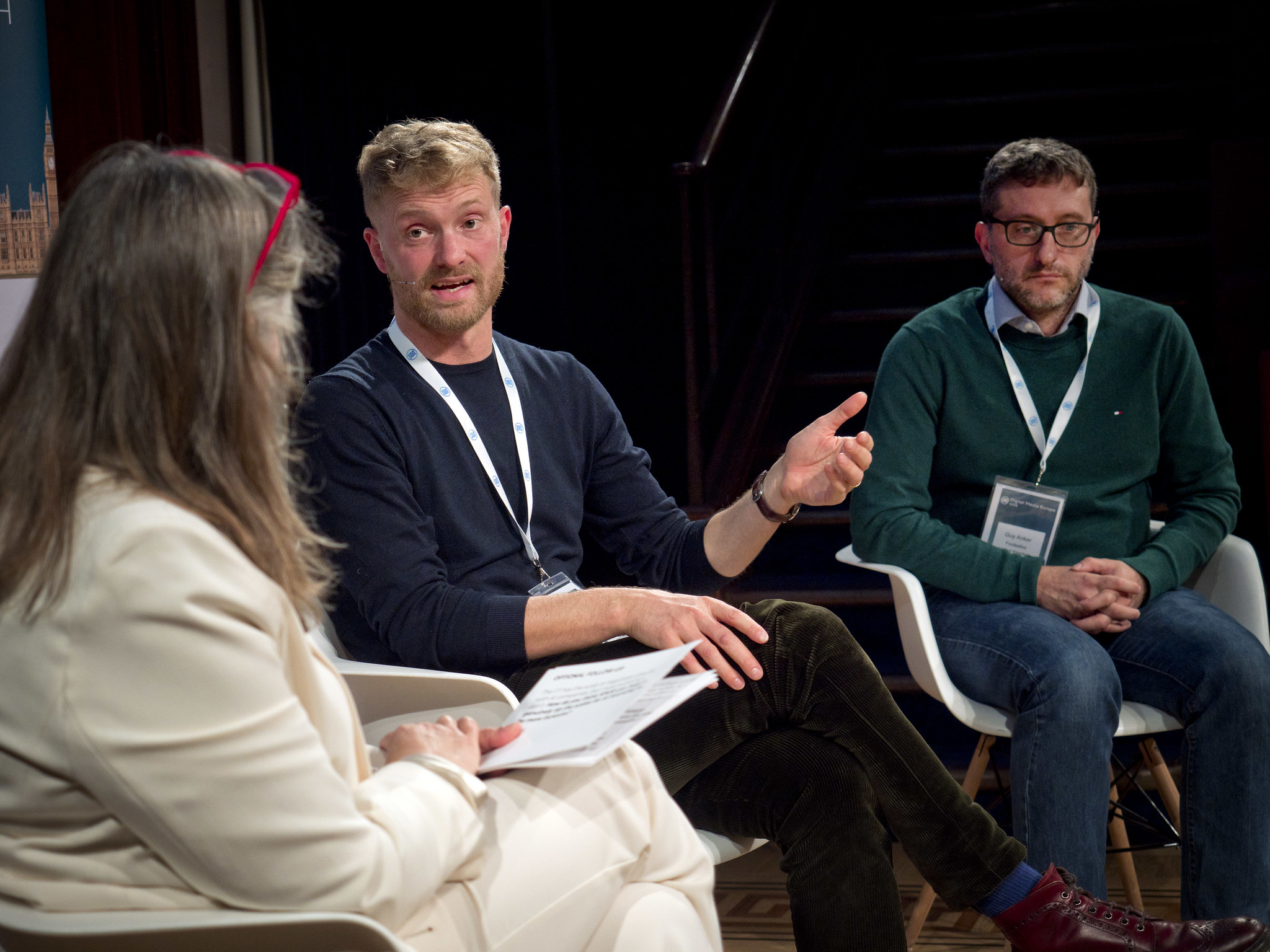
Guy Anker, VP of Affiliate, Footballco, UK, on stage at Digital Media Europe. © photograph by David Sandison, www.dsandison.com
Pushed to change
Footballco generated 7 billion social media views during the World Cup. During that time, Anker said, AI helped the team to produce 10 times more affiliate content, with an uptick in revenue as a result.
Anker warned, however, that publishers looking to emulate its strategy need to contend with the changing reality of discovery online: “It’s about continuing to optimise for SEO, for AI search.”
Traffic sources are going to be squeezed, so brands need to diversify beyond SEO. Paid media, owned channels, and social are key. But even they have risks.
“[You] need to be a destination, not just an SEO referral. Diversifying your traffic sources beyond Google, [by] having a good presence on organic social, good newsletters etc.”
Publishers could do well being strongly supported by good digital marketing teams. Tracking, measurement and data are as important as great stories are. Otherwise, you cannot effectively target users.
Potential AI licensing deals
Similarly, John believes the FT Group is taking a proactive approach to diversification in the face of search changes, in its case focused on potential licensing agreements between it and AI companies.
Through its work with SPUR, the FT is taking a leading role in negotiating the rights for content licensing: “We need to be in the door with these organisations to influence the way they make decisions that have demonstrable impacts on the way we run our businesses. Our position is one of destination and defence: building a destination of value to our users and customers in an AI world, while at the same time protecting it from illegal scraping.”
The reality of digital publishing is that no revenue stream is guaranteed. With changes to circulation and advertising revenue, diversification is a must. As the two speakers demonstrated, new opportunities constantly arise, whether that be through affiliate, events, or AI licensing – provided you build them around your portfolio’s existing strengths.
WAN-IFRA’s Raquel González, who moderated the session, also contributed to this article.