Arctic Silk Road Gains Interest as a Gulf Alternative
Asian shippers eye the Arctic Northern Sea Route as the Middle East conflict disrupts traditional trade lanes.
This article appears in the November issue of Global Finance Magazine.
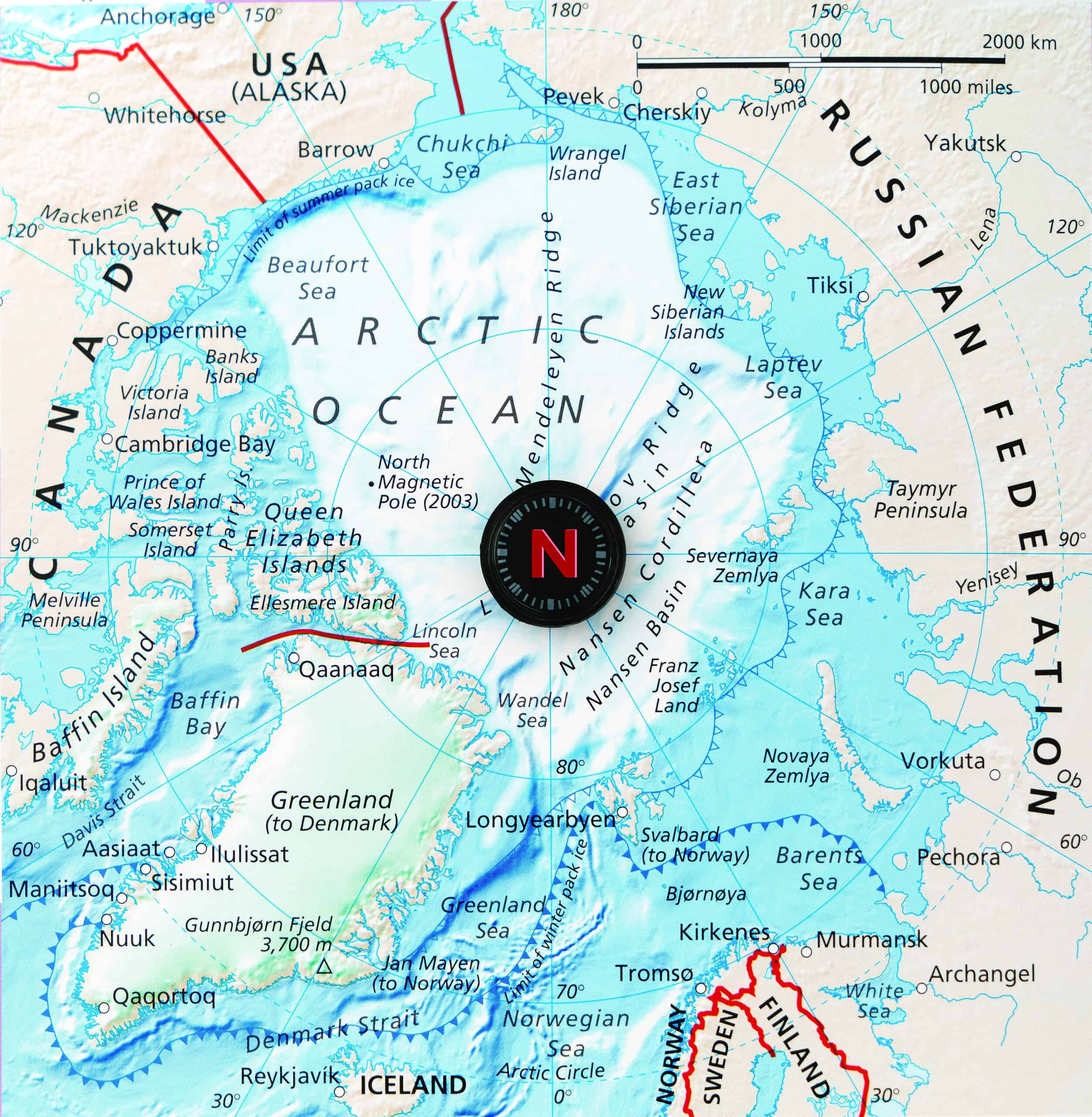
Asian countries are betting on the Arctic Northern Sea Route as an alternative to traditional shipping lanes to send goods to Europe as the U.S.-Iran conflict makes the Persian Gulf less attractive. In August, the container ship Pan Star Acro left South Korea for the U.K., the Netherlands, and Poland via the Arctic. The same month, the Dubai Tower, operated by the Chinese company Sea Legend, left Qingdao for Teesport in the U.K.
At first, the Suez Canal appeared the natural alternative to the Gulf, but attacks by Yemen’s Houthi rebels on vessels in the Red Sea and the Bab al-Mandeb strait curbed shippers’ enthusiasm. And Plan B, the Cape of Good Hope, is costly.
“The route Shanghai-Le Havre [France] via the Suez Canal is a 40-day trip,” said Jérôme de Ricqlès, shipping expert at the digital logistics platform Upply. “The Cape of Good Hope option is even longer, 60 to 65 days.” That leaves Asian shipping companies with the Northern Sea Route, or NSR.
“The gain is really noticeable,” de Ricqlès said. “The journey only lasts 20 days.” The NSR also appears less costly.
The Russian Complication
Not that it’s ideal.
Interest in the Arctic is growing, Allianz acknowledged in its Safety and Shipping Review 2026, “but the region remains higher risk.” Machinery damage, territorial disputes, and potential sanctions against Russia complicate operations.
Jérôme De Ricqlès, Upply
The ice silk lane runs along the Russian coast for thousands of kilometers, so shipping companies need the Kremlin’s green light and specialized icebreakers to escort vessels through the Arctic passage. The route is open only from August to October.
While Sea Legend promises weekly container service beginning next summer, “it will only operate for eight weeks,” said Niels Rasmussen, chief shipping analyst at BIMCO, or Baltic and International Maritime Council. Asian shipping companies will be able to carry “less than 0.5% of the weekly volume from East and Southeast Asia to North Europe.”
“On paper, NSR is very attractive; in reality, the route is at an early stage of development,” said de Ricqlès. Volumes are small, and the environmental impact could be large. Mindful of a potential acceleration of damage from global warming, several shipping giants, including Maersk, Mediterranean Shipping Co., CMA CGM, and Hapag-Lloyd, have already pledged to “not use the Northeast passage.”
But never say never.
“Within 20 years, global warming could allow six months of navigation in the Arctic,” de Ricqlès speculated. China, which benefits from a limitless friendship treaty with Russia, would then be able to establish robust polar traffic between Asia and Europe. While Korean and Chinese shipping companies currently operate small vessels with a capacity of around 2,000 to 3,000 TEU (20-foot equivalent units), future ships could be considerably bigger.
“China is working on nuclear-powered container ships,” said de Ricqlès. “Ports usually stay far away from risky nuclear vessels, but Gdynia in Poland would be the perfect port of entry to Europe.” One of its terminals is controlled by CK Hutchison, a Chinese conglomerate.
Caroline Crosdale is a contributing writer based in the U.S.