Nigeria Health Watch builds AI-readiness with an internal wiki
About the organisation: Nigeria Health Watch is a communication and advocacy non-profit focused on improving health outcomes in Nigeria. Originally launched as a two-person blog in 2007, it has since expanded into a broader organisation that today is involved in solutions-driven journalism, community health monitoring, advocacy and research. Its team of permanent and freelance staff and volunteers comprises more than 60 people.
Building the ‘brain of the organisation’
To some degree, every organisation struggles with institutional knowledge. As years go by and staff members come and go, it’s seemingly unavoidable that documents, multimedia files and other resources become scattered and effectively lost across online platforms, servers and local hard drives.
This was the problem that Nigeria Health Watch tackled during their participation in NextGen AI Leaders, a WAN-IFRA programme in partnership with the Google News Initiative. The programme is designed to help young media leaders reach the next stage in their careers through responsible AI deployment and strategic leadership.
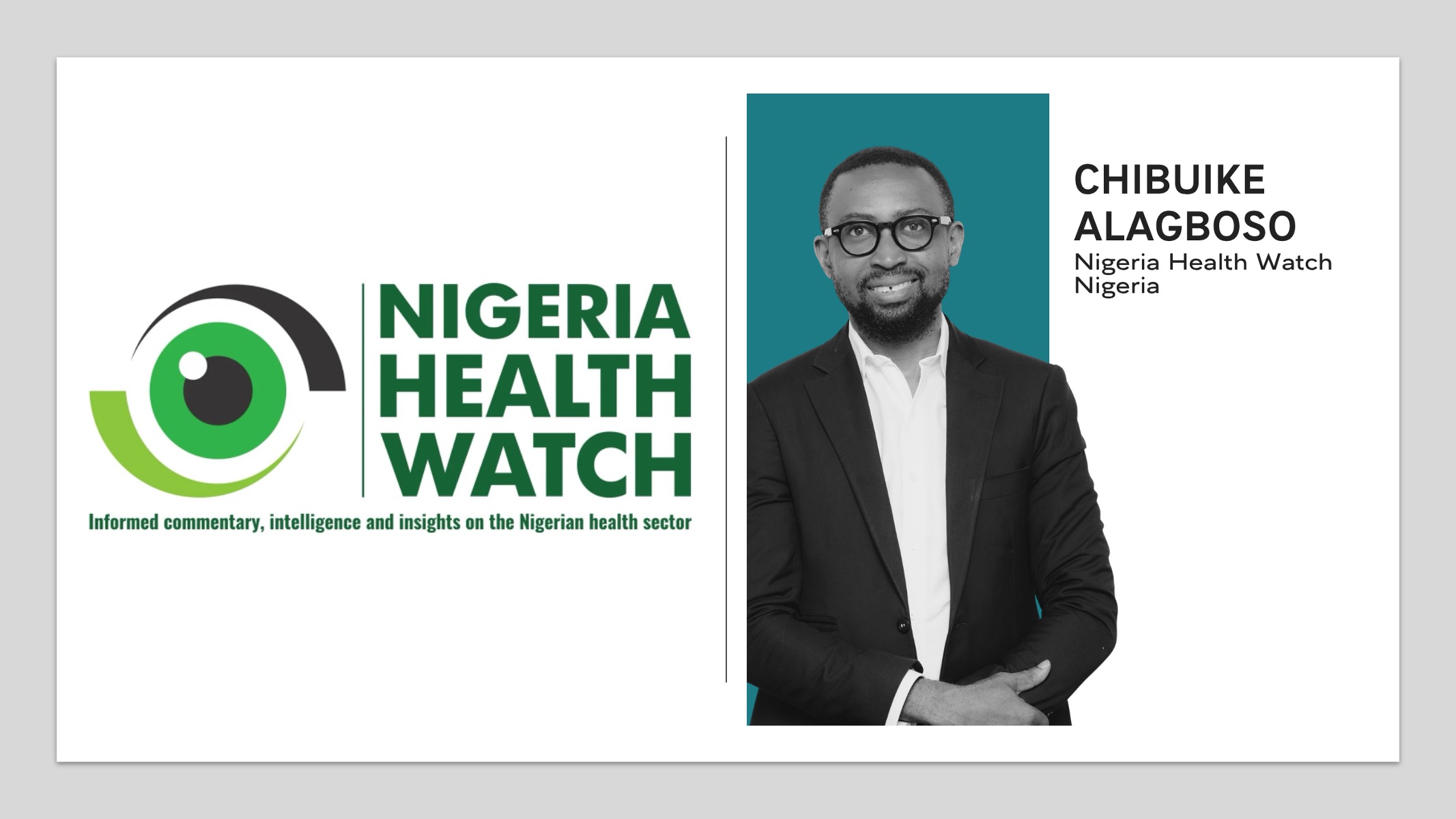
During the programme, Chibuike Alagboso, Director of Media Programmes at Nigeria Health Watch, began the process of building an internal wiki, a “brain of the organisation,” in order to better preserve organisational memory.
According to Alagboso, there was a strong feeling within the organisation that access to important resources tends to disappear, especially after employees leave: “You might as well not have those materials, because they are scattered all over the place and you can’t access them. You might not even know they exist.”
Even when a specific file is needed for a project – a concept note, or a photograph – “we often find ourselves in situations where we have to spend a lot of time looking for it,” he said.
Start with a vibe-coded prototype
Today, Nigeria Health Watch is involved in a wide range of activities, but the organisation’s roots go back to a blog that was started by two friends interested in covering health care in the country.
That foundation is still strong, Alagboso said: “We still write, we still produce content, we’re very active on social media.” The organisation’s regular output includes thought-leadership and opinion pieces, and it has a particular focus on solutions journalism.
Before joining the NextGen AI Leaders programme, Nigeria Health Watch had explored various types of AI use, from content generation and social media amplification to transcription, summarisation and analysis of large troves of documents.
As Alagboso began to develop an internal wiki to better capture organisational knowledge and resources – their most ambitious AI-driven initiative to date – his first step was to build a prototype that he could share with the IT team.
Having a vibe-coded prototype was tremendously helpful, Alagboso said: “It was easier for me to quickly translate my thinking into something visual, as opposed to trying to explain it, or draw it, for colleagues.”
Screenshot: The vibe-coded prototype of the internal wiki that Alagboso passed on to the IT team.
The actual development of the tool was delayed because of the organisation’s annual conference and a website overhaul, but the IT team have now built the frontend interface, the backend for uploading resources, and the cloud infrastructure.
The biggest step remaining is the collection and uploading of resources into the tool. The goal is to have a working version for team members to use by the end of the year.
‘The potential is huge’
Alagboso is optimistic that the internal wiki will make a significant impact, especially in terms of efficiency and saving time.
“It will have the context of everything we have done: projects, concept notes, stories, assets, all that. The potential is huge.”
“It’s going to reduce the loss of institutional memory, because you can easily find things that happened even before you came into the organisation,” he said.
The clear upshot of having an easily searchable archive of past resources is that “it’s easier to create, it’s going to save time to build new things,” he said. “Rather than having to go back to a clean slate, there’s context to start from.”
Vivianne Ihekweazu, Managing Director of the organisation, commented on the internal wiki’s development: “Nigeria Health Watch creates an environment where our teams can express their creativity and explore new approaches to communications and advocacy. Our internal wiki reflects this commitment.”
“Preserving knowledge takes foresight, but passing it on is even better. The wiki will preserve the knowledge and ideas generated through our work so they remain accessible when colleagues leave, giving future teams a foundation to build on. We hope to share what we learn with other organisations and help them build similar tools,” she said.
We spoke to Alagboso to learn more about how the NextGen AI Leaders programme helped shape his views on AI leadership. This interview has been edited for length and clarity.
‘Start with the problem’: Q&A with Chibuike Alagboso
WAN-IFRA: How did your perspective on AI leadership evolve during the programme?
Chibuike Alagboso: The main learning was about change management: you can’t just sit in your office and think, “This is what we need to do, this is how we build it, and now we have to get team members to buy into it.” You have to start by thinking about who the stakeholders are, who the blockers are. And from the beginning think about how to engage them.
Naturally, there might be some resistance in trying to push AI adoption and experimentation. How have you dealt with that?
It’s actually the reverse. Rather than resistance, our problem is more the overuse of AI, which we are now trying to cut down. We’re putting in some guardrails with the creation of an AI policy. It’s important to know where to draw the line: Where can we use AI? Where can we not use it?
I picked up an important leadership lesson during the programme: as leaders, it’s our responsibility to know when to ask others to slow down, even when we’re trying to drive innovation. Because AI use can get all over the place, it can be overwhelming. We have to know when to say “no.”
Was there a significant leadership challenge, and what did it teach you?
My main challenge concerned getting the tech team to take ownership and run with the wiki. The challenge was about managing time better, even though I do empathise, because I understand there are a lot of things on their plate. The biggest lesson there is to put scheduled check-ins in the calendar, so that even if you miss a goal, you have a check-in to know where you are and what the next steps are.
What milestone felt like a true breakthrough?
A big one was being able to visualise [the internal wiki] with a prototype rather than describing it. Another milestone was with the backend, the cloud infrastructure, that was set up. Also, we have a lot of resources and assets that we want to connect to the wiki, but we decided to prioritise multimedia assets, especially pictures, because we have pictures all over the place: in Google Drive, Microsoft SharePoint, hard drives… We made the important decision to make that the priority and start putting all that together.
Has participating in the NextGen AI Leaders programme influenced your role or career path?
I believe it has put me on a certain pedestal, as far as AI leadership is concerned. If any conversation in the organisation is happening around AI, I usually get invited to be in the room. The programme has put me in a very strategic position, and if anything concerning AI innovation or business development comes up, I’ll definitely be involved.
If you could give one piece of advice to another media leader trying to implement AI right now, what would it be?
Start with the problem. That’s what I tell my team members. Don’t build something just because AI is the shiny new thing. You have to start with a clear problem. Once you have that figured out, you can see how AI can help you solve that problem.
If you are clear on that, maybe you realise it’s a problem with a process and it’s something that you need to tweak. If you plug AI into a process that is not working, it will actually make it even worse. So start with the problem, understand the problem, then ask how AI can help address it.