A-lehdet speeds up AI adoption with an in-house short video script creator
About the publisher: A-lehdet is a Finnish publisher best known for its portfolio of magazines that cover current affairs, living, design, health, culture and lifestyle. Beyond print, the group has diversified into digital media, influencer marketing, and e-commerce. Founded in 1933 with the launch of its flagship periodical Apu, the company remains family-owned to this day.
Streamlining social video production
As news publishers increasingly use social media for video distribution, many newsrooms face new challenges that are upending traditional workflows. From writing to editing, the process of creating video content can add pressure on an already busy newsroom, particularly if the publisher has little background or few resources dedicated to video production.
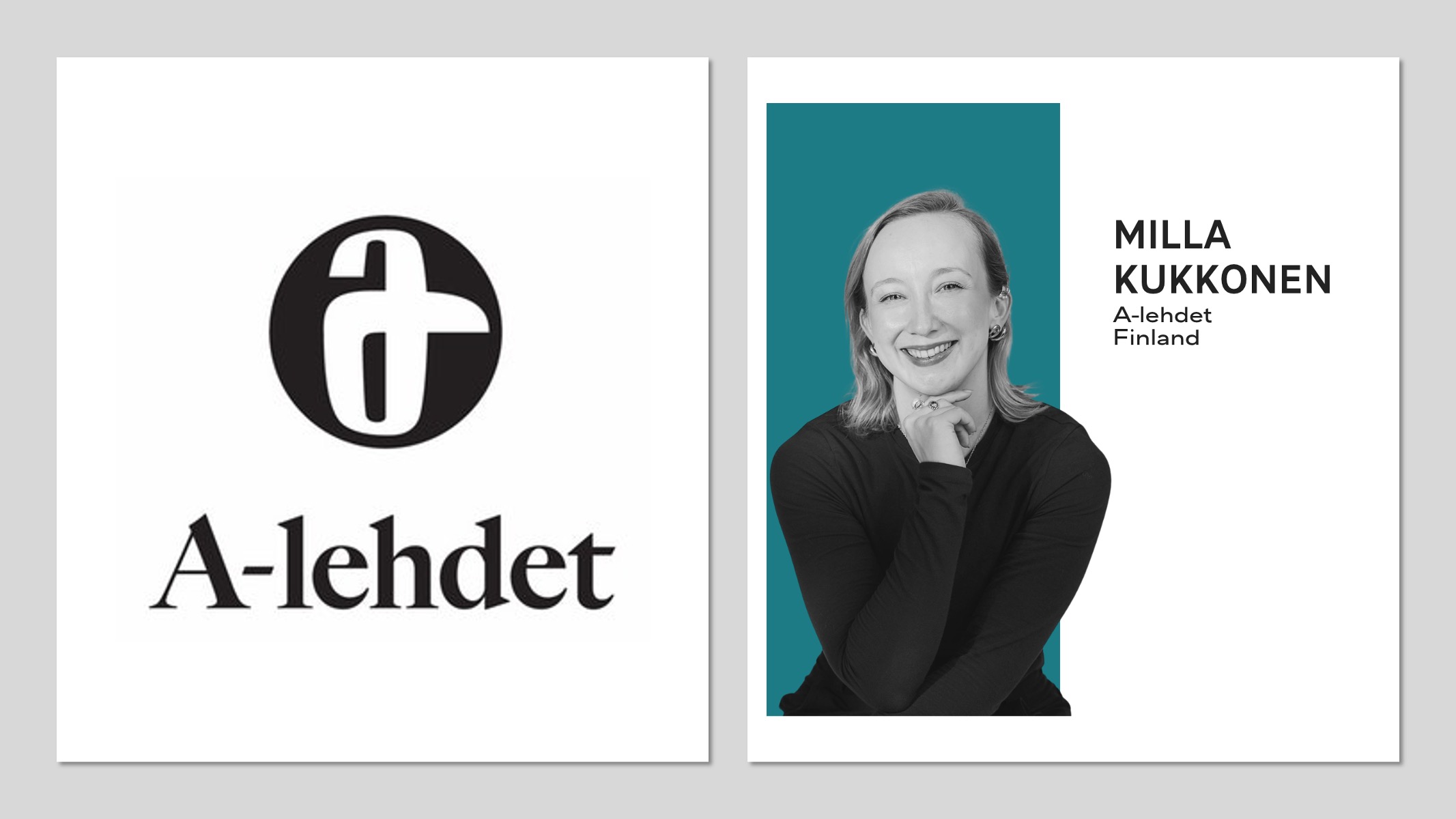
This was the issue that Milla Kukkonen decided to work on during her participation in NextGen AI Leaders, a WAN-IFRA programme in partnership with the Google News Initiative. The programme is designed to help young media leaders reach the next stage in their careers through responsible AI deployment and strategic leadership.
In her job as Executive Producer at A-lehdet, Kukkonen has seen how much work transforming an article into a short-form video represents. A particular challenge she had identified was coming up with a strong “hook” that distils the article into an interesting question and captures the viewer’s attention from the start.
Using Google AI Studio, she began working on a video scripting assistant, also involving her colleagues in the editorial department for their feedback. A working prototype was already finished before the NextGen AI Leaders programme ended. “It was energising to see how quickly you can create things,” she said.
Finding the right opening
Kukkonen’s solution allows users to upload their source material (an article or an interview) and generates suggestions on how a video script based on it could be structured, including an attention-grabbing opening.
More broadly, mobile video is playing an increasingly important role in A-lehdet’s content strategy, and the new tool supports this by simplifying the process of journalists producing their own videos. The publisher also works with a wide roster of freelancers, and the tool makes it easier to turn externally created articles into videos for social media distribution.
“Our aim is to increase mobile video production so that all writers can independently create videos. That’s the need I wanted to address with this tool: to help people script, edit and publish videos on their own,” Kukkonen said.
She developed the initial prototype using Google AI Studio, but its features have now been transferred into ChatGPT, bringing them into the AI environment that is used across the company.
Screenshot: Kukkonen’s first prototype of the scripting tool app was created using Google AI Studio.
A-lehdet has a fairly flat organisational structure, which means that a lot of people are involved in making content for the company’s social media channels, Kukkonen said. She estimates that now that the video script creator is widely available, about half of the editorial team are potential users of the tool.
Building ‘AI savvy’
Because A-lehdet is a Finnish publisher, the script creator was naturally built to work in Finnish. While some users of generative AI tools have found them lacking when working with smaller languages, Kukkonen said that the leading models have now improved to the point where this is no longer an issue.
Summarising her experiences in the NextGen AI Leaders programme, she credited the initiative with helping her build her “AI savvy.” Given that AI spans both IT and editorial parts of the business, she said having an “AI fluent” person in the editorial team has been helpful in navigating this reality.
The programme’s impact has also been felt more widely in the company: Kukkonen said the experiences she gained during the programme sparked many interesting conversations and have helped build internal momentum for AI use.
“Milla’s ability to combine the possibilities of AI with good journalism and established editorial practices has already made a difference to our way of working,” said Mari Paalosalo-Jussinmäki, Head of the Lifestyle Media Group at A-lehdet.
“She has played a key role in bridging the gap between our tech teams and editorial staff. She’s also great at encouraging her colleagues to try new things,” she added.
Looking back on the project, Kukkonen noted that the development of the scripting tool reaffirmed a key belief she had about AI implementation: while AI may be effective in summarising and analysing large amounts of content, human journalists have an edge that the models are unlikely to threaten.
“I believe even more strongly than before that our journalistic advantage is the ability to find and report on issues that have not been previously revealed.”
We spoke to Kukkonen to learn more about how the NextGen AI Leaders programme helped shape her views on AI leadership. This interview has been edited for length and clarity.
WAN-IFRA: How did your perspective on AI leadership evolve during the programme?
Milla Kukkonen: One thing that stuck with me was something Anita [Zielina, one of the instructors] said: “AI is a leadership challenge, not a tech challenge.” Many issues related to AI actually come down to basic leadership questions: defining roles, responsibilities, competences, and everyday workflows. They are fundamentally management issues, and you shouldn’t think of them as “tech things.”
I also gained a better understanding of how leveraging AI requires collaboration. You need a shared understanding of what the problem is, who is responsible for what, how decisions are made, and how to measure successes.
The programme also reaffirmed the idea that AI leadership requires that you actually understand AI. You have to actively use it and try to think of ways AI can improve your own work. I don’t think you can outsource it and say, “I’m not a tech person, so I’m not going to bother.”
What level of AI resistance have you faced in your organisation? How have you dealt with it?
I wouldn’t talk about “resistance” in our company. To me, it’s not resistance if you have concerns or ask questions.
Of course, people have all kinds of opinions and concerns, and I actually understand many of them well. Even I have doubts running through my mind at times. Will AI affect the quality of journalism? Will my competence be enough going forward? Are we going to lose tasks that feel meaningful? It’s healthy to ask those questions, and I think voicing concerns and fears is actually a positive thing.
At work, we try to focus on discussing AI at the level of how it relates to our jobs. I believe that if doubts and uncertainties arise, there must be permission to voice them. And I’ve tried to make sure that we actually have those conversations when such concerns come up.
Was there a significant leadership challenge, and what did it teach you?
I’ve reflected quite a bit on how to bring together the perspectives of different experts so that the end result is genuinely helpful for people in their daily work.
We have an AI working group where I’m currently the only representative from the editorial side. So I bring our viewpoints into the discussions: how we plan training, consider guidelines, and so on. It has reinforced the idea of how important it is to genuinely understand the perspective of everyone involved.
How has participating in this programme influenced your role or career path?
Before the programme, I had a mostly informal role as the “AI person” in the newsroom. I was involved in development projects, attended workshops and learned about relevant issues.
Now my role has steered even more in that direction, as I wanted to move deeper into the AI space. The programme was a springboard, and I decided to dive in. It felt vital to ensure that the newsroom’s voice is heard inside the company.
If you could give one piece of advice to another media leader trying to implement AI, what would it be?
I can think of three things. One: invest in learning across the company. Even in a small organisation, you can get huge benefits from people realising for themselves how they can reorganise their work to be more efficient. People tend to shine when they are empowered to improve how they handle their tasks. It really pays off to ensure that learning and upskilling are coordinated in a systematic way.
Secondly, AI may end up having an important role in the creation of some content, but what AI can’t take away – and what is our competitive edge as journalists – are untold stories. There are endless untold stories in this world, and you just need the courage and capability to tackle them and dig them up.
My last point comes from the [NextGen AI Leaders] programme. It was a wonderful experience: I met amazing people, made friends, had hilarious conversations, shared experiences – and saw that everyone was wrestling with similar issues and wondering where all this is heading. That felt important on a human level.
So my advice would be: also try to do things that have nothing to do with AI. Enjoy life, pet your dog, go for walks – and spend some time with the people that you are trying to reach with your content, your audience. Don’t just obsess over AI, but remember who we’re actually making content for, and connect with those people.
AI is developing fast, but what AI will not be able to do is feel on our behalf, or be present on our behalf. You can only do that yourself. So, remember to focus on things other than AI once in a while!