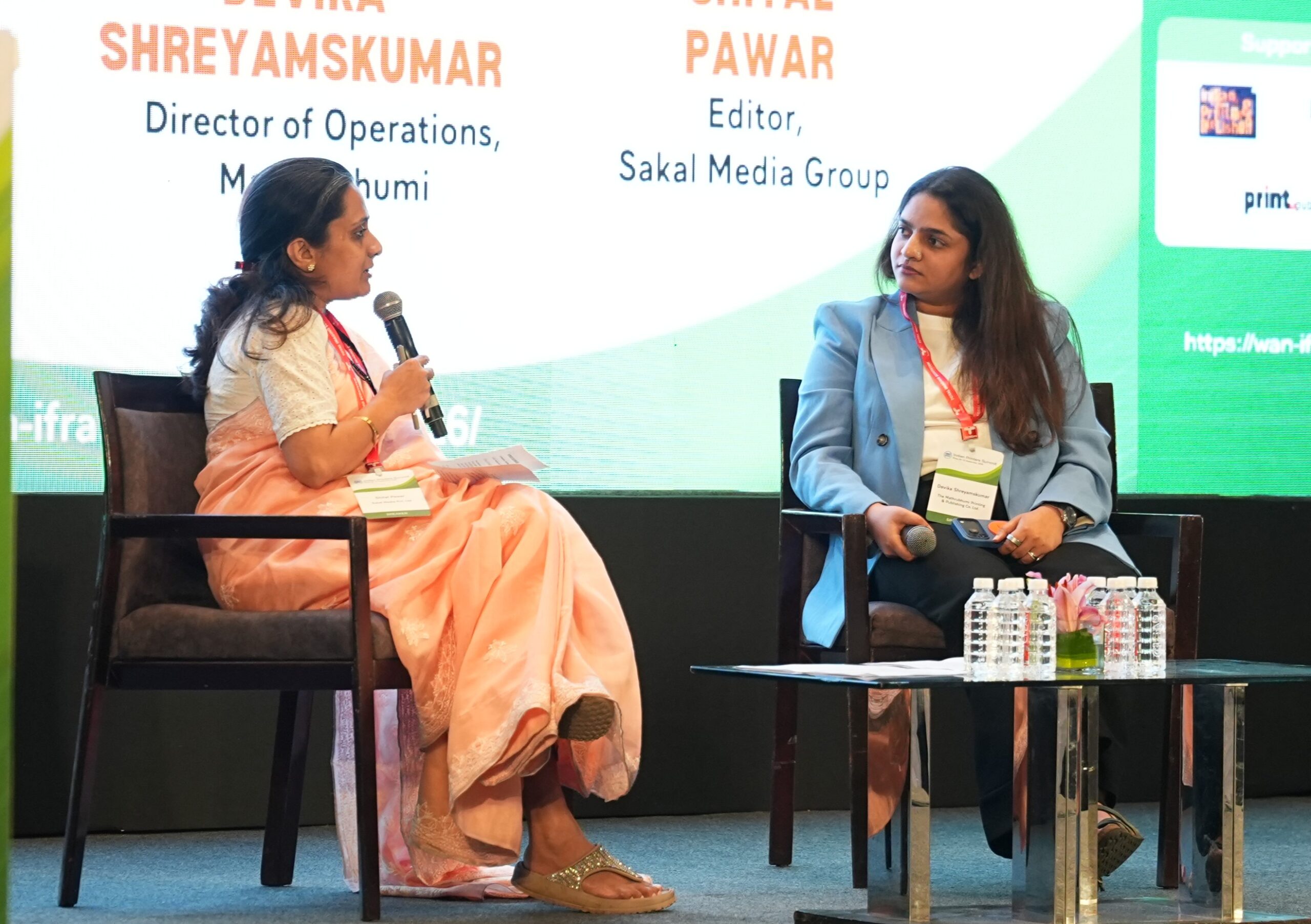
How Mathrubhumi is using interest-led IPs to reach new audiences
For Mathrubhumi, one of the experiments in responding to changing audience behaviour is not a new format or platform, but intellectual property (IP).
Based in Keralam, the publisher has developed an automobile-focused IP designed to work across formats. It has also created Kappa CULTR, an electronic music and contemporary culture festival hosted annually by the group’s Kappa TV in Kochi, Keralam.
For Devika MS, Director of Operations at Mathrubhumi, these are examples of how a legacy media organisation can move beyond the traditional boundaries of its business. “Now we have to think very medium agnostic,” she said during our recent Indian Printers Summit in Pune.
Building IPs around audience interests
The Auto property can extend from video and text to experiences on the ground. The idea, Devika said, is to build communities around specific interests and sustain engagement beyond the content.
That approach shows a broader change she sees in the way media companies must understand their audiences, and does not see changing consumption as something confined to younger audiences.
People across generations now consume content through social media and other digital platforms, making traditional distinctions between readers and viewers less useful.
“What really defines an audience is their interest,” she said.
A person might be interested in music and art alongside technology and cars. These overlapping interests, rather than age or location alone, can determine the content they consume.
WAN-IFRA members can access the full discussion through our Knowledge Hub.
Reaching audiences beyond the existing portfolio
Devika sees an opportunity for Mathrubhumi to broaden its reach while keeping its journalism and news role intact. The company can develop content around different interests and niches, as it has done with Kappa CULTR.
“For a 103-year-old company, electronic music is not the natural thing that you would get into first,” Devika said.
Yet the property gave Mathrubhumi access to an audience that did not previously exist within its ecosystem. The company also runs a literature festival, bringing people with different interests together.
Devika said the value of such initiatives is not limited to creating another content product. They allow the company to expand its audience beyond what its existing portfolio can reach.
Experimenting with the business model
Mathrubhumi’s experimental approach also extends to its business model.
No single new revenue stream can replace traditional advertising, Devika said. So, publishers are exploring a mix of subscriptions, events, IPs, and ventures outside the industry.
“But even in the future, media companies are looking at diversifying into completely different things, probably something which has nothing to do with media also,” Devika said.
However, these initiatives have not yet made up for the revenue lost by publishers over the years, she added.
Publishers are also experimenting with various technologies as AI continues to change the media business.
Devika said she sees its potential to improve efficiency and reduce repetitive tasks, but cautioned against following audience data to drive editorial decisions.
“We shouldn’t reach a phase where data becomes our editor,” she said.
Mathrubhumi plans to keep testing new formats, IPs, revenue models and businesses, without compromising its editorial identity.
Devika acknowledged that it is too early to know which experiments will work or what the business will look like in five years. For her, two priorities remain clear: ensuring the company is financially strong and safeguarding its journalistic reputation.