AFP builds a new funding model for investigative journalism
By Maria Lisicka
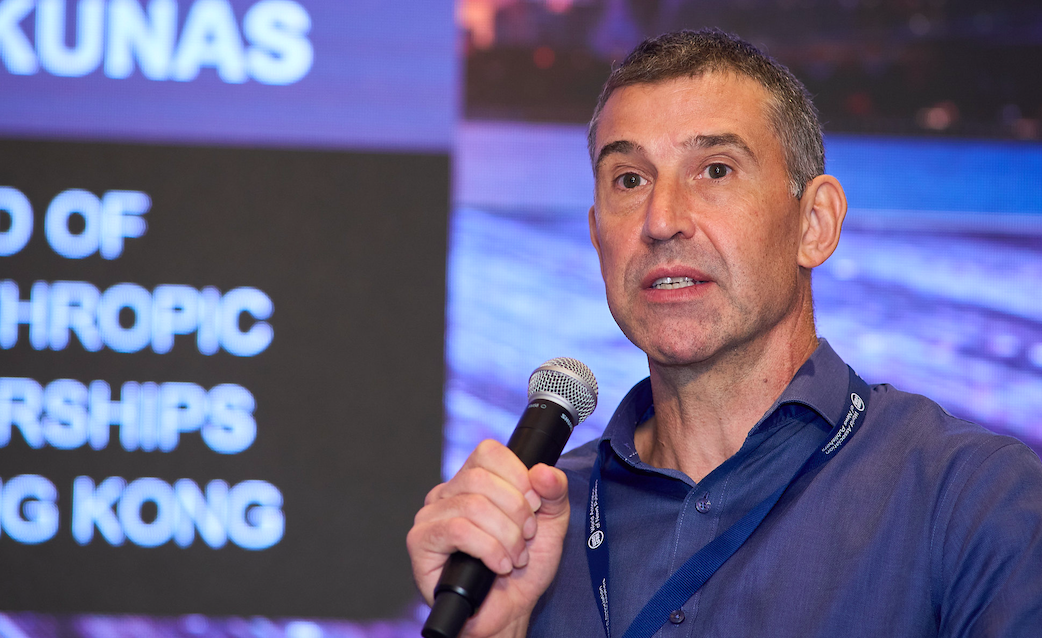
With 1,700 journalists in 151 countries, Agence France-Presse documents events around the clock. But Karl Malakunas, its Head of Philanthropic Partnerships, described a different kind of experiment they have under way: “a completely new editorial and funding model for AFP” for in-depth and investigative journalism.
Malakunas, an Emmy-nominated and Walkley Award-winning journalist, joined AFP in Hong Kong 25 years ago. “Breaking news is in my veins,” he said. Yet, like a lot of journalists, he always wanted “to scratch that itch” of going deeper.
He did so in the Philippines, turning a 700-word article on environmental defenders in Palawan into a 90-minute feature documentary. The film took 10 years and was largely funded by foundations.
In March 2025, AFP’s global news director asked him to bring that approach inside the agency.
AFP gets about a third of its funding from the French state and two-thirds from its 4,000-plus clients. Philanthropy adds a third stream, focused on the “Future of the planet” and the “Future of societies.” Above all, editorial independence must remain “sacrosanct,” Malakunas said.
A global desk for environmental justice
The first project is AFP’s Environment and Climate Legal Desk, billed as the world’s first global newsroom unit dedicated to environmental and climate justice. Its specialist reporters will support AFP’s bureaus on cases too complex for busy news teams, such as SLAPP suits (lawsuits designed to silence critics) in the Philippines.
Raising the money proved to be the more difficult part.
“It’s definitely harder, the fundraising element than the editorial element,” Malakunas said. “We’re not going to sugarcoat that.” AFP bypassed traditional journalism funders to approach environmental foundations, “a long, slow process.”
The desk now has a founding editor to build and lead it, and is hiring reporters in Asia, Africa and Latin America.
Impact you can document
Working with The Gecko Project, which brought the story idea, AFP put its boots on the ground to reveal that an Indonesian mill supplying Asia Symbol, a Chinese maker of “so-called carbon-neutral packaging,” had processed wood from plantations where orangutan habitat had been cleared. Haleon, the British maker of Panadol, then dropped Asia Symbol as a packaging supplier for its China operations.
AFP now documents such outcomes.
Asked how impact is measured for funders, Malakunas said AFP is building its first impact tracker. Beyond distribution reach, it asks: “Is it cited by civil society? Is it cited by lawmakers? And did it lead to anything?” The results go back to funders. As AFP reaches audiences through its media clients, journalists will log impact themselves.
“It’s boots-on-the-ground journalism. That’s the differentiator … And it’s expensive and it’s hard to do.”
– Karl Malakunas, Head of Philanthropic Partnerships, AFP
Protecting independence
AFP published a code of ethics on day one. Once the desk is running, there is a firewall: “Foundations can speak to me,” Malakunas explained, but they “don’t have direct access to our journalists.” AFP is also not “foundation-led”: “We did spend a lot of time determining what we wanted to do, what our value was […] and not chasing what foundations wanted.”
Funding, he said on the panel, is “fickle” and the sector “opaque”, especially after last year’s USAID cuts sent many organisations to philanthropies. AFP’s answer: no more than 25 or 30% from any one funder.
Lessons for Asian newsrooms
In Southeast Asia, investigative journalists face harassment, rising costs, SLAPP suits and barriers to US and European foundations.
“It’s extremely difficult, but it is possible,” Malakunas noted. “There is big money in the US and Europe. It’s extremely hard to access, but it’s there.”
Established outlets have an edge, he argued: “Foundations do take confidence in the fact that you’re an established media organisation; you’re already doing good journalism.”
His advice for the next 12 months: commitment and training. “You’re going to have in your newsrooms people who are raring to go,” he said. “Even without the extra funding, if you are committed to this, allocate some space for one or two or whoever those people are.”
About the author: Maria Lisicka is a young professional in PR and strategic communication, currently pursuing her studies at the University of Amsterdam and Nanyang Technological University, Singapore.