Martin Schori on hiring for yesterday while bracing for tomorrow
By Martin Schori
I’m sitting in a café with a young reporter who is frustrated.
She’s a future star, I’d say – original thinker, strong voice, clear sense of what she wants to do with journalism. Management ambitions and everything. She is, in other words, exactly the kind of person media organisations claim to be looking for.
And yet she can’t get a permanent position anywhere.
Not because she isn’t good enough, but because she doesn’t quite fit. Every time she meets with a hiring editor, she starts talking about ideas, formats, and the relationship with the audience – and fairly quickly you can feel the conversation drift apart.
The person across the table – which, I have to admit, has often been me – is just trying to solve a staffing problem. You don’t want to hear about grand visions. You need someone who can cover the early shift. Preferably yesterday.
At the same time, we hear everywhere that the future of media in the AI era is about exactly what she represents: building relationships, earning trust, developing a distinct voice.
Becoming more human, not less.
Most editors I know would agree with that analysis. The question is how many have actually translated it into how they hire.
The professionalisation of the industry – and a, in many cases entirely necessary, focus on metrics and data – has made us very good at defining roles in detail. We know exactly what a breaking news reporter should do, how a news desk should function, what’s expected of a social media editor.
Everything is logical, optimised, measurable.
But these are also roles built on production, speed and standardisation – which is precisely what AI is getting better at, fast.
That doesn’t mean the roles disappear tomorrow. But it does mean their relative value is shifting. And that raises a fairly uncomfortable question: if we know that what will matter more going forward is voice, relationship and creativity – why is it still so hard to get those people into our organisations?
I think most editors carry a short mental list of people they’d love to bring on board, because they’re characters.
But whenever there’s actually a position to fill, those people don’t fit.
‘Many of the most interesting talents end up cycling through temporary contracts, short-term projects and fill-in shifts. Or they leave – for other industries, or for their own platforms where they can actually build something.’
That last part isn’t an abstract threat. We’re seeing it across markets: interesting voices turning to Substack, YouTube or TikTok – not to other newsrooms. Every time we pass on someone because she doesn’t fit an existing role, we risk funding the competition instead.
‘The question isn’t whether we can afford to hire differently. The question is whether we can afford not to.’
Making that shift requires something harder than money: The ability to hire someone without knowing exactly what they’ll do on day one – but with a clear sense of why they’re needed. A difficult decision, but perhaps the one that will determine which media organisations still have a distinct voice in 10 years.
The reporter in the café is still waiting for an industry ready to ask the right question.
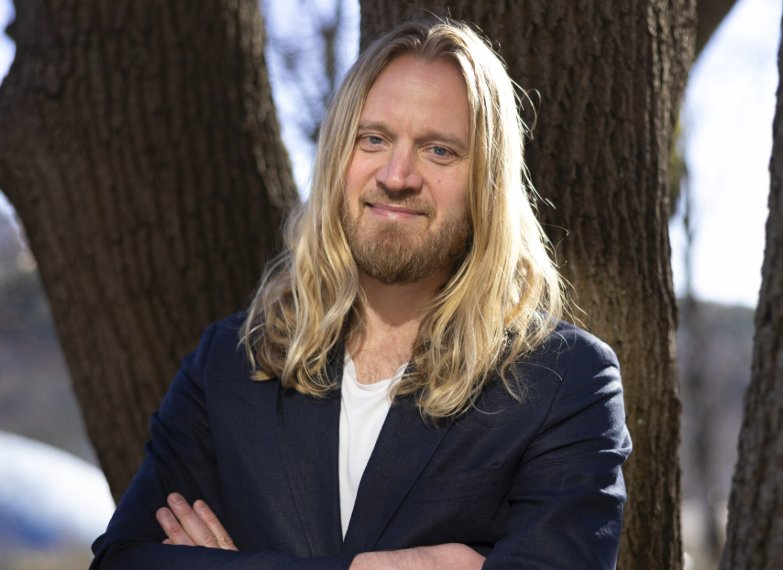
About the author: Martin Schori is former AI & innovation officer at Aftonbladet, now a co-founder of media company Hint. His book AI in the Newsroom will be published in Swedish and English in April.