A crisis of connection, not content: Inside Spilnews’ GenZ model
“Dutch youth is suffering from news poverty – and not in the sense that there’s too little news. There’s actually an overload of information. The poverty is that overall information doesn’t land with that generation.”
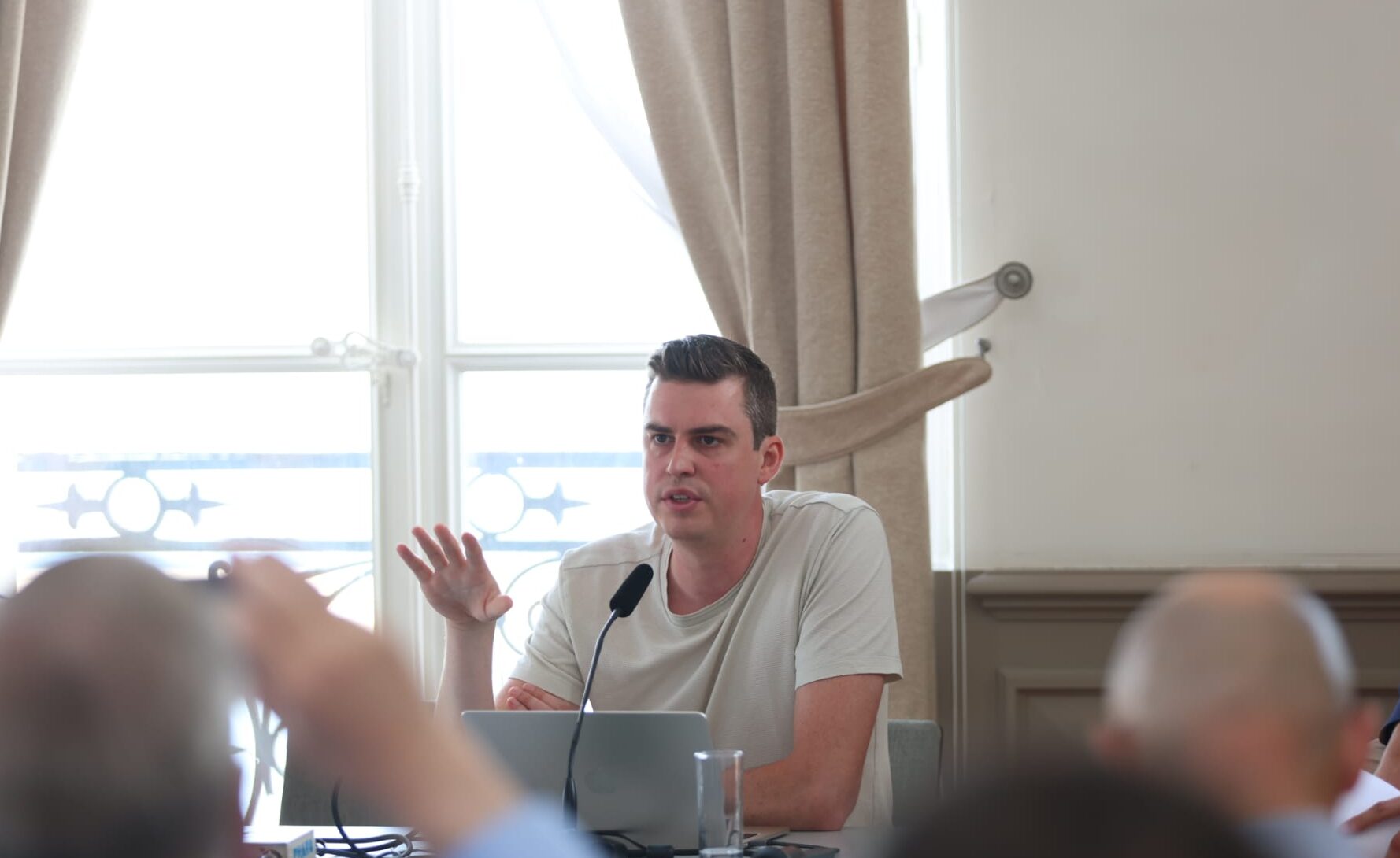
When Christopher Kenis, publisher of Spilnews, opened his session at our ongoing World News Media Congress in Marseille, he wasn’t describing a crisis of supply. He was describing a crisis of connection. And that distinction is the basis on which the Dutch newsroom – barely a year old – has built itself from scratch.
Spilnews launched in June 2025. It has 18 employees with an average age of 26, and produces 60 to 70 pieces of content a week.
Before launching, the team surveyed close to a thousand 18-24 year olds on what they felt was missing. The answer wasn’t more information, more context, or more trustworthy voices.
“Information was actually everywhere,” Kenis said, “but the connection wasn’t.”
Three findings shaped what came next:
- Gen Z follows feeds, not homepages
- They trust people over brands, and
- They want to participate in the news, not just consume it.
“So with Spilnews, we couldn’t have our homepage as our front door, or our masthead as the source of trust, and the publication couldn’t stop at the post button.”
The result is a newsroom built around three components: an internal editorial core, creators, and a community.
Theme first, creator second
The creator model is where Spilnews diverges most from traditional newsrooms – and from the influencer-adjacent media brands that have tried to court Gen Z before.
“When I’m talking about a creator, I want to make sure you understand, because it’s often misinterpreted,” Kenis said.
“It’s not an influencer. It’s someone who has the skill to make content work on social media, and it’s a specific craft. It’s about pacing, the way you talk, the way you address your audience, the way you think in formats, and how you engage in the comment section.”
At Spilnews, some journalists have developed that creative skill. Some creators have developed a journalistic one. But selection begins not with the person – it begins with the theme.
The newsroom identifies where Gen Z is underserved and selects creators who live in those gaps.
“We need a creator that goes to sleep with it, wakes up with it and just wants to talk about it all day long.”
The format follows from there, shaped by the creator’s natural storytelling style.
It wasn’t always like this.
When Spilnews launched, the team hired journalists and set out to break news and add context. “But that didn’t work,” Kenis said.
“The camera sees through performed interest. If your creator doesn’t really live the topic, the audience sees that – and they take off.”
Jeroen, Spilnews’ first editorial hire, is Kenis’s clearest example. A 24-year-old journalist who started out covering all kinds of topics, he “goes to bed and wakes up with politics” – the newsroom just had to give him the space.
Jeroen on TikTok.
Now he’s in The Hague every day, vlogging solo through the second chamber while other outlets send teams of three or four. “Jeroen’s audience knows: if they see a room, it’s politics – hard news and soft news,” he noted.
Annemoon came from the other direction: a content creator who developed journalistic skills. She covers internet culture, technology, and true crime.
Community as sourcing
At Spilnews, the community is not a distribution channel. It’s a reporting resource.
The content cycle runs in three phases.
Before publication, the community provides sourcing – ideas and tips that come in through DMs to Spilnews or directly to editors. Annemoon, for example, first posts asking what her audience wants to know about a case before she begins reporting.
After publication, the comment section becomes a space for conversation – one that creators, not social media managers, are primarily responsible for managing.
“Our journalism deepens in the comment section,” Kenis said.
And from that conversation, new angles and follow-up questions regularly become the seed for the next story.
“For us, the community isn’t just distribution, it’s also sourcing,” he added.
Annemoon on TikTok.
External creators, same standards
Spilnews also works with external creators, not for reach, but for specific reasons: expertise, access to communities the in-house team doesn’t reach, or storytelling skills that can’t be built quickly internally.
Jady, a law student with around 20,000 followers who makes content about legal topics, was brought in for her expertise.
But the team noticed something else: Jady’s ability to put strangers at ease on the street. She now works as a vox popper for the newsroom.
Lekker An and Noah – both with substantial Dutch followings – appear in the Spilnews Hotline, an opinion format in which they speak as voices of their communities.
Whether internal or external, everyone who publishes through Spilnews operates under the same editorial code of conduct and publication process.
“These guardrails are what make sure we’re not doing influencer marketing with personalities – we’re actually doing journalism,” Kenis pointed out.
Keeping the feed and the books separate
Kenis is candid about one commercial reality: 18-to-24-year-olds are not going to pay for journalism, at least not yet.
So Spilnews looks to advertisers – through branded content, but on its own terms.
One rule holds firm: editorial creators do not present branded content.
“We want our audience to know what they can expect from each face,” Kenis said.
External creators handle that work instead, with Spilnews managing the pitch, creator matching, production, and distribution end-to-end.
“If we want to uphold the trust that youth gives us, we need to make sure that our branded content has the same standards as our editorial content,” he added.
A year in, he acknowledges Spilnews is still working from a draft.
The architecture is clear enough: an editorial core, creator journalism anchored in genuine interest, a community that feeds the work as much as it receives it, and a revenue model designed to keep those things separate.
“We’re still trying to figure out how we need to build it,” he said. “But we have a working draft.”
Spilnews is part of WAN-IFRA’s News Creator Exchange programme. Details here.