Ringier’s ongoing data initiative proves their logged-in users are more valuable – and why
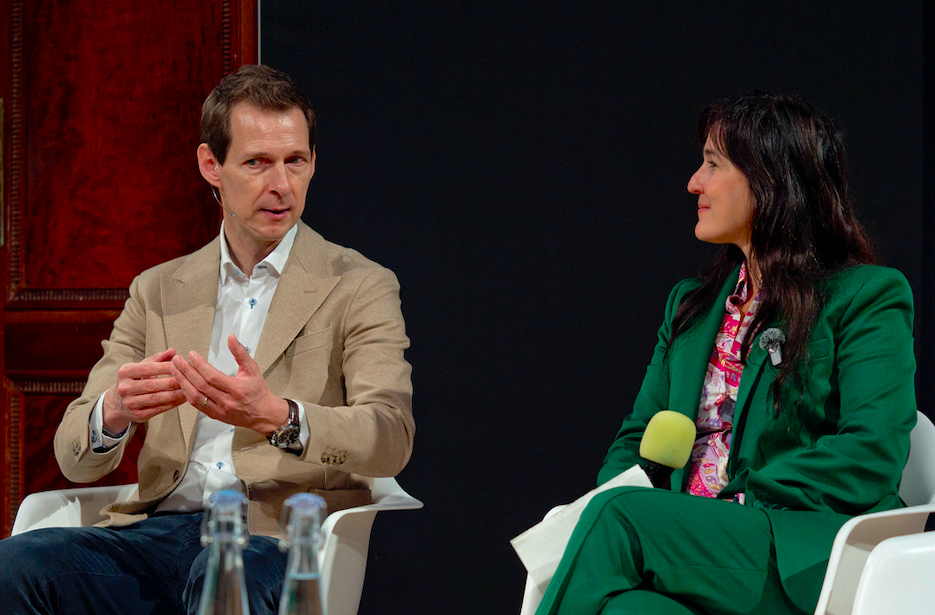
“For a long time we suspected that logged-in users have a higher value than non-logged-in users, but we didn’t have the data to prove it,” said Patrick Rademacher, Chief Strategy and Innovation Officer, Ringier AG.
Founded in 1833, Ringier is a family-owned media and entertainment multi-national group based in Switzerland. The group has three key business areas: media brands, sports media and marketplaces. In total, Ringier owns and operates 115 companies in 19 countries in Europe and Africa with approximately 5,500 employees.
About two years ago, Ringier started work on a project to test the hypothesis that logged-in users are more valuable than non-logged-in users, Rademacher said. The efforts focused on Blick, their largest news brand and one of the most popular titles in Switzerland.
Bringing the data together
A big issue, and one likely to be familiar to many publishers, wasn’t that they actually lacked data, but rather that the data was stored in many different places.
“We had data in Google analytics, in the ad server, in the log-in system, etc., etc.,” Rademacher told participants during WAN-IFRA’s recent Digital Media Europe conference in London. “To bring those data together was a lot of work.“
They focused on data around two key areas: Reader revenue and advertising.
To determine Customer Lifetime Value, they created a two dimensional approach. The first dimension looks at five different types of users:
- No consent (meaning website visitors who opt out of sharing their data)
- Consent only
- Logged-in users
- Monthly subscribers
- Yearly subscribers
The second dimension is based on a user’s loyalty, or more specifically, their number of site visits in a given month:
- One-time readers – those who visit Blick’s site just once in 30 days.
- Casual readers – two to three visits within 30 days
- Returning readers – four to 29 visits within 30 days
- Loyal readers – one to three visits per day
- Brand lovers – those who visit the site more than three times per day
They then combined the two dimensions, creating 25 different user segments, which can be seen in the slide above.
A similar approach was taken on the advertising side, Rademacher said.
“We have the average revenue per user (ARPU) multiplied by lifetime, which is based on active use, which is partly cookie-based. So this is more complex than reader revenue, but we also got a Customer Lifetime Value, and then brought those two together as one Customer Value,” he said.
An ongoing process
Rademacher noted that the overall process remains ongoing, and that the findings he was sharing were preliminary. What is important for Ringier now, he said, is the pattern and direction that the early results show.
For example, the Customer Lifetime Value of a logged-in user is seven times higher than a user who is not logged-in, he said.
They have also found that “the Customer Lifetime Value of a monthly user is much higher than for a user that has given us only consent,” Rademacher said.
“That showed us that we are on the right track, proof that our hypothesis was right,” he said.
WAN-IFRA Members can view or download Patrick Rademacher’s presentation slides on our Knowledge Hub.
Another interesting result, Rademacher noted, is that “all subscribers generate high advertising revenue. So a subscribed user generates not only subscription value for us but also high advertising revenue because they come back more often. They generate more ad impressions.”
In addition, Blick’s data show the more loyal a user is, the higher the overall lifetime value.
“When we compare, for example, the difference between a casual reader coming two or three times per month with a brand lover who comes more than three times a day, there is ARPU up to 26x higher,” Rademacher said.
‘It’s not the log-in: it’s the engagement’
In general monetary value, he noted that a one-time user who has not given Blick any consent, equates to roughly 1 Swiss franc (equal to about 1.09 euros), whereas “a brand lover with a yearly subscription brings us 1,500 Swiss francs (approximately 1,630 euros). Once more, it’s not about the number, it’s about the pattern,” he said.
The issue for Blick now, Rademacher said, is that “our users currently are mostly in the segment of ‘consent only.’ So we have a clear incentive to guide them deeper into the funnel, to the log-in and subscription.”
Another important question the team addressed was: Where does the value of the log-in come from? Was it simply a matter of getting someone to log-in? This topic had been an ongoing matter of discussion internally, Rademacher noted.
What they found is that the true value of logged-in users is generated by their engagement.
“When a user comes back more often, it’s more page views, it’s more ad impressions, it’s more advertising,” he said. “The more direct the contact with the user, the better the interaction. The more likely that you have an email that you can address. The easier to convert from log-in to subscription. It’s not the log-in itself: it’s the engagement.”
“Within our users, we clearly have identified some super users. And those super users bring the highest value. They are deep in the funnel. They are logged in, or subscribers. And they have high loyalty, meaning they come very often,” he said.
Offering sports fans a personalised experience with ‘Follow My Team’
Ringier has already begun acting on their findings to “guide our users deeper in the funnel. And once again, it’s not the log-in itself that makes a difference, it’s the engaged users being logged in,” Rademacher said.
For example, he described a relatively new service for logged-in sports fans called “Follow My Team,” about their favourite sports team.
“You get a personalised feed, details on the team, on players. You get push notifications, and so forth,” he said, adding that Ringier promoted this heavily around the World Cup this year. Since then, they have seen month-on-month gains in logged-in users while at the same time seeing a month-on-month decrease in the “consent only” users.
“This is not the end of the process, we are still in the middle of it,” Rademacher said.
Next, Ringier wants to add print data to get a fuller understanding of users. The company has a large portfolio of print products, and many digital news subscribers also subscribe to print magazines.
They also plan to add customer acquisitions, “because what we have seen so far is purely on the revenue side, and we would like to add the cost side to get the full picture,” he said.