Print knows its circulation. Now it needs to know its readers
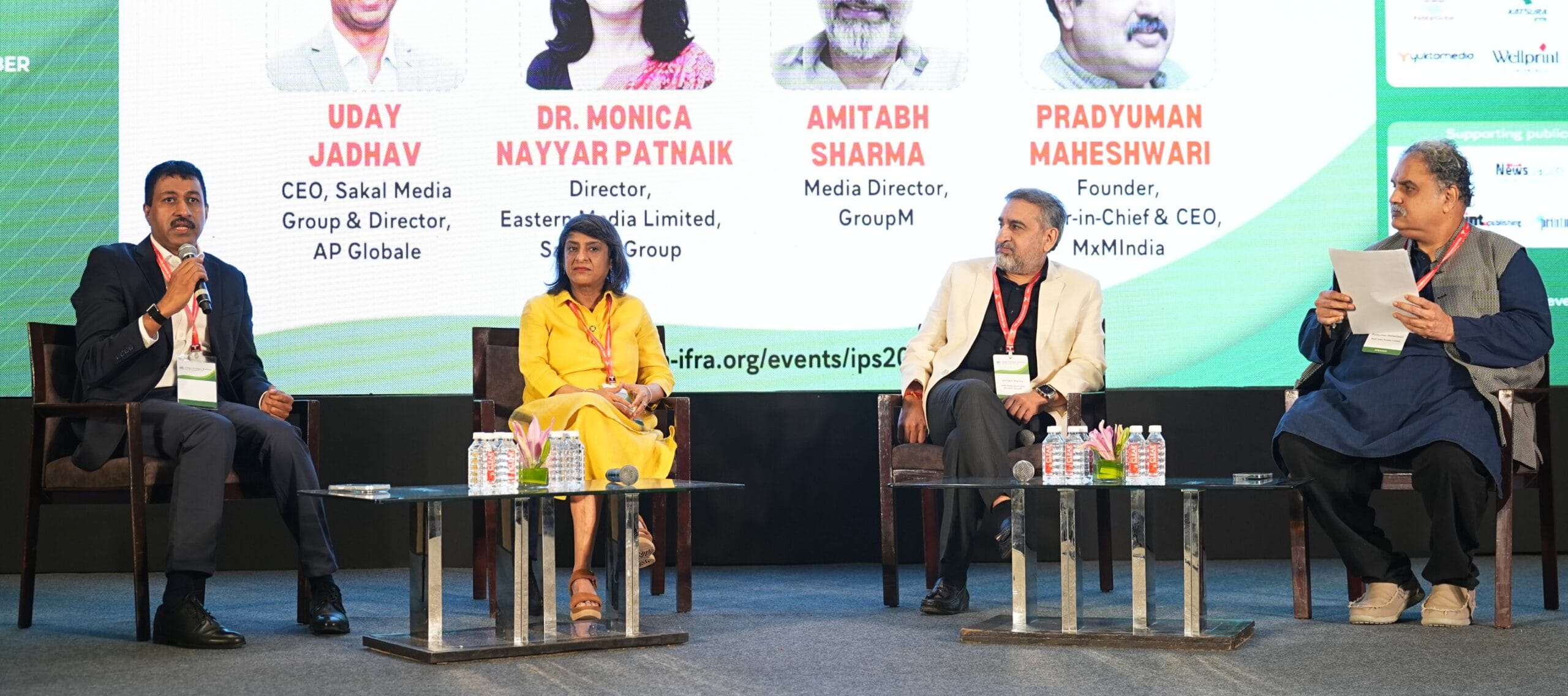
Sakal distributes more than one million copies a day across Maharashtra. “Yet, we don’t know who the reader is, what type of content they like, how much content they like, and what time they expect to deliver the content,” said Uday Jadhav, CEO of Sakal Media Group, during our recent Indian Printers Summit in Pune.
For an industry that has always measured circulation, not knowing the reader is now becoming a problem.
Newspapers have traditionally relied on hawkers to reach readers. Publishers focused on circulation and advertising revenue, while the reader remained at the end of a distribution chain rather than at the centre of the business model.
“We never prioritised the circulation function, we never prioritised the readers to get data,” Jadhav said.
Today, advertising accounts for almost 80 percent of revenue, with subscriptions or circulation contributing the remaining 20 percent. The industry must “flip the revenue model” so that the majority comes from the audience, he said.
Jadhav said achieving that will require more than raising cover prices. It will mean knowing what readers actually value.
Circulation is not the same as audience
Monica Nayyar Patnaik, director of Eastern Media Limited, which publishes Odia daily Sambad, highlighted the changing habits of younger readers.
A reader may encounter the same local story through a newspaper, an app, Instagram or a short-form video. For publishers, that means finding ways to stay relevant across these different points of consumption.
Amitabh Sharma, Media Director at GroupM, highlighted the gaps in readership measurement in India. The last Indian Readership Survey (IRS) was conducted in 2019, seven years after the previous one in 2012, and there has been no survey since.
At the same time, advertisers have become accustomed to platforms that can provide specific information about audiences and outcomes.
“Publishers can no longer assume that circulation alone is sufficient evidence of advertising value,” Sharma said.
Newspapers expanded circulation partly by taking readers from competitors, rather than by building distinctive capabilities around their own audiences.
“Publishers have not focused on building an infrastructure around their audiences,” he said. “They never thought about building their platform, they didn’t invest in technology to measure that.”
More than 270 participants from 36 organisations gathered in Pune on 9–10 September for the 34th edition of the Indian Printers Summit.
From selling space to selling value
Publishers are experimenting with new platforms and revenue models. For instance, Sambad has moved into FM, television and digital. But diversification does not automatically translate into monetisation.
“We don’t have that many viewers that we can monetise at a different level,” Patnaik said.
Publishers continue to approach advertisers largely by selling newspaper space, even as clients look for more than a full-page ad. They want PR, sampling, activations and other services that can deliver a more direct response, Jadhav said.
“We are trying to sell only space to the agencies. We are not monetising our readers,” he said.
Meanwhile, Sambad has attempted to address the advertising side through its own metrics. In the absence of an industry-wide readership measure, it tracks competitors’ advertising, measures advertising space and estimates revenue to assess its position in the market.
This analysis helped Sambad estimate its share of advertising volume at around 48 percent. Such data gives the newspaper a way to demonstrate its position to advertisers, particularly in a regional market where local reach and local news remain important, Patnaik said.
Knowing the reader is only the first step
“If a reader is only interested in sports and not politics, we must give them only sports,” Patnaik said.
For publishers, knowing what individual readers want could be key to getting them to pay for content. “If you have the database with you, you will be the king,” she said.
A detailed reader database could help publishers do more than sell subscriptions. It could tell them what audiences are interested in and help them tailor content, advertising and other services accordingly. That becomes even more important as publishers look to increase the share of revenue coming directly from readers.
There are already signs that publishers are trying to get readers to pay more. In Maharashtra, Sakal has raised its cover price from Rs 5 [$0.06] to Rs 8 [$0.09] over the past two years and plans to take it to Rs 10 [$0.11] in the next two years. Sambad has also raised its cover price to Rs 9 [$0.10], according to Patnaik.
But higher cover prices will not solve the industry’s problems on their own. Costs are rising while revenues remain under pressure, and publishers also need to invest in people and technology.
Talent, costs, competition and changing consumer behaviour are among the industry’s main challenges, Jadhav said.
That makes better use of existing talent important. Sharma suggested that reporters and editorial leaders could build audiences through podcasts and other platforms.
“You have such credible reporting and reporters and editorial chiefs, can they become influencers?” he said.
For publishers, the task is to turn that editorial credibility, reader knowledge and reach into assets they can build and monetise themselves, rather than continuing to depend mainly on circulation and advertising.