NZZ is turning its archives into a newsroom tool
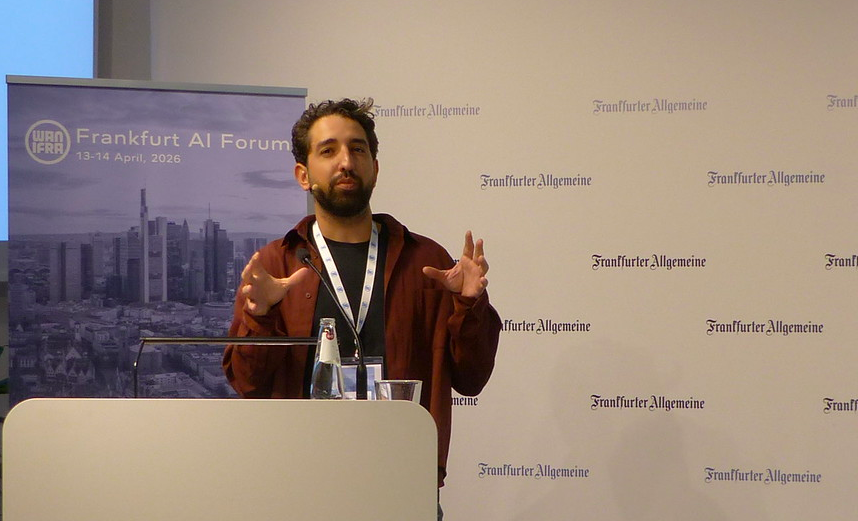
At our recent Frankfurt AI Forum, Alban Mazrekaj, Head of Content Technology and Format Development, said the focus is on improving internal workflows. While AI is often associated with chat interfaces and audience-facing products, he emphasised using it to “improve the lives of our editors.”
With a large volume of historical material already digitised, the challenge is making that content easier to use in everyday editorial work.
Rethinking the editorial stack
A central part of this effort is a rebuilt internal archive. Instead of relying on separate tools for images, agency feeds, and older content, NZZ has brought these elements together into a single system that allows access to everything it has published during the past 250 years, along with licensed material.
This archive is used both for reader-facing products and for internal workflows, making it easier to use content during the writing process.
The system sits alongside a hybrid technical setup. NZZ uses the CMS LivingDocs but extends it with custom-built tools. Rather than relying entirely on the CMS, the team continues to build additional functionality where needed.
Mazrekaj described how these decisions vary: “A lot of time… I have to think about whether I should build the stuff myself with my team or buy a solution.”
He noted that before tools like Piano became widely used, the company had built its own conversion logic before opting for standard solutions and focusing more on editorial workflows.
“These tools are delivered as browser-based plugins. They appear while editors are working in the CMS, allowing them to use new features without leaving their writing environment,” Mazrekaj said.
Many of these tools are still in development, but are expected to be released in the next two to three months, he added.
Applying editorial rules at scale
One of the first use cases is AI-assisted proofreading, designed to apply editorial style rather than just correct errors.
Traditional tools identify spelling mistakes, but NZZ’s system goes further and incorporates internal style rules to align content closer to local linguistic expectations. This is particularly relevant in German, where regional differences influence word choice.
Mazrekaj illustrated this with an example from his own writing. A reference to “Junge” (boy) passed human review, but the system suggested “Knabe,” explaining that the latter aligns more closely with the publication’s regional style. “Junge” would be more common in northern Germany, while “Knabe” is used in Switzerland, Austria, and southern Germany.
“This is just one example of hundreds or thousands of rule sets where a normal language spellcheck would see this as correct,” he said.
The system can also identify where additional explanation is needed, prompting editors to clarify terms or references that are not defined in the text.
Approximately 105 participants from 25 countries attended our Frankfurt AI Forum in mid-April. Photo by WAN-IFRA’s Rocío Valderrábano.
Rather than replacing proofreaders, the tool changes their role. As Mazrekaj noted, AI can take on some tasks, but it also introduces new ones. For example, errors in text-to-speech outputs require review. “In every company, the number one bug spotter is always the CEO,” he said.
Editors can accept or reject suggestions, or provide feedback to update the underlying rules over time, reflecting how language evolves.
AI helps suggest image use in coverage
A second workflow focuses on image recommendations. Mazrekaj noted that some commonly used visuals can hurt click rates, particularly when the same types of images are used repeatedly, making them “boring.”
At the same time, well-chosen images can improve the experience of reading an article.
The new system analyses articles as they are written and suggests images from both internal archives and agency feeds. It also considers how recently an image has been used, avoiding repetition.
As Mazrekaj noted, if the same image has been used in the past few months, the system can suggest avoiding it to introduce more variety.
Rolling out AI through newsroom workflows
The tools are supported by a system called Proofmark, which manages editorial rules, terminology, and guidelines. It allows teams to update these elements without requiring engineering support.
The tools are designed to fit into existing workflows rather than replace them. Development has been carried out with small teams first, allowing for testing before wider rollout.
Proofmark, for example, was introduced within the proofreading team before being expanded. As Mazrekaj said, “you cannot change the whole organisation at once,” so starting with a smaller group made it easier to test and refine the system.
A similar approach has been taken with image-related tools, developed in collaboration with editorial staff.
Looking ahead, the team is considering additional tools such as a fact-checking system to support journalists earlier in the writing process.
Across these efforts, the focus remains on integrating AI into existing editorial work to make it easier for journalists to produce and refine content.