‘Monetise the relationship, not the pageview’: Rethinking news publishing in the AI era
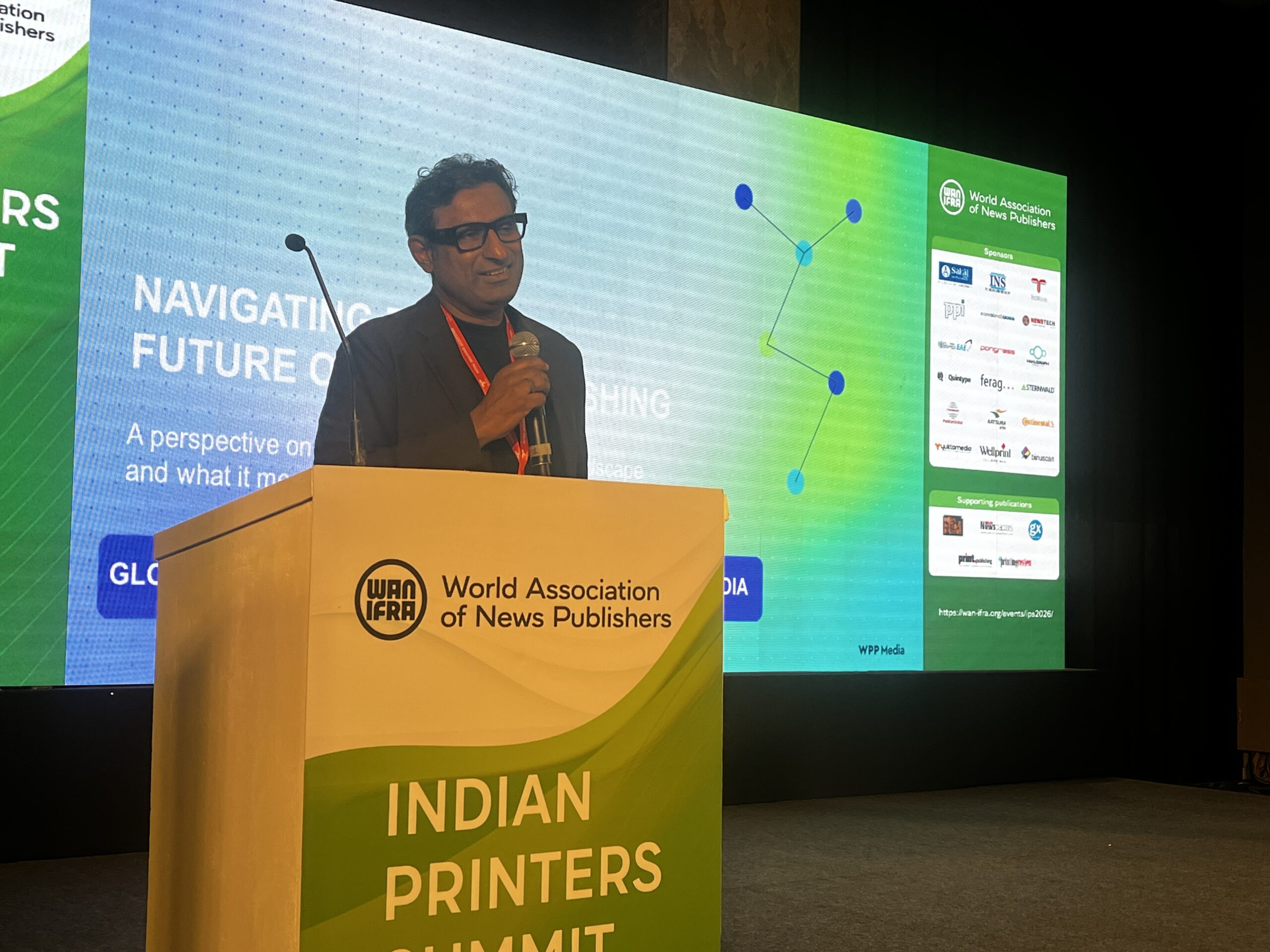
In an AI-saturated world, the scarce asset is not information. It is confidence that the information is real, sourced and accountable, Padmanabhan said during the opening keynote at our Indian Printers Summit in Pune today.
That makes trust part of the value publishers provide.
“The future of news publishing is not just about creating more content, but it’s about creating more value to the audience they serve,” he said.
As information becomes easier to access, publishers need to maintain their relationship with audiences and show how their journalism is reported and verified.
The principle is: “Rent distribution. Own the relationship.”
Publishers need to distribute their journalism across multiple platforms, but also understand the audiences consuming it.
“If you do not know who the audience is going to be, do not distribute,” Padmanabhan said.
“The winner will not be the publisher with the most content, but the one with the strongest relationship with the audience.”
When the answer comes before the click
AI is changing what Padmanabhan described as the “unit economics of attention”.
“If the answer happens before the click,” publishers need to think about how they optimise their journalism for LLMs, he said.
The question is how publishers can optimise to appear in AI results while moving beyond the pageview.
Publishers also need content that can be adapted and distributed across different platforms without compromising editorial standards.
Building different reasons to pay
Padmanabhan pointed to The New York Times as an example of a publisher that has moved beyond simply putting stories behind a paywall.
It has different products around news, sports and cooking, each with depth of content and exclusive content.
“These products have created habits that have enabled the publisher to aggregate cohorts of audiences with very different interests,” he said.
The result is a portfolio of reasons to pay, rather than simply a paywall around individual articles.
The same understanding of audiences is relevant to advertising, he said.
Advertising businesses seek to understand their audiences so they can serve them more relevant advertising, he added.
More than 280 participants from 36 companies attended Day 1 of the Indian Printers Summit in Pune.
Journalism has value beyond the article
Padmanabhan also mentioned Reuters as an example of putting its journalism first and knowing its audience well.
“Trusted reporting is increasingly valuable not only to readers, but also to AI systems,” he said.
He outlined four stages for publishers: archive, licence, data and value.
A publisher’s archive can be licensed, while preparing its data for AI use can create further value, including for enterprise LLMs.
The opportunity is to think about journalism not only as something audiences read, but also as trusted information that can have value in AI systems, he said.
The competitor may be someone audiences already trust
“The new competitor is not another newspaper. It is the person audiences already trust,” Padmanabhan said.
Publishers should consider partnerships with credible creators while keeping verification, standards and accountability visible.
For publishers, the challenge is to distribute journalism wherever audiences are while maintaining the relationship with those audiences.
The future of news publishing, he said, “is a relationship story.”