‘Independence isn’t declared, it’s built’: How Mediapart turned reader trust into a business model
By Maria Lisicka
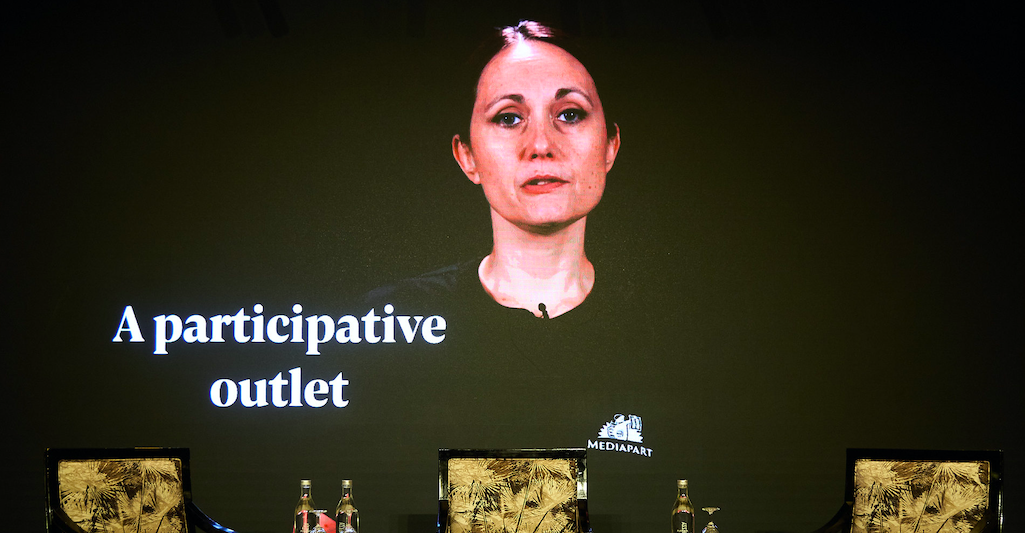
“Exclusive and verified information has value, and people are okay to pay for it.” This principle has shaped Mediapart since 2008, the company’s CEO, Cécile Sourd, told participants of WAN-IFRA’s Asian Media Leaders Summit.
For Mediapart, independence has become not just an editorial value, but a legal and financial structure.
In 2008, “everything was for free on the internet, including news,” Sourd recalled. Mediapart’s founders made “this crazy bet that people would actually be willing to pay for exclusive and verified information.”
At first, the bet was costly: Mediapart lost money for two years, financing long investigations without enough subscribers.
“It all changed when we started revealing facts that no one would have revealed if we hadn’t been there,” she explained. From then on, “people knew they could find something at Mediapart they wouldn’t read anywhere else.”
“Eighteen years later, this bet paid off,” she said.
Mediapart has more than 280,000 individual subscribers, who account for 99% of its annual revenue. “This is the foundation for everything else,” she said. “If your only boss is the reader, your accountability is to them only.”
After reader funding, the second pillar is legal: in 2019, Mediapart created the Fonds pour une Presse Libre (Fund for a Free Press), an endowment fund that supports independent French media.
Crucially, it permanently holds Mediapart’s capital, “which makes it impossible for an outside shareholder to take control of the newsroom.”
The third pillar is financial sustainability. Mediapart has been profitable for 15 years, carries no loans and self-finances its investments. Together, these pillars mean “independence isn’t just a slogan, it’s a financial and legal architecture.”
‘Not above, but within society’
“Being financially independent isn’t enough,” Sourd stressed. “You also have to build a direct relationship of trust with your audience.”
That starts with participation. Subscribers publish their own posts in Le Club, and Mediapart co-produced a reader-funded cinema documentary on the Sarkozy-Gaddafi affair, Personne n’y comprend rien. “The core idea is that journalism shouldn’t be above, but within, society, in a direct interaction with it.”
It continues with transparency. Mediapart publishes its full annual accounts, explains its investigative methods in a section called La Boîte Noire (“The Black Box”), and asks journalists to declare their interests.
“You can’t demand transparency from the powerful people you scrutinise if you don’t hold yourself to the same standards,” Sourd noted.
Finally, Mediapart meets readers at free events and answers them through customer service run by real people rather than AI. Such closeness is no extra, she said: “It’s what turns a reader into a long-term supporter.”
“Independence isn’t declared, it’s built: legally, financially and every day in [our] relationship with the readers.”
– Cécile Sourd, CEO, Mediapart
Journalism that shifts the debate
“Our job is to look for the truth of facts, not to defend opinions,” Sourd said. Mediapart’s investigations have opened public debates and at times led to legal or political consequences, from police violence to corruption. “This isn’t journalism reporting into a void.”
Beyond good timing and some luck, Sourd said, it takes a clear value proposition centred on real journalism, and a “journalistic promise” that “doesn’t change over the years.”
See more: No ads. No investors. No compromise: How Mediapart makes independence pay
and also: Mediapart transforms B2B from revenue niche to growth lever
Why no advertising? Because Mediapart investigates companies, “having advertisements is a weakness for real, real independence,” Sourd said, while acknowledging that “it’s a luxury for us not to need them.”
Long reads come at a cost: “the first reason why people unsubscribe” is “the lack of time,” Sourd conceded. Mediapart has responded with free newsletters, summaries, audio versions and video shows. Still, half its subscribers have stayed over three to four years.
Mediapart’s bet is that “keeping a real, vivid relationship to the readers” will help it withstand AI. “Maybe that’s too optimistic,” she said, “but that’s how we are trying to fight it.”
About the author: Maria Lisicka is a young professional in PR and strategic communication, currently pursuing her studies at the University of Amsterdam and Nanyang Technological University, Singapore.