How The Observer rebuilt its digital business with seven people and an AI agent
By John Rahim
Executives at established publishers like to ask what they would build if they were starting today. The Observer has spent a year finding out.
The Sunday title dates from 1791. When Tortoise Media bought it from the Guardian’s owner in April last year, it had never had a website of its own.
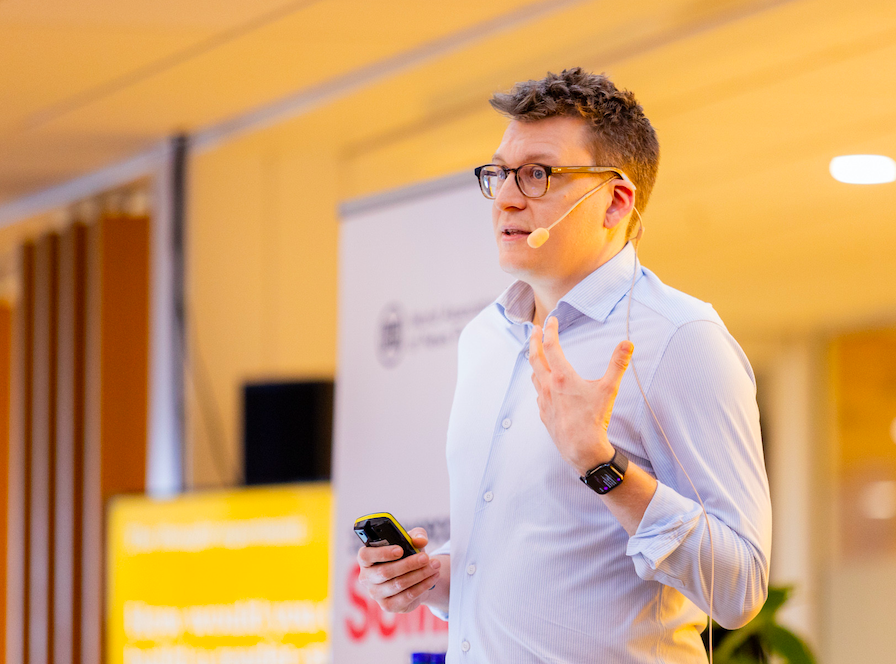
Tortoise itself is a start-up built on podcasts, events and newsletters. Jack Riley, its Chief Customer Officer, told WAN-IFRA’s Newsroom Summit, held at the Norwegian publisher VG in Oslo, that he had inherited a famous brand and, on the digital side, a blank canvas.
Digital subscriptions, new apps and a redesign arrived together on 27 November 2025. Less than a year later, Riley reported more than 70,000 subscribers.
Revenue from digital customers has grown by an average of 13% a month for 11 months and now matches revenue from print subscriptions. Print has gained as well: subscriptions made up 36% of print sales last year and about 45% now. Riley gave no figures in pounds, and the match with print is with subscription revenue alone; newsstand sales are not included.
A prospectus from 1791 still sets the brief
The strategy starts with the first edition, which promised a paper free of prejudice and party, devoted to truth and to “every species of knowledge that may conduce to the happiness of society.” Riley reads that as a case for staying unbiased in a more polarised market, for breadth of coverage and for reporting that is constructive without pretending all is well.
Against that brief he set three pressures, each with its own answer.
The first is AI, which makes ordinary reporting easy to copy. The Observer’s answer is direct relationships with readers and original reporting that nobody else has.
The second is a younger audience that would sooner watch or listen than read. The answer is Tortoise’s podcast business, now folded into the newsroom.
The third is readers’ growing attachment to individual writers over the titles they write for. The answer is a newsroom reorganised around its best-known writers.
The Observer’s hits under Tortoise include the investigation into The Salt Path, the bestselling memoir, and, in June, the scoop that Sir Keir Starmer was about to resign.
The subscription must be worth more than the articles
Every subscriber gets Culture Club, launched in the spring. It includes a weekly newsletter from Tim Adams, the Culture Editor; discounts negotiated with partners; events such as film screenings and Q&As with directors in the newsroom; and a book club that is also streamed online.
Riley’s test is that a subscriber with a passing interest in culture who did nothing beyond taking up the offers would be “well served.” A subscription, he argued, is more likely to succeed when it offers much more than access to articles.
Audio does similar work. Foundling, a six-part narrative investigation released in March, is the title’s biggest driver of subscriptions so far, and a few months ago Observer series held the top two places on Apple’s podcast chart. Distributing through other platforms brings in listeners and subscription revenue, and partnerships extend the reach of a small company. A series on who funds Reform UK, Nigel Farage’s party, was made with the podcast producer Goalhanger and went out on The Rest Is Politics’ subscriber feed before the Observer’s own; The Wargame was a co-production with Sky News.
The most recent addition answers the third of Riley’s pressures, readers’ attachment to individual writers: the Observer’s best-known names now have Substack-style tools to run their own newsletters alongside their reporting for the paper.
A team of seven, with the agent counted as the eighth
Riley arrived to find no business-side team and a budget smaller than his competitors.’ He hired on the assumption that the future belongs to small groups of “super-powered individual contributors” with few layers of management above them, people able to move between strategy and hands-on work.
More of them came from outside publishing than from inside it, with Disney+, YouTube and ClassPass among their former employers. He also looks for contrarians: those most suspicious of the status quo, he said, have had the biggest effect. With nobody to delegate to, “we’re all kind of responsible for solving everything.”
The development team is seven strong, including three engineers who each work across every layer of the product and two designers from a print background who now build products themselves.
Riley counts the AI agent the team built on Claude as another member. It combines knowledge specific to the Observer, such as design guidelines, architecture and technical documentation, with connections to the team’s project-management, design and code tools (Jira, Figma and GitHub) and to Runway, the title’s data platform, and runs everything through automated review and testing. The automated testing, he said, speeds up work and takes load off engineers.
The effect is that people who are not engineers, Riley among them, build and release features on the live site. Almost everything on it, including the sign-up and subscription flows, now carries some of the agent’s work. The Observer had been running a daily graphic that plots the day’s stories on two axes. A designer drew an interactive version that readers can vote on; Riley connected Claude to the design file and built it in an afternoon. It now goes out every day.
One analyst, and anyone can ask
Data follows the same logic. The Observer has one analyst. Every data source in the business feeds a single Google data warehouse, BigQuery. A connector on top of it, using Google’s Gemini model, works out how to answer questions that staff put to it through Claude or a Slack bot. The analyst’s time goes on sitting with editors and on maintaining the written guidance that teaches the connector to return the right numbers. “Old-fashioned dashboards” survive beside it.
Riley was candid about the limits. The tools have so far been built to be “good enough for us to learn” from, rather than polished, and whatever is built in an afternoon has to be maintained by the same seven people. The newsstand, which still accounts for more than half of print sales, is untouched by any of it.
He had three lessons for the audience:
- Hire for independence over management experience,
- Build rather than buy, and
- Let anyone in the business question the data.
About the author: John Rahim is the founder of The Media Stack.