Building the future now: Ukrainian regional media turn learning into action in Lviv
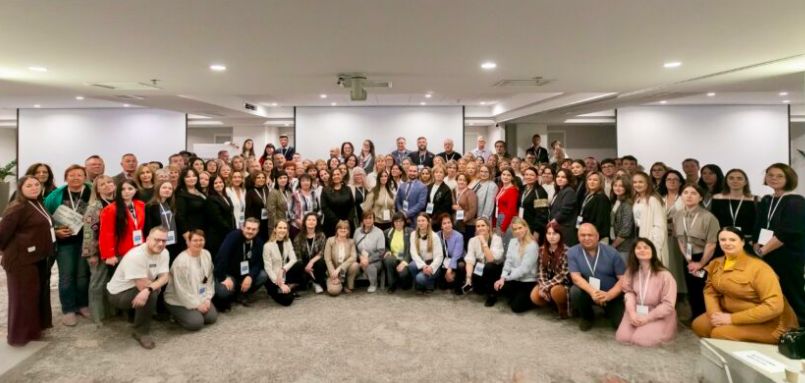
The XV Media Congress, “People. Trust. Decisions.”, brought together 180 participants representing 58 newsrooms from 43 Ukrainian cities, alongside international colleagues and partners. Organised by the Association of Independent Regional Press Publishers of Ukraine (AIRPPU), with the support from WAN-IFRA and MBL, the Congress examined the immediate and longer-term challenges facing Ukraine’s regional and local media.
The discussions reflected the extraordinary environment in which these organisations continue to operate. Newsrooms are responding to attacks, power and connectivity disruptions, staff mobilisation, financial instability and growing exhaustion.
At the same time, they are developing new editorial products, experimenting with revenue models, reaching younger audiences and strengthening their role within their communities.
The wider programme around the Congress included a WIN Ukraine Leadership Alums gathering on 1 October, followed by the main Congress and a dedicated roundtable on 3 October reviewing the Norwegian – Ukrainian Partner Exchange Programme under Stronger Together.
From leadership learning to newsroom action
In Lviv, 14 alums of the WIN Ukraine Leadership program gathered for a day dedicated to reflection, peer exchange, and continuous learning.
Building upon previous leadership development initiatives, the session emphasised transforming organisational commitments to staff safety and gender equality into actionable, everyday newsroom practices. During the meeting, media leaders spoke candidly about the ongoing pressures of navigating several years of war. They addressed the heavy emotional burden, continuous future uncertainty, and the imperative duty to safeguard employee wellbeing and physical safety.
The event highlighted how the WIN alums network has evolved beyond a conventional professional directory. It serves as a vital, trusted forum where leaders can openly share challenges, seek counsel, and draw on shared insights from peers facing comparable circumstances across Ukraine.
A workshop facilitated by Lesia Lazorenko focused on operationalising gender policies to guide daily managerial and editorial decisions. Attendees examined key aspects of gender-sensitive reporting, including ethical coverage of domestic and gender-based violence, protecting survivor confidentiality, and dismantling gender stereotypes in content. The overarching takeaway was that effective newsroom gender policies must serve as active, living guidelines.
A Congress grounded in resilience and reinvention
Looking beyond short-term survival, the Media Congress focused on long-term sustainability, exploring strategies for regional and local outlets to remain essential, credible, and financially viable over the next five to ten years.
Key discussions centred on balancing editorial independence with financial health, navigating technological shifts like AI, fostering audience trust, and equipping newsrooms to handle ongoing instability.
Rather than delaying future planning, Ukrainian regional media are actively modernising. They are restructuring workflows, investing in early-career journalists, testing membership models, and fortifying operational systems for uninterrupted reporting.
These efforts show that true resilience requires maintaining the agency to make forward-looking choices, preserve core journalistic principles, and serve local communities through adversity.
Addressing the fatigue felt across the industry, AIRPPU CEO Oksana Brovko emphasised the critical role media plays in guiding the public through wartime challenges.
“In the first years, we were learning how to hold on, but we cannot spend the years ahead simply in survival mode,” Brovko noted. “We need to build media that people will still need in a year, in five years and in 10 years. We need to learn how to succeed, build communities, use new technologies and create new products. And we must do all this without giving up our independence, because the future of Ukrainian media will not begin after the war. It is already being shaped by the decisions we make today.”
Oksana Brovko, CEO at the Association of Independent Regional Press Publishers of Ukraine (AIRPPU)
Canada’s presence at the Congress: support for Ukraine and media freedom
Canada’s presence brought an international perspective to the Congress. Tamara Mawhinney, Ambassador of Canada to Ukraine, joined a delegation with Journalists for Human Rights (JHR) Canada – including President Rachel Pulfer, Director of European Programs Janine de Vries, and Marcus Kolga from the European Program for Media in Exile – to meet with Ukrainian regional media representatives.
In her remarks, Mawhinney acknowledged the heavy strain on newsrooms during the war while praising their determination to continue reporting and planning for the future.
“Canada has stood alongside Ukraine for a very long time: in 1991, in 2014 and in 2022. And that will not change,” she said.
Mawhinney highlighted media freedom as central to Canada’s relationship with Ukraine. The delegation engaged directly with local newsrooms to understand their needs, share expertise on legal safeguards, and foster future cooperation.
Tamara Mawhinney, Ambassador of Canada to Ukraine
Norwegian-Ukrainian Partner Exchange
The final day brought Ukrainian and Norwegian representatives together to review the Partner Exchange Programme, focusing on how newsrooms adapted ideas into practice.
A regional outlet from Chernihiv described shifting from a traditional print-first model to publishing digitally first before expanding stories for print – a crucial adaptation during blackouts – noting that changing mindsets mattered more than adopting specific tools.
Another newsroom expanded its digital membership from nine to 45 by hosting community events, city tours, and workshops, shifting focus from short-term subscriber growth to long-term engagement and retention.
Additionally, outlets prioritised operational stability, such as securing alternative energy sources, to preserve editorial independence during wartime while establishing direct dialogues with regional authorities.
This exchange highlighted mutual learning: Norwegian participants valued Ukrainian crisis resilience and community-driven innovation, while Ukrainian outlets gained insights into digital production, subscriptions, and revenue growth.
Stronger together
Across the alumni gathering, the Congress and the partnership roundtable, one message remained consistent: Ukrainian regional media are not simply enduring the war. They are building the organisations they want to become.
They are establishing safer and more inclusive workplaces, examining whose voices appear in their journalism, developing new audiences, testing new revenue streams and protecting editorial independence under extraordinary pressure.
The experience in Lviv also showed that international cooperation is most effective when it recognises the expertise already present in Ukrainian newsrooms. Partnership is not about transferring a ready-made model from one country to another. It is about creating the trust, time and professional space needed for media organisations to learn from one another – and then translate that learning into action suited to their own communities.