The ‘Aha!’ feeling: Svenska Dagbladet’s new digital subscription engine
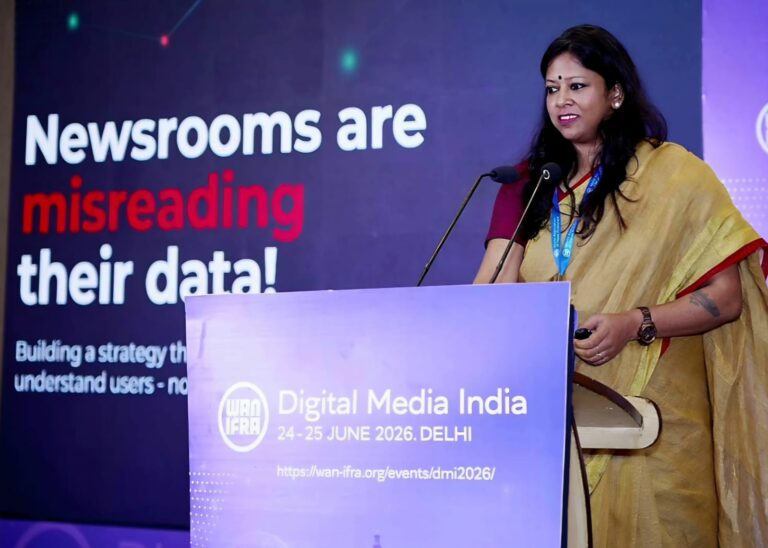
At our Newsroom Summit last week, Lisa Irenius, Editor-in-Chief and CEO of Svenska Dagbladet, told participants about their strategy for digital growth and the factors behind their success.
While the title’s revenue from subscriptions in the years after Covid looked good on the surface, there were some major underlying issues, she said.
“When we looked behind these numbers, we saw our total subscription base was shrinking quite rapidly,” she said.
The revenue figures had looked fairly good because SvD had been increasing their subscription prices, but it had become a case of fewer subscribers paying more.
SvD was not compensating for its losses in print through digital subscriptions, and they needed to reverse this trend, Irenius said.
‘One clear goal for the whole company’
This situation was SvD’s starting point for some new goals, Irenius said.
In 2024, they were getting close to having 100,000 subscribers, so they set a new target: 125,000, a 25 percent increase.
“One thing we learned, and I do not think you can overestimate it, is setting one clear goal for the whole company,” Irenius said.
“There is a tendency to have all these different things we measure: We measure reach. We measure page views. We measure a lot of things, and you easily create confusion: What is the most important?” she said.
To get more new subscribers, they focused on a few main opportunities.
A huge conversion opportunity
The first of these was reach. Only 10 percent of visitors to SvD’s site were subscribers. “That’s a huge opportunity, we had 90 percent to convert,” Irenius said.
To do this, they worked with dynamic paywalls and A/B testing. “A lot of A/B testing. We put together a task force with competence from business, from data analysts, product development, and they worked on a lot of different iterations,” she said.
SvD has also made changes to their journalism: what they have and what they offer.
“We have changed the way that we work together,” she said. “In general, we have made smaller teams that work more independently, created new ways for collaborations. We have a more simplified news organisation. We no longer have a digital news desk: everyone works with a digital presentation.”
They also have a growth grid, where they have journalists, product developers and data analysts working together.
“And we see that we have new opportunities in new formats, like audio, which has been very important for us,” Irenius said.
For example, they have developed a documentary format, which has helped them reach out new subscribers and connect with different age groups that they previously haven’t been able to reach, she added.
With these documentaries, Irenius said they typically publish the first episode free for everyone and then to continue listening, people have to subscribe, which has worked well, she said.
The kinds of journalism SvD is focusing on has also changed, and this is also helping to win them new subscribers.
For example, there is more of a focus on helping their audience to learn things, how to do sports, for example.
“This kind of reporting has been really important for us,” Irenius said. “These journalists are actually the most effective in converting new subscribers at Svenska Dagbladet, so this has been worthwhile developing.”
Getting personalisation, automation help from AI
SvD is also considering how it distributes content and how AI can be useful in this area.
“We have started doing it, but there are still many more opportunities here, that is new ways to find readers. We have much more to learn and develop when it comes to how we use AI and machines to do the distribution in our channels,” she said.
As part of Schibsted, SvD is using the Schibsted Publishing Platform, which Irenius said has very good personalisation and automation features. “On our front page today, we only have three manually curated places, the rest is done by machines,” Irenius said.
“We have been testing it a lot and it works very well. It has really increased our conversion rates – and the time spent on our website,” she added.
The result of all of these efforts is that they have not only reached their goal but also done it ahead of schedule. “And we managed to reverse the negative-subscriber based trend, so we’re actually growing the total subscriber base again,” Irenius said.
But SvD is not resting on their accomplishments. Instead, they are actively working to develop and fine-tune their Unique Selling Point, which she stresses is hugely important for publishers.
“What is it that you offer that others don’t? What distinguishes your news brand from other news brands? We have been doing a lot of research among our users and among our news consumers in Sweden: What are they willing to pay for?”
These discussions are also taking place in their newsroom, she said: “What capacities do we have? And what do we want to develop?”
For their focus, SvD is placing an emphasis on “giving an ‘Aha!’ feeling to our readers. You know, an ‘Aha!’ moment when you suddenly realise something,” she said.
“This is what we really want our journalists to be the best at and to develop in everything we do. So, it’s about deeper understanding: Why do things happen? How are they connected? It’s about new thoughts, new ideas, and also arousing curiosity. And this is also an experience. It’s not only about fuelling the intellect, but how does it feel?”
This is not only about the stories the journalists write but also “the visuals and the total experience of the news site. So this is also a way of seeing journalism – what feelings are evoked?”
An AI bot helping to evaluate content
SvD has even created an AI-based tool to help them.
“We are developing an AI bot that evaluates the “Aha!” part because we want to focus on this,” she said.
This AI bot gives every article an “Aha” score from 1 to 10. It also explains why something is an “Aha” story or why isn’t it, and what could be better. “And it’s actually really good at it,” Irenius said.
“We have been testing this with our editors’ evaluations and towards readers: What do they feel? And we are fine-tuning it, and it gives great results.”
“So this is a big change for us,” she added, “that you can have this massive qualitative evaluation of your journalism, and it can really help you develop a unique way of doing your journalism.”
SvD is also in the process of developing new ways of engaging with audiences through a free subscription product called “SvD Bas”
“It will be a first-step for new subscribers, but it will also be a good thing for previous subscribers. What will happen here is that they will stay in our free subscription, so that even though they don’t pay any more, we will still have a relationship with them and be able to communicate with them,” she said.
This will be really interesting to test, she added, and said they are planning to start with a weekly newsletter with selected articles from SvD, and are working on plans on how they will develop it in order to foster frequency and engagement.