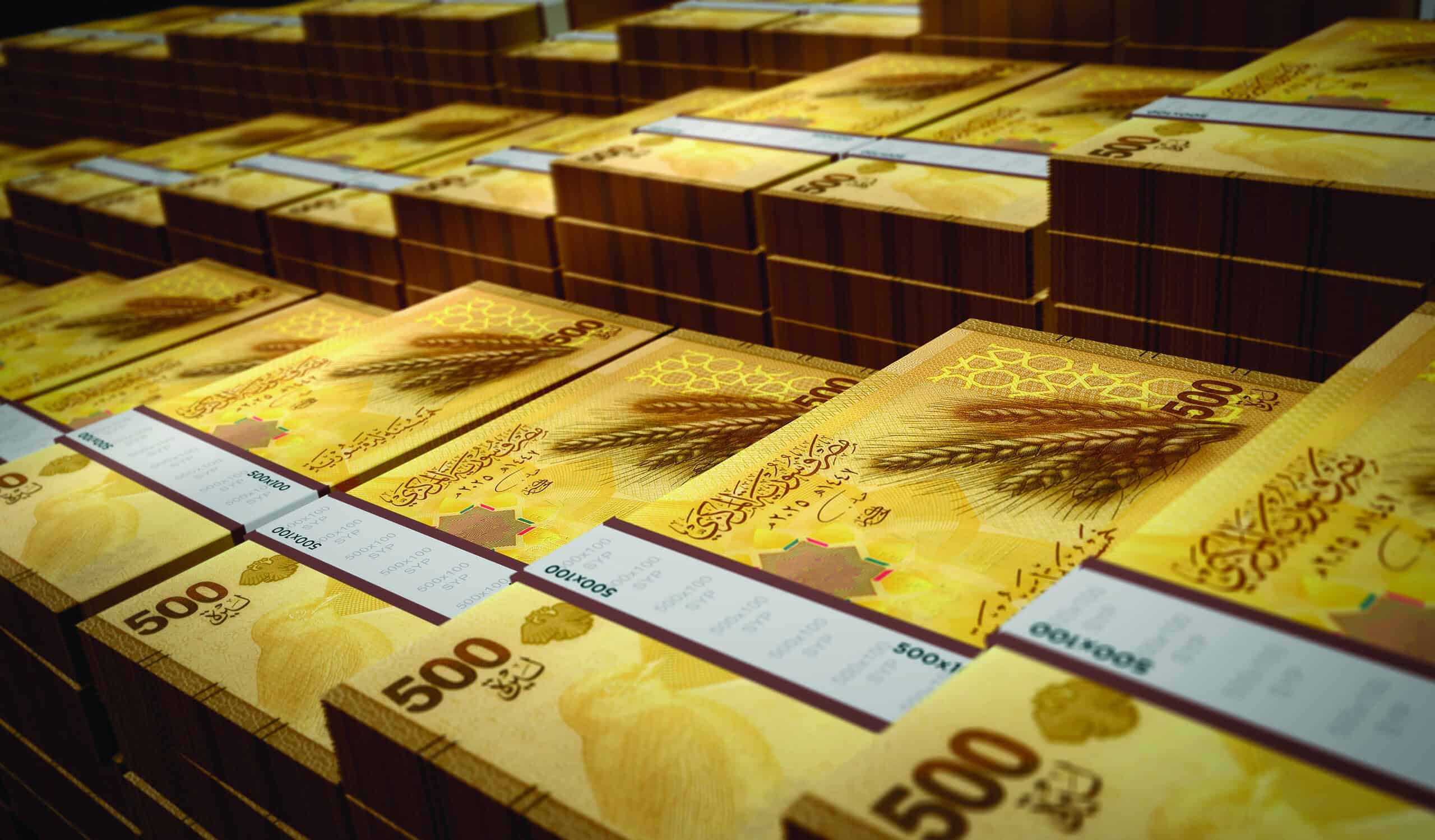
Cash Economy and Weak Links Strain Syrian Banking Sector
Rebuilding Syria’s cash-heavy economy tests fragile local banks as foreign lenders eye a return.
This article appears in the December 2026 issue of Global Finance Magazine.
Two years after the fall of Bashar al-Assad’s regime, most global sanctions have been lifted, and money can technically flow into Syria. But getting the Syrian banking sector back on track is another story.
“The reopening of external financial channels has progressed considerably faster than the domestic banking system’s capacity to absorb and translate that opening into renewed financial intermediation,” warned the Union of Arab Banks in its latest research.
Syria first opened to private banks in 2001, with foreign ownership initially capped at 49%. Lebanese, Jordanian, and GCC lenders moved in first. By 2011, on the eve of the uprising, the country had 21 banks, and about a quarter of adults had bank accounts. War and international sanctions then sent every indicator into the red, and the informal, cash-based economy took over commercial and financial life. It still runs it today.
Since the Assad regime fell in December 2024, the new authorities have passed key reforms—more than half a dozen so far in 2026—and set a target to double the number of commercial banks by 2030. No new licenses have been granted yet, but Turkish and Jordanian banks have applied.
On the ground, banking activity is picking up. Qatar’s QNB, which retained its license throughout the war despite maintaining only a minimal presence, became the first bank in Syria to enable international payments through Mastercard.
Jordan’s Arab Bank, which owns a 53% stake in Arab Bank Syria, also hopes to strengthen its market presence and expand its customer base.
“Syria presents significant opportunities as businesses and individuals seek greater access to financing, secure payment channels, and reliable banking services,” said Ahmad Zidan, general manager at Arab Bank Syria. “Potential areas for growth include financing productive sectors, SMEs, and corporate customers; housing finance and retail lending; digital banking and electronic payments; and financing domestic and international trade.”
Zidan added that there is also “potential to support reconstruction and economic recovery through structured financing solutions, including syndicated loans for eligible projects.”
Big Capital Infusion Needed
The needs are huge; Syria requires an estimated $216 billion to rebuild. GCC countries have pledged billions, and multinationals such as port operators DP World and CMA CGM are starting to move in. So far, Western banks remain shy, but in October, JPMorgan Chase & Co. helped Damascus issue its first letter of credit in more than a decade for a deal with Saudi Aramco.
Not all newcomers are banks. In late June, Kuwait’s Zain Group won a 25-year telecom license with a $747 million bid.
“Our plans are big for Syria. And the size of the ticket we wrote reflects our intention,” said Malek Hammoud, CFA, chief investment and digital officer at Zain. The operator is eyeing fintech and mobile money and is in talks with the Syrian Central Bank. Commercial operations, including 5G, should start in 2027.
But Syria’s challenges remain daunting. The most pressing priority is an asset-quality review of state-owned institutions, which account for 69% of the sector’s total assets. Viable banks could be recapitalized, while others could be restructured or consolidated. Other pressing issues include FATF, correspondent banking relationships, modernizing legal frameworks, and restoring customer confidence.
As the UAB puts it, the challenge “is not simply to reopen banks or reconnect Syria to international payment networks. It is to rebuild the conditions under which households are willing to place savings in banks, banks are able to intermediate those savings safely, and domestic and international investors are willing to provide the additional capital required for reconstruction.” Until then, Syria’s reality remains disconnected from its financial ambitions.
Chloe Domat is a contributing writer based in France.


