Group Tours vs. Private Itineraries vs. Luxury Train Journeys: Which Rajasthan Package Format Actually Fits You
Most people searching for the best Rajasthan tour packages assume they’re comparing versions of the same thing, a handful of operators offering roughly the same forts, the same desert safari, the same Jaipur-Jodhpur-Udaipur loop at slightly different prices. What actually gets compared is rarely explained clearly: Rajasthan trips come in three genuinely different formats, not just different price points on the same format, and picking the wrong one can leave you either overpaying for flexibility you didn’t need or stuck on a rigid schedule when you actually wanted room to linger. Understanding what separates a fixed-departure group tour, a private customizable itinerary, and a luxury train journey is the real first step to finding a package that fits, rather than just finding one that’s cheap or well-reviewed.
Fixed-Departure Group Tours: Efficient, Social, and Rigid by Design
Group tours are built around a set itinerary, a set departure calendar, and a shared coach or vehicle moving a group of strangers-turned-companions through the same stops in the same order. The appeal is straightforward: because costs are split across a full group and operators run the same route repeatedly, per-person pricing tends to be the most competitive of the three formats, making this the natural entry point for solo travelers, budget-conscious visitors, and first-timers who’d rather not manage logistics themselves.
The tradeoff is equally straightforward. You’re moving on someone else’s schedule, spending exactly as long at each fort or market as the itinerary allows regardless of whether you’d have preferred twenty more minutes or twenty fewer, and sharing the experience with a group whose interests and pace may or may not match yours. For travelers who genuinely enjoy the social dimension of group travel, this isn’t a downside at all; it’s often the best part of the trip. For travelers with strong opinions about pacing, photography stops, or dietary needs, it can feel like a constant series of small compromises.
Private Customizable Itineraries: Your Pace, Your Priorities, Your Price
A private itinerary flips the group tour’s structure inside out. Instead of joining a fixed schedule, you work with an operator to build a route around your own priorities: more time in Udaipur if lake views matter more to you than palace interiors, a sunrise-only visit to Amer Fort to skip the midday crowds, or an extra night in Jaisalmer specifically to fit two safari attempts instead of a rushed single outing. Private cars and private guides mean the day bends around you rather than the reverse, and for families with young children, older travelers, or photographers who need flexible timing, this format consistently produces a noticeably better experience than a shared group schedule ever could.
The cost structure works differently, too. Because you’re not splitting a vehicle and guide across a full busload of travelers, private itineraries carry a meaningfully higher per-person cost for solo travelers and couples, though the math improves considerably for families or friend groups of four to six, where the fixed costs of a private car and driver get spread across more people and start looking much closer to group-tour pricing. This is often the format worth the premium for travelers who know specifically what they want out of Rajasthan rather than being open to whatever a standard itinerary offers.
Luxury Train Journeys: All-Inclusive Spectacle, Built for the Trip of a Lifetime
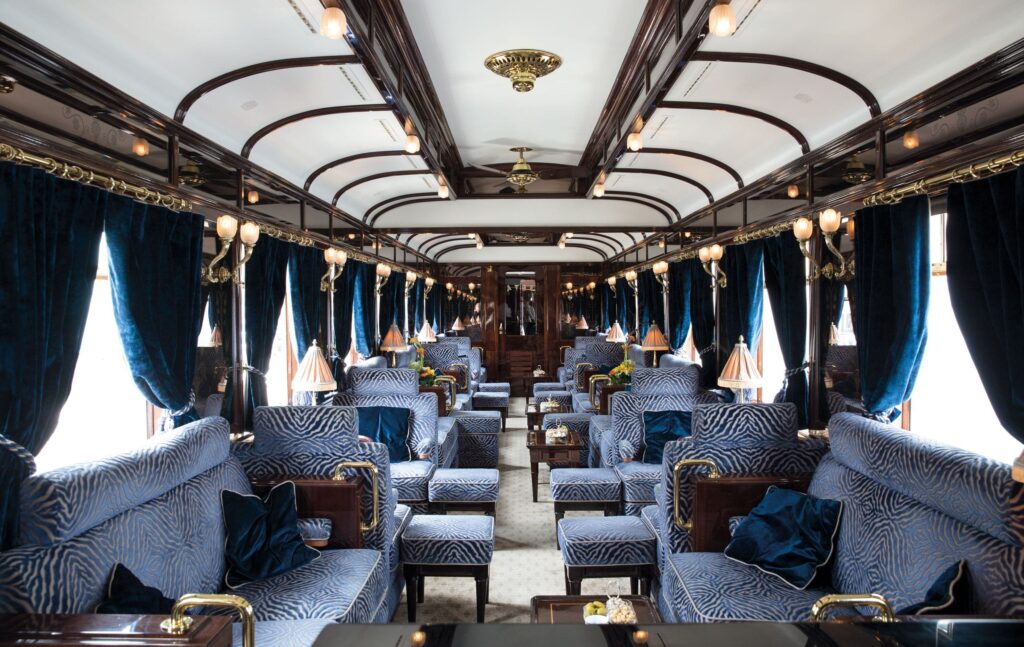
The third format sits in a different category altogether. Rajasthan’s luxury heritage trains, most famously the Palace on Wheels and the newer Maharajas’ Express, turn the journey itself into the centerpiece of the trip rather than a means of getting between destinations. The Palace on Wheels runs a seven-night, eight-day route out of Delhi covering Jaipur, Udaipur, Jaisalmer, Jodhpur, Ranthambore, and the Taj Mahal, with fares starting in the thousands of dollars per person and covering accommodation, all meals, guided sightseeing, monument entry fees, and a set of signature experiences like a camel ride at Jaisalmer and a boat ride in Udaipur folded directly into the price. Departures typically run weekly through the cooler months between September and April, pausing entirely during the peak summer heat.
This format solves a completely different problem from the other two. It’s not about saving money or maximizing flexibility; it’s about removing every logistical decision from the trip entirely and replacing it with a fixed, opulent, all-inclusive experience that functions almost like a floating hotel moving between cities overnight while you sleep. For milestone trips, anniversaries, or travelers who specifically want the experience of the journey itself, not just the destinations, this is the format built for that, and no amount of clever itinerary planning in a group or private tour replicates the specific experience of waking up in a new Rajasthan city after a night on a heritage train.
Matching the Format to the Traveler
The honest answer to which format counts as the best Rajasthan tour packages depends entirely on what you’re optimizing for, and it’s worth being specific about that before you start comparing prices. If budget efficiency and the social element of shared travel matter most, and you’re comfortable with a fixed schedule, a group tour delivers real value and removes any logistics burden from your plate. If control over pacing, specific interests, and flexibility matter more than squeezing out the lowest possible price, and you’re traveling with at least a partner or small group, a private itinerary is very likely worth the premium. If the trip itself is meant to be a singular, once-in-a-while experience where the journey and the destination carry equal weight, and budget is a secondary concern, a luxury train journey delivers something neither of the other two formats can.
Booking Timelines Differ Too, and That Matters
Each format also runs on a different booking clock, which catches a surprising number of travelers off guard when they start comparing options only a few weeks before their intended travel dates. Group tours generally have the most forgiving booking window, since operators run fixed departures on a regular schedule and simply need enough seats filled to make the trip viable, meaning last-minute availability is often easier to find than travelers expect, particularly outside the absolute peak weeks of the season. Private itineraries sit in the middle because they involve coordinating a specific car, driver, and hotel availability around your exact dates. Booking even four to six weeks ahead gives you meaningfully more choice in accommodation tiers and guide availability than trying to arrange the same trip a week out.
Luxury train journeys run on the tightest calendar of the three by a wide margin. Because the Palace on Wheels and similar services operate a limited number of weekly departures across a single compressed season, and cabins sell out well in advance for popular months like November through February, this is the format where booking three to six months ahead isn’t just advisable, it’s often necessary to secure a departure date at all, let alone a preferred cabin category. Anyone building a trip around a specific anniversary or milestone date should treat the luxury train option as the one requiring the earliest commitment of the three, well before finalizing flights or other travel arrangements around it.
Hybrid Approaches Are More Common Than You’d Think
It’s also worth knowing that these three formats aren’t always mutually exclusive within a single trip. Some travelers book a private itinerary for the bulk of their Rajasthan route specifically to retain flexibility around city sequencing and pacing, then add a single luxury train segment, such as a shorter heritage rail journey between two cities, purely for the novelty of that particular leg. Others join a group tour for the core circuit but arrange a private day trip or two on either end for a specific interest, like an extra morning at Ranthambore or a private evening desert camp that the group itinerary doesn’t include. Treating these formats as building blocks rather than exclusive categories often produces a trip that captures the best parts of each without fully committing to any single format’s limitations.
Reading Between the Lines When You Compare Packages
Once you know which format you’re actually looking for, comparing individual packages becomes a much clearer exercise, because you’re no longer trying to judge a group tour against a private itinerary on price alone, which rarely produces a fair comparison. A private itinerary that costs more per person than a group tour covering the same cities isn’t automatically worse value; it’s solving a different problem, and the same logic applies to luxury train fares that look enormous next to either option until you account for everything genuinely bundled into that single price.
When browsing the best Rajasthan tour packages available for your dates, it’s worth explicitly checking which format each option falls into before comparing anything else, since a private itinerary, a group departure, and a luxury train fare aren’t really competing products so much as three different answers to the question of what you actually want your Rajasthan trip to feel like. Get that match right first, and the rest of the planning, which cities, how many nights, which activities, tends to fall into place far more easily than trying to force one format to deliver an experience it was never designed to provide.