2026 WAN-IFRA Golden Pen of Freedom acceptance speech
Delivered at the World News Media Congress, Marseille, 1 June 2026
Speakers: Mohammed Abed (AFP), Fatima Shbair (AP), Mohammed Salem (Reuters)
Mohammed Abed (AFP)
“Distinguished guests, WAN-IFRA and World Editors’ Forum members, colleagues, and friends —
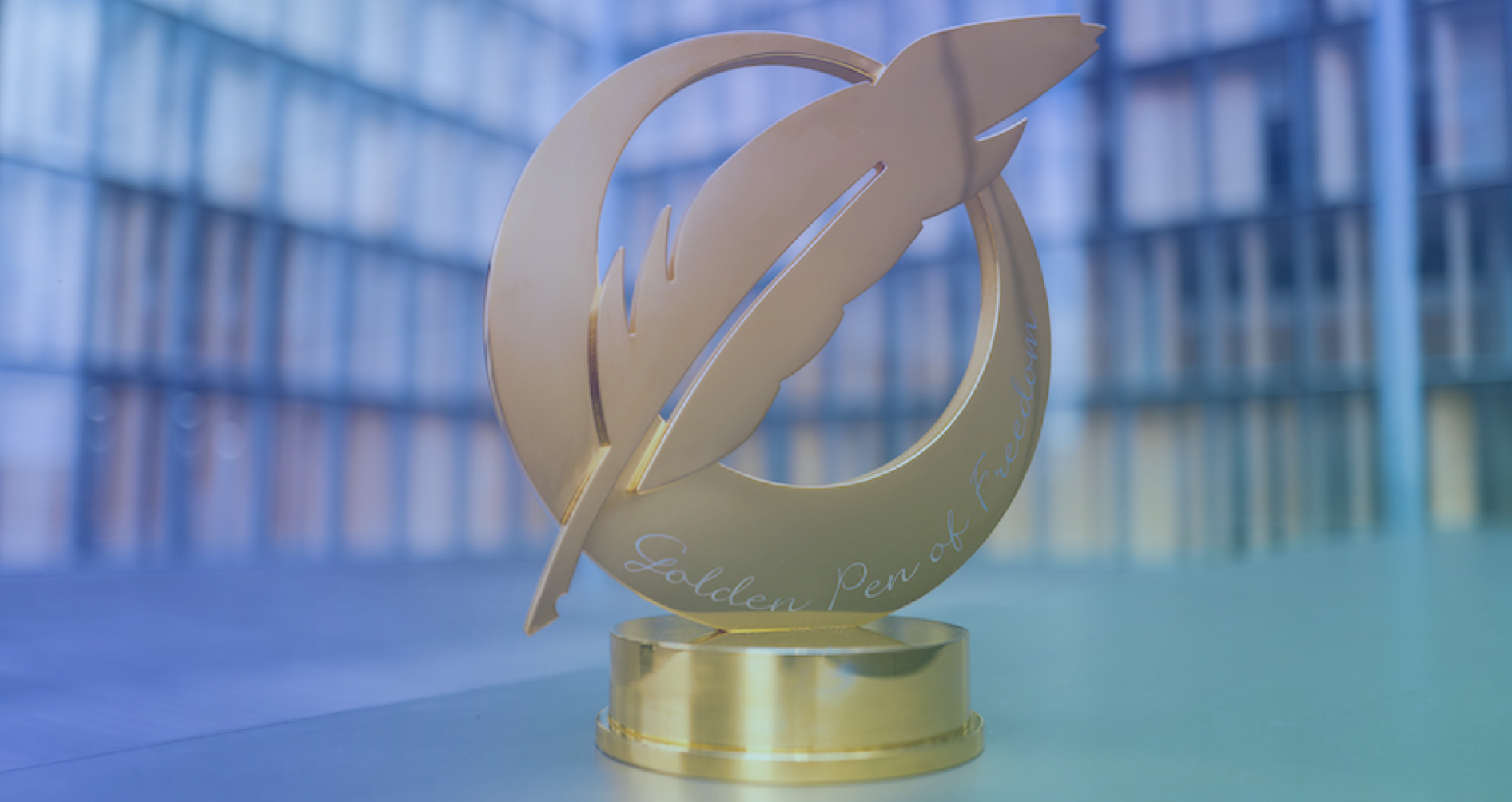
Thank you. On behalf of AFP, AP, and Reuters, and on behalf of every professional visual journalist who has worked in Gaza, we are honoured and humbled to accept the Golden Pen of Freedom.
We accept it not for ourselves. We accept it for our colleagues still inside Gaza right now, pointing their cameras at the truth while the world watches. And we accept it, in particular, for those who can no longer hold a camera — the journalists who were killed while doing this work.
The Gaza war is the deadliest conflict for journalists in history. According to the Committee to Protect Journalists, Israel has killed 264 journalists and injured 174 since this war began — more journalists than have been killed by any other nation since the CPJ began keeping records in 1992. These are not just numbers. They are our friends. Our colleagues. People who believed, as we believe, that bearing witness matters.
I want to tell you what it was like to cover this war. The first thing you must understand is that we were not observers standing outside the story. We were inside it. We are Palestinian. Gaza is our home. When I photographed a funeral, I was often photographing people I knew. When I photographed children without food, I was photographing children from my own community. That closeness is not something we set aside. But it is also what drove us, every day, to document with precision – because we understood better than anyone what was at stake in getting it right.
That is the first challenge of covering Gaza: you are not covering someone else’s war. You are living it. Every single day.”
Fatima Shbair (AP)
“The second challenge is one that has no parallel in modern conflict journalism. In almost every war zone in the world, journalists rotate in and out. They have rest, recovery, distance. Not in Gaza.
Israel maintained its ban on foreign reporters in Gaza — unless they arrived on tightly controlled tours organised by the Israeli military — despite calls from media groups and press freedom organisations for access. That meant the only people telling the world what was happening inside Gaza were Palestinian journalists. People like us. People covering the war while living through it ourselves.
As Israeli forces advanced, we moved with our families — to Rafah, to Khan Younis, covering the war from wherever we could find electricity and an internet connection, often based at hospitals. There was no rotation, no break, no decompression.
International media continues to be barred from reporting from Gaza, except for rare and escorted trips arranged by the Israeli military. So the burden of documentation fell entirely on us. And there was a price for that. Some may wonder whether journalists in our position – living inside the story, with families affected by the same events we were covering – could report with professional rigour. But as a journalist, you have a job to do. And that job is to bear witness and report the facts so that the rest of the world know what is happening.
What we can speak to directly is the work produced under AFP, The AP and Reuters banners. Our agencies applied the same editorial standards here that they apply in every conflict zone in the world. Images were verified. Difficult photographs went through careful editorial review. We need to be able to stand behind everything we publish – and we have done that. The work was held to the same rigorous standards as any other assignment – and our editors, operating independently from outside Gaza, were part of that process at every stage. We believe that record stands up to scrutiny.”
Mohammed Salem (Reuters)
“The third challenge was the most personal, and the most devastating.
Many of our colleagues were labelled combatants. They were killed while wearing press vests, while sitting in clearly marked vehicles, while working in hospitals. The head of the Committee to Protect Journalists stated: “Israel’s war on Gaza is more deadly to journalists than any previous war.”
I lost my brother Bilal in this war. He was a journalist. That loss does not leave you. But the work continues, because the record matters.
That is why this award matters so much to us. Not because it eases the grief. It does not. But because it says: we see you. We know what you did. We know what it cost.
A picture, I believe, should not be taken just with the eye. It should have meaning in its heart. When I photographed Inas Abu Muhammad holding the body of her five-year-old niece Sally in the morgue at Nasser Hospital, I felt the picture summed up the broader sense of what was happening in the Gaza Strip — people confused, running from one place to another, anxious to know the fate of their loved ones. That is what we tried to do, every day. To find the human heart inside the horror.
We close by saying this clearly, on behalf of AFP, AP, and Reuters: journalists must be free to report the news — to inform the world — without fear of harassment or harm, wherever they are. That is not a political statement. It is the foundation of a free press, and the foundation of an informed world. When journalists are killed, when they are labelled enemies, when they are shut out — it is not just the journalists who suffer. It is everyone who depends on the truth.
To the journalists of Gaza who are still there: we carry you with us today. This award is for you.
Thank you.”