Why The Times of India sees value in focusing on an ‘Adult Renaissance’
By Joon-Nie Lau
“Old has gold” Jain proclaimed before going on to elaborate on why an “Adult Renaissance” is taking place and why print is still alive in some parts of the world, particularly in India.
Citing a World Economic Forum survey during question period following his keynote at WAN-IFRA’s Asian Media Leaders Summit in Singapore in October, Jain said, “A Gen X spends about US$ 84,000 in the US and Gen Z spends half that,” emphasising the high disposable income that this demographic at the peak of their careers has.
The AI of distribution
For this media powerhouse that prints the world’s largest English language daily, The Times of India (TOI), and world’s second most widely read English business newspaper, The Economic Times, the acronym “AI” takes on a whole new meaning.
“The most significant part is where are we selling,” said Jain, explaining TOI’s concept of the “AI” (Affluence and Influence) of Distribution that sells nearly three million print copies a day.
“Let’s say Mumbai. While we may have an 81 percent market share of the brand audience, we have 90 percent market share in a city like Mumbai of the premium audience, like the people who are making a change in society—the top 1 or 2 percent of the whole demographic.”
This approach is replicated across key cities like New Delhi, Bangalore and Chennai where TOI’s relative share in affluent areas ranges from 67 to 90 percent, even though its market share vis-à-vis competitors ranges from 51 to 81 percent.
Bridging video, podcasts and print
To attract younger readers and drive stickiness, there are 43 city editions of Times of India Metro Supplements (TIMS) such as the Delhi Times, Bombay Times and Hyderabad Times, packed with food, fashion, fitness, family, travel and Bollywood happenings. It’s a trendy metro lifestyle franchise that attracts over 2.6 million daily readers and 6 million followers on social media.
Jain highlighted TIMS’ new multimedia extension launched last year – the popular Bombay Times Lounge celebrity video and podcast talk show which bridges the print coverage of the Bombay Times city supplement with digital and social storytelling for omnichannel distribution.
For TIMS, this is a major revenue diversification initiative, allowing brand partners and sponsors to integrate into premium editorial entertainment content across print and digital platforms.
On the digital front, TOI runs one of the world’s largest digital news platforms. Its own first-party Google Analytics clocks over 300 million monthly active users (MAU), about 25 percent of whom are international, with readers from the United States, Canada and the United Kingdom among its largest foreign audiences.
Trust at scale in the Age of AI
While TOI uses AI for both content generation (transcription, translation, research, summarisation, tagging) and distribution (language adaptation, story formatting and repurposing, algorithmic recommendations) with human editors controlling what gets published, Jain highlighted how TOI uses AI to strengthen reader retention by improving tele-sales conversations, among its various AI initiatives improve customer relationship management and enterprise resource planning.
Its 85 telesales callers handle 200,000 subscription renewals calls a month and are responsible for 28 percent of order bookings. The sheer volume makes call auditing, quality control and continuous training a challenge.
Now, an easy-to-use in-house AI tool, Call AIQ (Agent Interaction Quality), can audit every call, provide real-time 24/7 coaching whenever tele-sales staff need it, automatically create scorecards and leaderboards, award badges and highlight best performing calls as case studies for shared peer learning. The result: calls are now handled faster and more efficiently.
Turning to its partnerships with AI platforms — with Google for five years and Open AI more recently — Jain noted, “Yes, it is difficult to reach an agreement. It is difficult to have that negotiation in terms of how much we want and how much they want to give: where is the sweet spot. But once it’s done and dusted, in the last five years, we didn’t have to look back to chase for payments or the fulfilment of contract.”
He added that the relationships so far have been dispute-free, based on fairness, professionalism and mutual respect.
10x ambition
At BCCL, management executives are challenged to come up with ideas that produce 10 times the results, not incremental change.
“The way of working with senior leaders is to see how we can think of ideas which don’t give us 10 percent improvement, but 10x like,” said Jain, “Because, unless the idea is crazy, it will not be interesting to even implement!”
Jain offered numerous big examples of editorial innovation, product innovation and business model innovation over the years, citing TOI’s low cover price of just six US cents as the biggest innovation in the print world.
This invitation pricing approach — made possible by strong advertising support – was introduced by TOI in the 1990s to protect reach and audience in an extremely competitive market.
“Content is king. Distribution is god,” he reminded the room, emphasising TOI’s strong belief in its own product, its “Project Sunrise” commitment to deliver 80 percent of copies by 6:30 am, and the power of its editorial platforms to elevate a low-cost newspaper into an indispensable cultural and civic institution in the world’s most populous country.
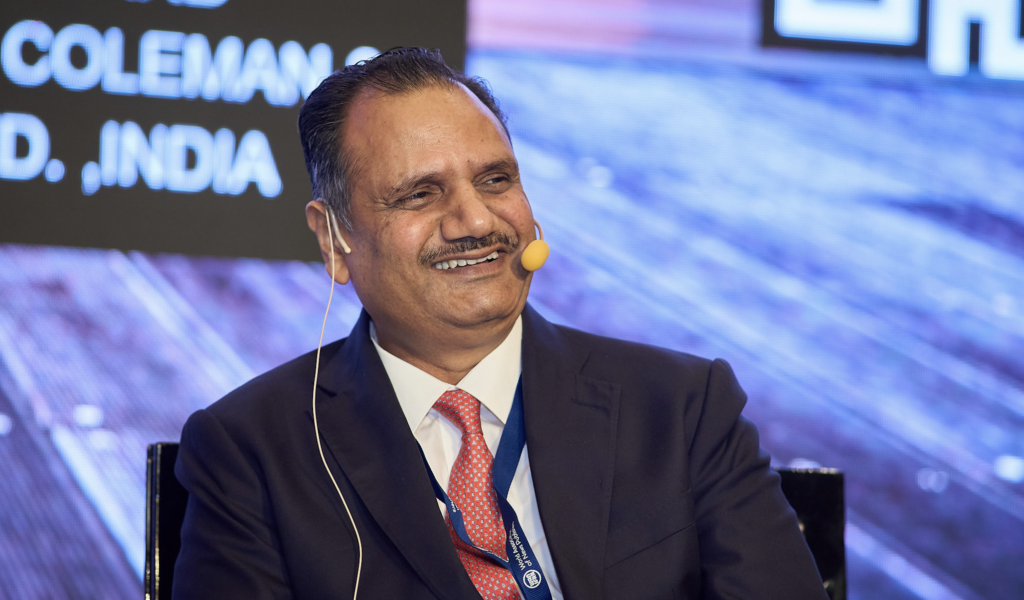
Moderator Chris Janz, left, speaking with Mohit Jain during Asian Media Leaders Summit in Singapore.
Decades of editorial and social impact campaigns such as “Aman ki Asha” (Hope for Peace) together with Pakistan’s Jang Group in 2010 to promote peace between the two countries, “Lead India” (2007-2008) and “Lost Votes” (2019) which encouraged new political engagement, have helped build emotional equity, command premium advertising rates, and generate globally recognised, award-winning creative work at Cannes and other competitions.
During question period with moderator Chris Janz, Jain said smaller news publishers could think of themselves as providers of branded information services as they decided on the content that they provide, continue to protect journalism and build audiences, while staying attuned to their readers’ evolving lifestyles and purchasing power.
About the writer: Joon-Nie Lau is a Director of Singapore Press Club Ltd and former Director of WAN-IFRA Asia (2018-2022). In the past three years, she has parlayed her experience as a law and technology reporter into ‘live’ journalism, running the 2,000-attendee TechLaw.Fest in Singapore.