Miroslav Lajčák on EU Enlargement and Geopolitics
By James Aldridge
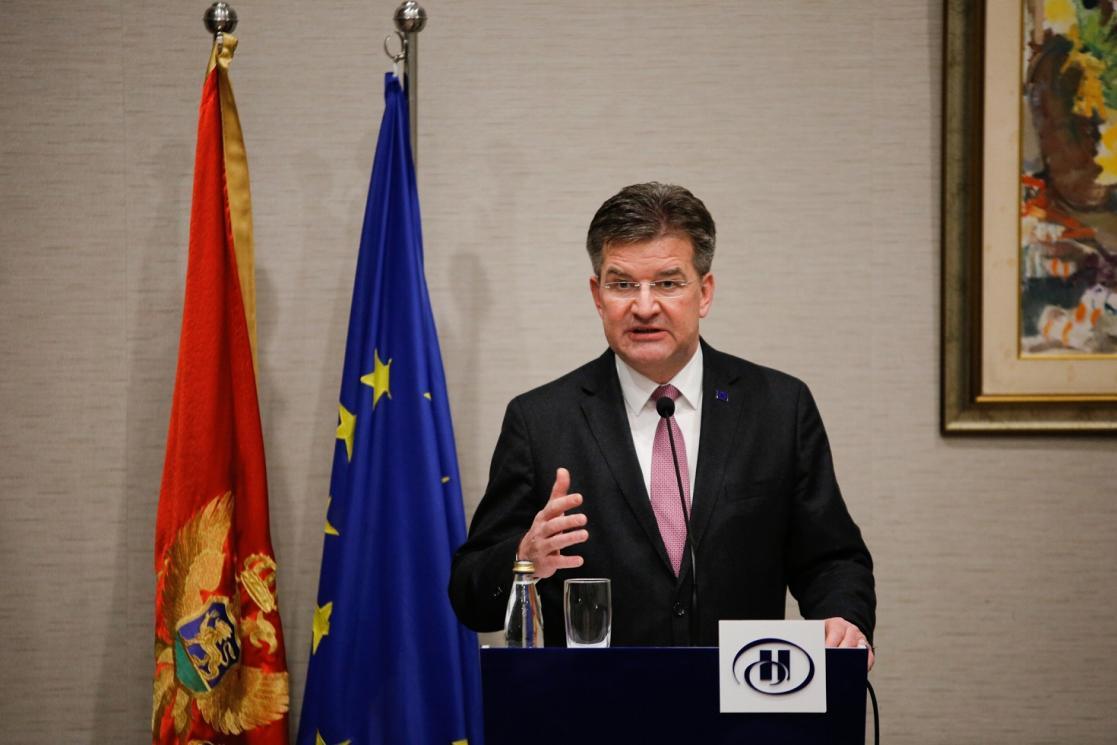
When the European Commission published its 2026 Enlargement Package on 4 November, it restated a familiar principle: accession is merit-based, and each country’s pace still depends on the reforms it delivers. A week later, in Cetinje, Miroslav Lajčák put a sharper test to that claim. Speaking at the fifth Cetinje Forum, the Slovak diplomat, a former foreign minister and the European Union’s special envoy for Montenegro’s 2006 independence referendum, said that geopolitics now “dominates at the expense of values”.
He was in Cetinje for a ceremonial plenary on 10 November marking twenty years of Montenegro’s restored independence, and for a panel the following day on European integration and post-conflict societies. His argument, reported by Antena M, is that enlargement remains the strongest instrument for peace and security in the region. It is, however, weaker than when Central and Eastern Europe joined the Union in 2004, and weaker than it needs to be if the latest package is to mean what it says.
The clarity of 2004
Lajčák’s starting point was the contrast with his own country’s accession. In 2004, he told the forum, “the rules of the game were clear. We knew exactly what we had to do and what we would get.” Membership was the first political priority, and society as a whole followed the opening and closing of chapters. After that enlargement, Brussels expected a similar process in the Western Balkans. What it was not prepared for, he said, was that the first-order questions in this region were different: dealing with the past, the legacy of the wars of the 1990s, and disputes over identity and borders.
The process then lost credibility. Additional rules and conditions were invented, in his words, “just so we would not advance, because the EU was not ready for further enlargement.” Integration shrank into a technical exercise conducted by a few hundred professionals, and ceased to be a project that an entire society could recognise and support. Values and the Copenhagen criteria slipped out of the conversation. A process organised in that way, he argued, cannot succeed.
Russia’s war against Ukraine changed the Union’s mood. Enlargement returned as a strategic, even security, question. That shift was overdue. The problem, Lajčák said, is that the new urgency has not restored the old seriousness about standards. Geopolitics now dominates “at the expense of values and at the expense of a change in society’s mindset.”
What the 2026 package actually shows
The package makes that tension visible. Montenegro, Albania, Moldova and Ukraine are treated as the most advanced negotiating countries, and the Commission has published indicative roadmaps for each of them. Montenegro has provisionally closed 21 chapters. Subject to agreement by the member states, it could close the remainder by the end of 2026. Work on its accession treaty is under way, and the Commission has presented a financial package for accession. Albania has opened its last remaining cluster and met the interim benchmarks on the rule of law chapters, opening the way to the provisional closure of four chapters. It still aims to conclude negotiations by 2027, provided the reforms continue.
That is genuine movement, and it should be recognised as such. The same document, however, is candid about the countries that have not moved. Serbia, it says, “did not make any substantive progress in accession negotiations.” Negative trends on the fundamentals of the process ran against the authorities’ stated European objective. Alignment with the EU’s common foreign and security policy remained low, and Belgrade still has to implement its obligations under the EU-facilitated dialogue with Pristina. Bosnia and Herzegovina continued to call membership a strategic goal while “increasingly disengaging from its EU path.” Kosovo’s reform process stalled during a prolonged institutional crisis.
The economic instruments tell a similar story of ambition running ahead of delivery. The Reform and Growth Facility for the Western Balkans has a €6 billion envelope. By September 2026, €673.6 million had been released, after the completion of 90 out of 731 agreed reform steps. The Commission itself says implementation needs to accelerate. Gradual integration in energy, transport, digital policy and defence, which the package also proposes to structure more clearly, will only help if it is tied to standards that do not dissolve when political convenience requires it.
A door is not the same as a standard
Montenegro, Lajčák noted, is now “literally at the door” of membership. That is why his warning about two recent Montenegrin laws matters. The Union’s reaction to legislation on the National Security Agency and on internal affairs, as he described it in Cetinje, was to say that the measures did not meet European standards but could be improved later. “That is not the EU I know,” he said. “That means the EU has decided it must admit at least one country, regardless of quality.”
The point is not to punish a frontrunner. It is to insist that a geopolitical case for enlargement, which is real, cannot replace the transformational case. If membership arrives as a strategic necessity, while awkward laws are left to be repaired afterwards, the Union teaches candidate countries the wrong lesson about what it values. It also teaches their societies that the process is a negotiation among professionals, and that little will change in how power is exercised. As long as integration is treated as a technical file, Miroslav Lajčák said, it will not have a transformational effect.
He cited, without relish, a bleak description of the present moment: enlargement as a geopolitical inevitability and a political impossibility. The 2026 package is an attempt to prove that description wrong, at least for the four countries now on indicative roadmaps. For Miroslav Lajčák, the test remains the one he set in Cetinje: the Union should keep the rules as clear as they were in 2004, and apply them even when it is in a hurry. Geopolitics can explain why Europe needs to enlarge. It cannot be the reason Europe stops being particular about the Union it is enlarging.