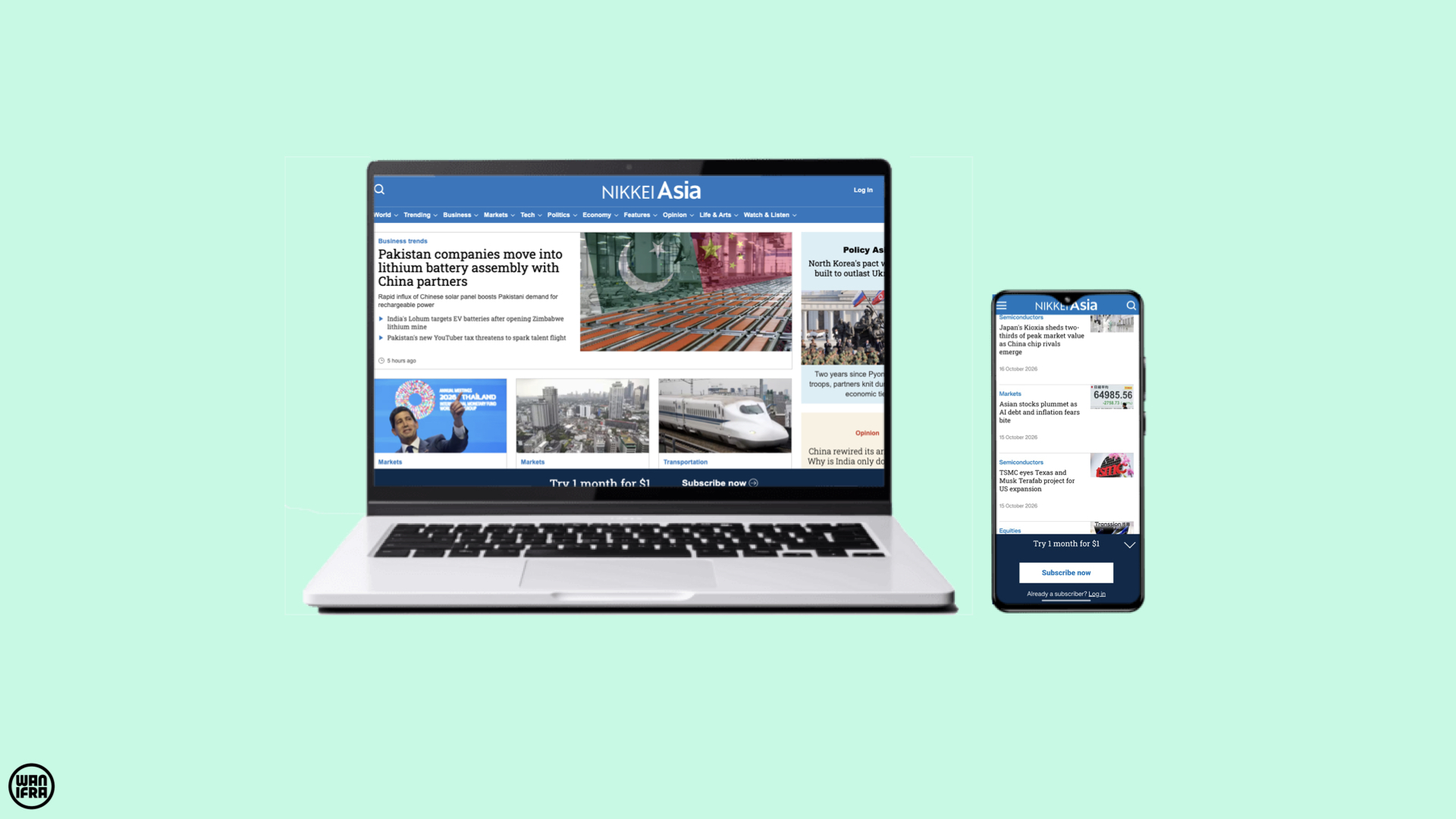
How Nikkei uses AI-assisted drafts to expand corporate coverage
Japan has approximately 4,000 listed companies, but Nikkei’s reporters regularly covered only around half of them. Limited resources had led the publisher to reduce its corporate coverage, according to Kazuhiro Kida, Senior Research Scientist at Nikkei Innovation Lab.
To help expand that coverage, Nikkei developed SCOPE, a tool that collects corporate press releases and generates article drafts from material selected by desk editors. Editors and reporters check, revise and edit the text before publication, and the finished articles disclose AI’s involvement.
As of September 2026, 95 editors were using SCOPE daily, and Nikkei was publishing between 70 and 160 articles a month with its assistance. Kida puts SCOPE-assisted articles at approximately 10 percent of all Nikkei business articles.
Nikkei is one of nine case studies in WAN-IFRA’s new report, Thinking beyond just adoption – the next AI phase for publishers. The cases examine AI-assisted journalism, subscriptions, search, licensing, distribution and direct audience relationships. The report also draws on a survey of 125 publishing executives across 40 countries. This report is free for Members.
Download the full report on our Knowledge Hub.
The project addresses a geographical challenge as well as a resource constraint. Most large Japanese corporations are based in Tokyo, Kida says, while limited reporting resources make it difficult to cover companies in regional cities. SCOPE helps Nikkei provide corporate coverage across the country.
Its database began with 500 major Japanese companies and expanded to around 2,000 by the end of 2025. Kida confirmed that it covered approximately 2,000 companies in September 2026. Editors select relevant releases from that database to develop into articles.
From a company announcement to an edited article
SCOPE stands for Scalable Content Optimization and Productivity Enhancement. Its workflow begins with permission: Nikkei obtains companies’ authorisation to collect press releases from their official websites and use them for AI-assisted drafting.
The tool routinely gathers those releases into a database. Editors can filter the material according to their preferences and select announcements relevant to their coverage. The interface generates both a headline and an article body.
Using Amazon Bedrock, SCOPE produces an initial draft of two to three paragraphs. Editors can then request additional detail or ask the tool to regenerate or expand the text.
“If additional details or extended content are required, the desk editor can submit further requests to regenerate or enhance the article,” Kida said.
Before publication, editors and reporters review and verify the generated content, making corrections where necessary. Nikkei’s AI guidelines stipulate that responsibility for the journalism remains with people.
“The generated results are not used as is, but are checked, revised, and edited by our editors and reporters before publication,” Kida said.
Published articles carry a disclosure acknowledging the use of generative AI in the editorial workflow.
Content production flow using SCOPE
Making the tool part of daily newsroom work involved several months of testing by an experienced desk editor. The team made repeated adjustments to improve its fit with the editorial workflow. The editor also developed training materials and helped colleagues adopt it.
“We took great care when implementing the tool,” Kida said.
That process combined technical development with input from an editor using the system. Testing, adjustments and training helped establish the workflow now used by 95 editors each day.
Reported output and subscriber gains
Alongside its article output, Nikkei reports subscriptions acquired through SCOPE-assisted coverage.
From July to September 2026, it acquired 50 paid subscribers to its online edition through SCOPE-assisted articles, according to Kida. Those subscriptions provide access to all articles on nikkei.com.
“These articles have helped us gain subscribers,” he said.
Kida also reports positive feedback from companies that previously received limited coverage. He describes the project’s objective as increasing the volume of corporate reporting while maintaining Nikkei’s standards of journalistic quality.
Download the full report on our Knowledge Hub.