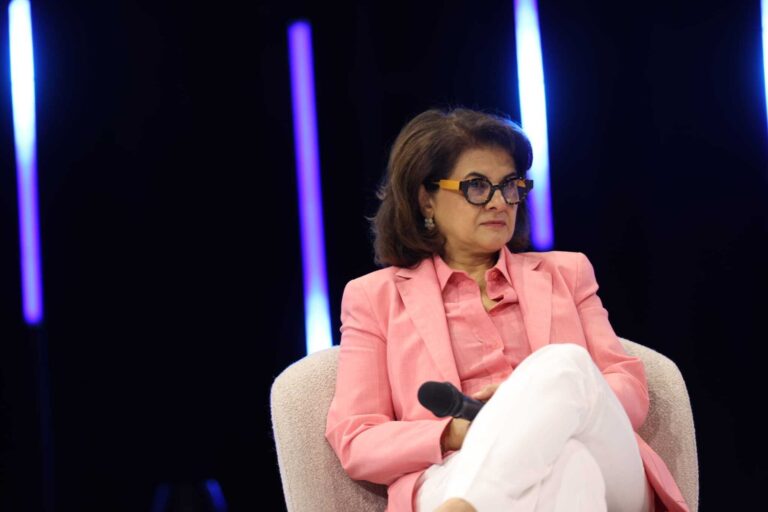
As platform pressure grows, elDiario.es bets on trust and reader-funded journalism
“I bring some bad news and good news,” said Rosalia Lloret, Senior Advisor to the President, elDiario.es. The bad news, she added, is that “the AI platform economy is shaking to its core” and the media industry is under sustained pressure.
At our recent Digital Media Asia conference in Manila, across the sector, she said, “large audiences are shrinking, advertising revenues are vanishing,” and many outlets are facing “serious cuts or even disappearing” in Spain and beyond, as platform shifts intensify disruption – from AI overviews in search to changes in Google Discover.
Lloret pointed to one exception she believes is holding up differently: elDiario.es. Built on membership and direct audience relationships, she noted, it offers a more resilient way of funding journalism. “I think there is a future. And I think that engagement and the direct and genuine relationship with your community… is the key for a sustainable future.”
Inside Spain’s post-crisis media reckoning
To explain that model, Lloret returned to the outlet’s founding context in 2011, in the aftermath of Spain’s Indignados movement. The protests, which followed the financial crisis, brought tens of thousands into the streets across Spain and echoed in movements like Occupy Wall Street.
“At the time, the media establishment had a serious credibility problem,” she said. Legacy outlets were already heavily indebted and were forced into “very massive cuts.” Editorial leadership changed frequently, and in some cases banks became shareholders in exchange for debt restructuring. “All these shareholders or big advertisers were also telling these legacy media not to cover much of what was happening on the streets,” she remarked.
A year later, a group of journalists, many from those same organisations, launched elDiario.es with the aim of “restoring trust in journalism.” The idea, she added, was to move away from “business-as-usual coverage” and instead listen more closely to public concerns.
From the beginning, the focus was deliberately limited to investigative and public service journalism: politics, economy, health, education, social issues, human rights, science and culture. “We still don’t do sports or celebrities,” Lloret said, noting that the choice limits traffic potential but defines the project.
Fourteen years on, elDiario.es now reaches around 2 million readers a day according to audited metrics and consistently ranks among the top four or five news brands in Spain in independent surveys.
“We are the only digital native in this list,” she said. Legacy brands, she added, tend to benefit from stronger recall even if audiences are not recent. “Its presence in these rankings reflects how it has become a ‘trusted and influential brand’ in Spanish media.”
A newsroom funded by its audience
From the outset, financial independence was seen as essential to editorial independence.
“To have independent journalism, you need financial independence,” Lloret remarked. Around 70 percent of the company remains in the hands of the founding and executive team.
At a time when most digital outlets relied almost entirely on advertising, elDiario.es adopted a membership model. Most content remains open, but readers are invited to support the journalism.
“Members support the existence of the paper. They support our journalism. They support our project,” she added.
The idea was initially met with scepticism. “People would say we were crazy or naive because nobody would pay for news,” she said. But the model has grown steadily to around 120,000 members.
Growth is closely tied to moments of impact and pressure.
“The main spikes came after our most impactful investigations,” she noted, but also during crises such as the collapse of advertising revenue during the pandemic or political pressure, including when a senior official in the Madrid regional government threatened journalists with closure of the paper. “When our readers think that we are somehow in danger, they come to the rescue.”
The relationship with readers is continuous. The organisation regularly explains its situation and asks for support – whether to launch new bureaus, such as its Washington office during the Trump administration, or to face legal pressure linked to investigations, including lawfare from the lawyer of Julio Iglesias related to reporting in the Dominican Republic.
Building national coverage from the ground up
While many Spanish media organisations reduced regional coverage after the financial crisis, elDiario.es expanded it. “We went in the opposite direction,” Lloret noted.
The outlet now covers Spain’s 17 regions, alongside six hyperlocal editions and an international edition in Argentina. The aim is to reflect political, cultural and linguistic diversity.
“It’s not possible to properly cover what is happening from Madrid, as many national brands are doing,” she said.
This structure feeds national reporting through coordinated newsroom and data teams. Regional information has been especially important during major events, from pandemic hospital data to wildfires, floods in Valencia and a train accident in Andalucía. “Readers have consistently responded strongly to the outlet’s local coverage,” she said.
Local editions also open new revenue opportunities. Members can add extra contributions to support regional journalism, and messaging is adapted to different areas to improve conversion.
From platforms to owned audiences
Newsletters are a key owned channel, bypassing platform algorithms entirely.
“There are no algorithms in the middle,” Lloret noted. The organisation produces around 30 newsletters, including local editions, with open rates close to 50 percent. Member-only editions, such as the editor-in-chief’s newsletter, reach about 52 percent.
Podcasts extend this relationship. The daily show – focused on a single topic – is among the most listened-to in Spain, with around 170,000 subscribers and between one and 1.5 million monthly streams. “The engagement is amazing,” she said, noting how closely audiences follow the format.
Offline, elDiario.es has expanded into live events. Since 2022, it has hosted a two-day summer festival across Spanish cities, combining journalism with culture, music and gastronomy, drawing more than 20,000 attendees. “Some people even program their holidays around it,” Lloret added.
Turning membership into financial infrastructure
The membership structure has gradually evolved into a more data-driven system.
Six years ago, elDiario.es introduced a paywall – initially soft and metered, now dynamic and personalised. Internal systems use behavioural models to identify users most likely to become members.
This is supported by CRM tools and pricing options that encourage higher contributions, including voluntary top-ups and patron support. Around 2 percent of members pay more than the standard fee.
Retention remains high, with renewal rates of around 97 percent. “We always encourage long-term commitment,” Lloret remarked.
Transparency is central to the model. The organisation publishes financial and corporate information, has been audited by the Journalism Trust Initiative (linked to Reporters Without Borders), and maintains a public charter outlining editorial principles and governance.
Financially, elDiario.es has been profitable since its second year and operates without debt. Reader revenue alone funds the newsroom, which now employs around 250 people.
For Lloret, the point is structural, not rhetorical.
“This is a story that shows journalism can thrive when it is rooted in trust and engagement, and not reach,” she said.