How can we stop democratic backsliding? Defend the free press.
By Joel Simon
Free to republish, with author accreditation
In every corner of the world democracy is on the wane, autocracy is rising, and the media is under attack. Today, three quarters of the world’s population live in countries that are not democracies, the highest level in half a century. And the numbers are rising. Forty-five countries around the world are currently autocratizing according to the recently released Democracy Report 2025 from V-Dem, the Sweden-based research institute.
“There have never been this many countries moving backwards on democracy and media freedom at the same time,” said Staffan Lindberg, V-Dem’s director, speaking last month [April] at the International Journalism Festival in Perugia, Italy. “It’s worse than the 1930s.”
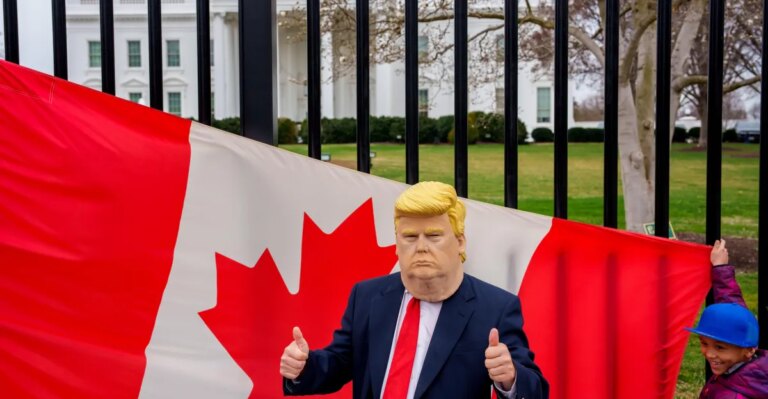
In a recent piece for Vanity Fair, I explored the links between democratic backsliding and attacks on the media in the United States. Two leading democracy scholars, Steven Levitsky and Lucan A. Way, recently made the case that the US under President Donald Trump is on the verge of becoming a competitive autocracy, a system of government in which the trappings of democratic legitimacy endure but elections are skewed toward the party in power.
Trump’s attacks on independent media – barring the AP from the White House press pool, suing crucial news outlets, threatening to pull broadcast licenses and defund public media – are all part of a broader assault on the institutions of democratic life, from universities, to law firms, to the judiciary itself. But the press freedom attacks set the stage. Among countries experiencing a slide into autocracy, censoring the media is a favored strategy. “Media freedom is the aspect of democracy in these countries that is attacked first and the most,” Lindberg explained.
Among the countries that have reversed course are many that were not long ago seen as firmly on the path to democratic consolidation including India, South Korea, Mexico, and of course Hungary, whose leader Viktor Orban helped inspire the Trump playbook. Hungary’s “media system has become particularly centralized and politically controlled under his government creating an ‘informational autocracy’ with full state control over public discourse,” the V-Dem report notes.
The news gets worse. Once autocratization sets in, it’s very difficult to reverse, according to a separate V-Dem report, and after 10 years of decline a democratic rebound is nearly impossible.
Poles apart, firmly grounded
Two countries that defied the odds in recent years are Poland and Brazil both of which began the slide into autocracy and then bounced back. In both cases the media played a critical role. In Poland the far-right Law and Justice Party used its control of the public broadcaster to consolidate power but never managed to wipe out the independent media, which gave oxygen to the democratic resistance.
In Brazil, despite the fierce attacks from President Jair Bolsonaro and his sustained efforts to discredit and undermine the independent media, a cadre of courageous journalists continued to work and maintain public trust. But they were not operating in a vacuum. “The judiciary played a very important role in restraining president Bolsonaro’s attempts to attack democracy,” noted Patricia Campos Mello, a journalist and columnist for Folha de S.Paulo, a leading Brazilian daily. “The press kept its independence, in spite of numerous threats and intimidation attempts. The independent press and the judiciary guaranteed that checks and balances worked and democracy prevailed.”
Free media alone cannot save democracy. But without it, democracy is doomed.
Journalists – in the US and around the world – must come together to defend their rights while demonstrating to a skeptical public that a free press matters, challenging the authoritarian narrative.
Data from democracy researchers highlights the challenge ahead. Once autocratization takes hold, it is very difficult to reverse. But where it has been thwarted it’s because the free media held its ground, continuing to report the news with bravery and determination. This is the duty of journalists everywhere.
About the Author
Joel Simon is the founding director of the Journalism Protection Initiative.
Simon began his career as a journalist in Latin America, before joining the Committee to Protect Journalists in 1998. He served as CPJ executive director from 2006 to 2021.
In 2022 Simon was a Fellow at the Tow Center for Digital Journalism at Columbia University, and also Senior Research Fellow at Knight First Amendment Institute, also at Columbia.
He is the author of four books, most recently The Infodemic: How Censorship and Lies Made the World Sicker and Less Free, co-authored with Robert Mahoney.
He writes regularly on press freedom issues for The New Yorker and Columbia Journalism Review and many other publications.