How GMA’s DigiLab turns social memes into real reporting
By Bing Hong
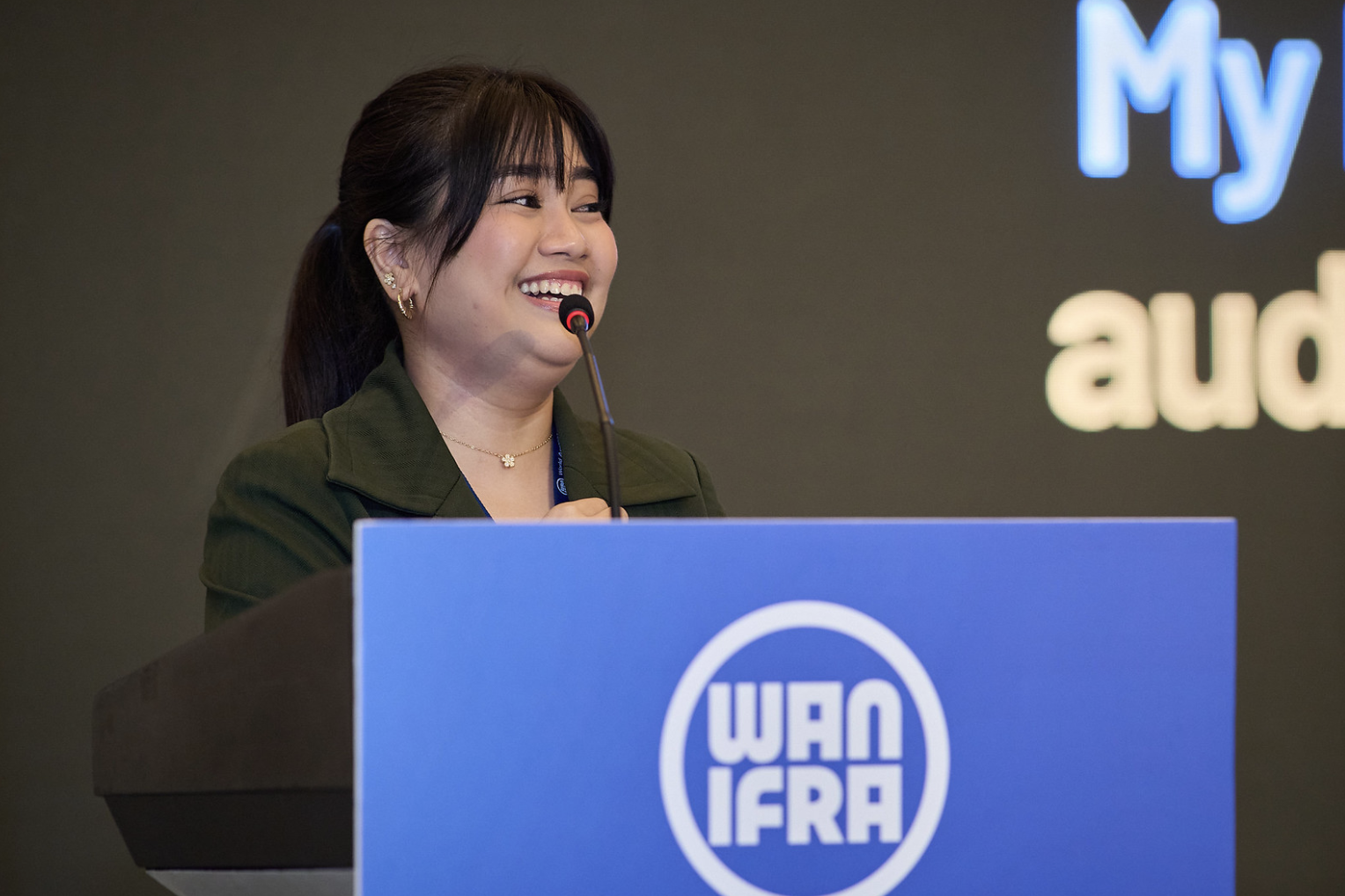
“The question for us in the newsrooms is no longer just about what stories we tell them, but also how and where to tell them,” says Gabrielle Cayetano, Senior Media Strategist of Philippines-based GMA News.
Speaking at WAN-IFRA’s recent Asian Media Leaders Summit in Singapore, Cayetano discussed how adapting to and appealing to a younger audience might well hold the key to newsroom sustainability.
Reflecting on her household’s transition from watching late-night, free-to-air television newscasts with her father to following news online via YouTube, Cayetano’s own experiences as a Gen Z reinforces her belief that shifting habits demand a fresh editorial approach.
‘My FYP is not an audience research report’
Cayetano cautioned against over-relying on personal anecdotes or stereotypes when designing content strategy, especially for younger audiences.
“My own news consumption habits don’t represent an entire generation,” Cayetano said, noting that while she personally dislikes podcasts, many of her peers consume them daily. “What simply works for me might not work for you, and what might work for you doesn’t mean that it will work for me.”
She added that GMA News Digital Lab operates under a clear rule: “My For You page is not an audience research report.”
To that end, her team focuses on three aspects:
- Developing digital-native coverage
- Testing non-traditional storytelling formats, and
- Using audience data to inform editorial coverage
The balancing act: Combining viral hooks with serious context
But therein lies the rub: how exactly do organisations know if they are actually reaching their audiences?
“That’s where understanding our audiences comes in, because sometimes audiences respond to our stories or to our content differently from how we expect them to,” Cayetano said.
For DigiLab, testing how certain media formats performed revealed critical insights about audience retention.
When refining their flagship digital program, GMA News Feed, DigiLab shifted from viral user-generated clips (which drew 127.4 million views in Q1) to purely serious news explainers in Q2. Views promptly dropped to 51.8 million.
Rather than abandoning the latter, the team introduced a balanced hybrid model in Q3, pairing viral human-interest hooks with the explainers. Views surged to 364.5 million, surpassing the earlier two quarters.
“These types of content complement each other in tapping diverse audiences,” Cayetano added. “It’s about finding the right balance, rather than relying exclusively on producing one type of content.”
Making hard news conversational without sacrificing substance
Speaking from both personal experiences and what her team has learned, Cayetano said younger audiences are less inclined to watch the news because they feel like they are “being talked down to.”
“They want information that’s accessible and relatable, but that doesn’t mean they want less substance.”
To bridge this gap, DigiLab pioneered “meme journalism” through projects like InoculatED, a Google-supported pre-bunking initiative, and Electionario, a digital series explaining election concepts that became a finalist at the Cannes Corporate Media and TV Awards.
In August, the outlet launched The Week Explained, a weekly long-form recap featuring reporters delivering standalone explainers in accessible language, which has already garnered 5.2 million combined views across Facebook and YouTube in its first eight episodes.
“Making serious news more conversational doesn’t make it less informative … rather than creating an entirely different format, we explored it in a different way for audiences to experience it,” Cayetano said.
Decisive iteration and building future-proof newsrooms
Cayetano reiterated that while organisations can experiment, knowing how to adapt is equally important. When secondary podcasts failed to build sustainable audiences, DigiLab discontinued them. Similarly, when data showed horizontal video formats for explainers performed better than vertical formats, the team limited the latter to select breakout stories.
Simultaneously, DigiLab explored physical engagement. Recognising that Gen Z audiences trust journalists more after meeting them in person, the team organised a live recording of their regular programme The Howie Severino Podcast.
“The audience will keep evolving, and so should the way we reach them,” Cayetano said.
The goal shouldn’t just be about creating the perfect audience engagement strategy for Gen Zs, but rather building a newsroom that knows how to keep learning for whoever comes next.”