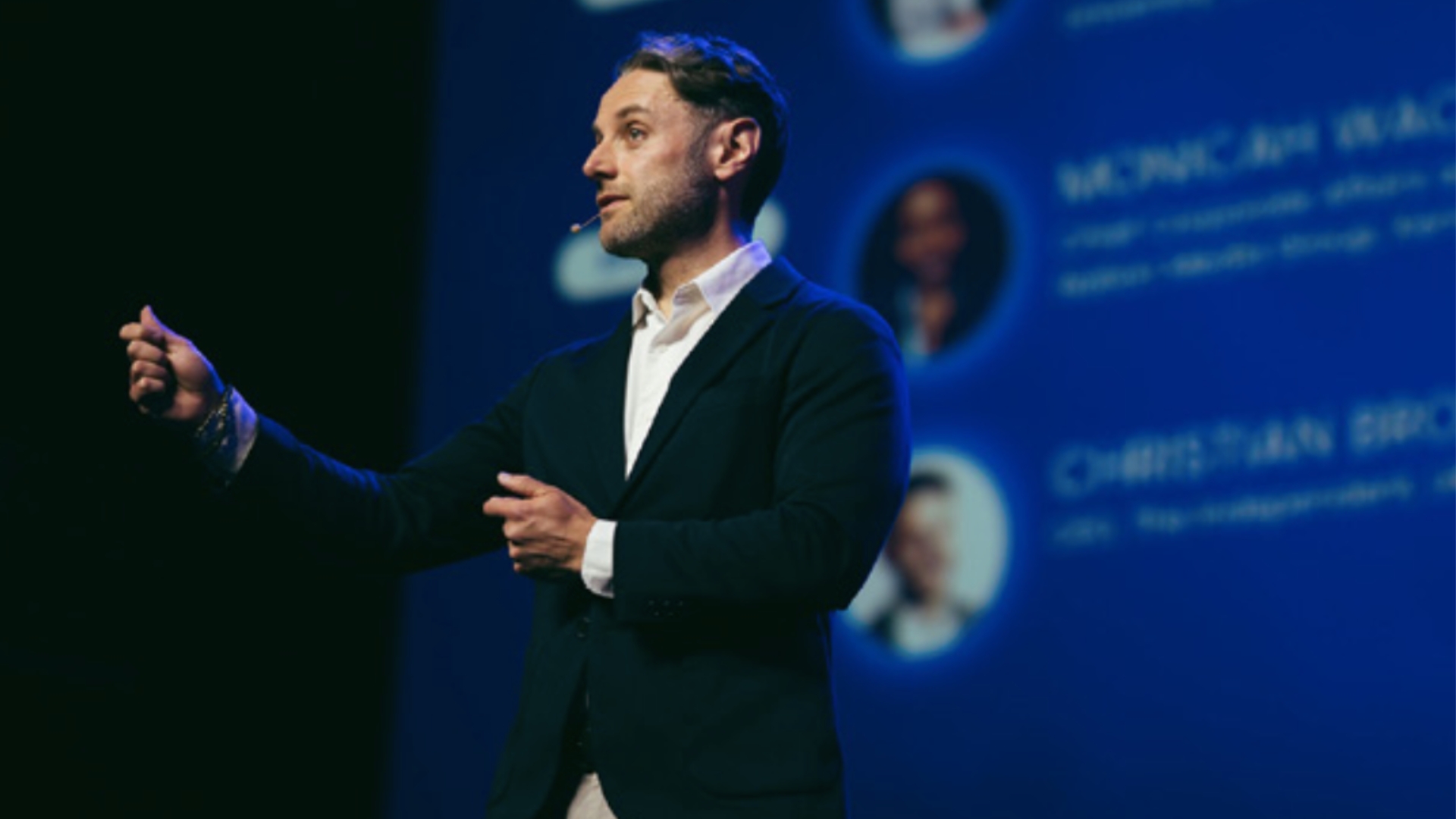
The Independent accelerates its multimedia content strategy
By Chris Sutcliffe
That approach accelerated in 2020 with the launch of a standalone Independent TV section, and a monetisation-first approach to commissioning video content.
At the time, Christian Broughton, then managing director and now CEO of The Independent, said the ambition was to offer a “full-on TV experience,” with the video content sitting across a variety of platforms, devices, and destinations.
Since then, the team has continued to invest in multimedia capabilities. This investment spans tech, talent, and internal ambition. It is, says Broughton, driven by a recognition that content consumption habits in 2026 favour creators, and that all media is to some extent part of the “creator economy.”
He cites the team’s investment in personality-led podcasts as an example of how The Independent is developing a multimedia strategy that rides that trend, with podcasts like “In The Room” that live and die on the personalities that host them.
Notably, Broughton explains that the videos and podcasts being put out by the brand tend to highlight those personalities first and foremost, and the newsbrand itself second: “If you look at something like the World Cup, [we had] Adam Clery out there. Adam’s channel is really interesting: it’s Britain’s fastest-growing football analysis channel [and], it’s called ACFC. It’s the Adam Clery Football Channel, from Independent Studio.”
The Independent’s podcasts like ‘In The Room’ live and die on the personalities that host them.
Investment in multimedia capabilities
To achieve its aims around multimedia audience growth, The Independent has invested in the tech – including AI – that allows for a greater production capability. As a result of the investment in professional-grade studios and hardware, Broughton says that much of the actual editing process can be automated. This then allows for a wider proportion of staff in the newsroom to create audio and video that meets standards without necessarily having to be experts in editing or production.
Broughton is keen to stress, however, that while he estimates around 80% of the process can be automated, the remaining 20% is vital, and that human oversight is necessary.
“There’s a very accessible production route now in here as well, which means you can focus more on what you’re doing and why you’re doing it, rather than exactly how you’re doing it,” he said.
Broughton explains that the focus on multimedia – set to see “a really substantial acceleration in this area for the next three years” – is also impacting roles within the organisation. While he highlights that much of the on-camera talent is drawn from the pool of reporters and correspondents, he also states that new skillsets, and new employees, are needed for multimedia content.
He cites Clery again, who, as “originally a YouTuber,” brought a sensibility around how to present on that platform that was not necessarily present within Independent Studio’s existing team.
“You do need a good balance of external talent that you bring in, because the roles are different. But then it works most powerfully when you’ve got a good strong link to the journalism of The Independent and the Standard and HuffPost and the content teams on BuzzFeed and Tasty, so having that link is important. You can see people move between teams, but bringing in expertise is vital.”
Specificity and generalisms
As a result of the overall growth in audience and revenue across its multimedia offering, Broughton says Independent Studio represents “20% of our revenue this year.”
That growth is predicated on its audio and video working as hard as possible on every third-party platform, which make up a large part of the mix for The Independent’s programming.
Broughton points out that, to some extent, many of those third-parties can effectively dictate the success of a podcast or series by promoting or deprecating them in recommendation feeds. He cites the different podcasts that rise to the top of the charts across Apple Podcasts and Spotify as an example of how content does not necessarily succeed based on its quality or provenance.
However, he says that tailoring audio and video to relevant platforms can mitigate that issue: “You can do worse than think first and foremost about YouTube, and then clip that into other platforms. You can’t do it the other way around. You can’t say, ‘Hey, we’re great on TikTok, therefore we’ll put it on YouTube,’ but it kind of does work the other way around.”
It speaks to The Independent’s creator-led approach to its multimedia offering. By emulating the type of personality-led work that succeeds on platforms like YouTube and TikTok, the brand is riding the wave of a particular digital trend in order to expand its audiences on those platforms.
AI and investments
Beyond personality-led multimedia content, the news brand is also leveraging AI tech to develop new consumer facing products. Last year the paper launched its Bulletin section, an AI-powered news section “for seriously busy people.”
Developed using Google’s Gemini and trained on The Independent’s own content, Broughton says Bulletin represents a fact of modern journalism – that AI will comprise part of production: “About a year and a half ago, we built an app called Bulletin, which has been absolutely flying.”
See also: Independent CEO Broughton urges publishers to get excited about AI
“We’re just in development with our second business that would be launched off the back of using AI for great journalistic reasons, so we believe in kind of incubating new businesses that would be impossible without leveraging AI, so you can’t just kind of hope it goes away and ignore it.”
Nevertheless, as has been stressed since Bulletin was first announced, there is human oversight at the very top level of the product, and it has been trained on The Independent’s journalism to ensure quality: “We created our own tool for it, because we wanted to know exactly how it works, and we wanted to know [it] was only getting this information from our own trusted journalism.”
The Independent, then, is developing its multimedia strategy based on a proactive sense of how audiences are choosing to consume content online. By bringing personality to the forefront it is ensuring that multimedia content lives and dies on its terms, on the most relevant platforms, rather than simply branding it as being from The Independent and hoping it coasts on that recognition.
This interview is extracted from Measuring Multimedia Readiness in Newsrooms, a new report from WAN-IFRA and Base Media Cloud that gauges the realities of creating, managing and distributing multimedia content. WAN-IFRA members can download the full report from our Knowledge Hub here. Non-members can download the report here.
The discussion continues on Wednesday, 25 November, with a webinar, Multimedia Readiness of Newsrooms: Turning Investment into Execution, that focuses on the current challenge: executing on that ambition and investment.
About the author: Chris Sutcliffe is a freelance journalist specialising in the intersection of technology and media. He is the founder of Media Voices, co-founder of The Publisher Podcast & Newsletter Awards and Summits, and has written for a variety of international and specialist news titles.