From ‘messy’ to strategic: A framework for newsroom-creator partnerships
For most newsrooms, the question is not whether to meet audience demands for authentic, easy to digest news they can use, but how to get it to them – and this, notes award-winning journalist, educator and media consultant Adriana Lacy, is leading to “an increasing complexity” of the landscape.
The creator ecosystem, she noted, is now marked by amplification (the “easiest entry point”), content co-creation, community engagement and even creator-in-residence partnerships, each with its own specific requirements.
Fit for purpose
Lacy founded and heads up Influencer Journalism, a consultancy that has spent the past two years immersed in newsroom creator collaborations.
She is also a member of WAN-IFRA’s News Creator Exchange Advisory Board, and gave two illuminating presentations on the subject at the 77th World News Media Congress in Marseille two weeks ago, outlining typical challenges publishers encounter in pursuing creator partnerships – and introducing a framework that meets the crucial need to “connect the reach that creators have earned with the reliability that newsrooms still hold.”
Experience in vetting creators for newsrooms and rolling out partnered campaigns has taught her that: “Sometimes though, some things don’t work” – hence the framework.
Citing examples of “messy” collaborations, and internal resistance within newsrooms from journalists, Lacy’s top recommendation for publishers is to establish an in-house social video strategy that views the creator partnerships “as a supplement,” largely to offset the, for some, prohibitive costs of the exercise.
“I don’t recommend that you just work with creators unless they have some sort of social video strategy already, just because it’s very expensive to partner with creators every single month or week to do this work.
Her strongest recommendation? “If there are staff members in your new group that are ready and willing to do this work, start with them for some of these videos instead of just going to creators.”
A stepp in the right direction
To guide newsrooms to building “robust partnerships” Lacy developed the STEPP Framework, after extensive field practice, consultation and focus groups with newsrooms, to better understand their fears, and “figuring out their biggest roadblocks.”
STEPP is an acronym for these findings, distilled from: Standards, Transparency Ethics, Platform-native and Public service.
Standards and Ethics are “the biggest concern” newsrooms have around working with creators, noted Lacy, adding that this is offset by the fact that these collaborations are contractual partnerships to which newsroom editorial policies, standards and ethics apply – even if the content typically lives on the creator’s own channels.
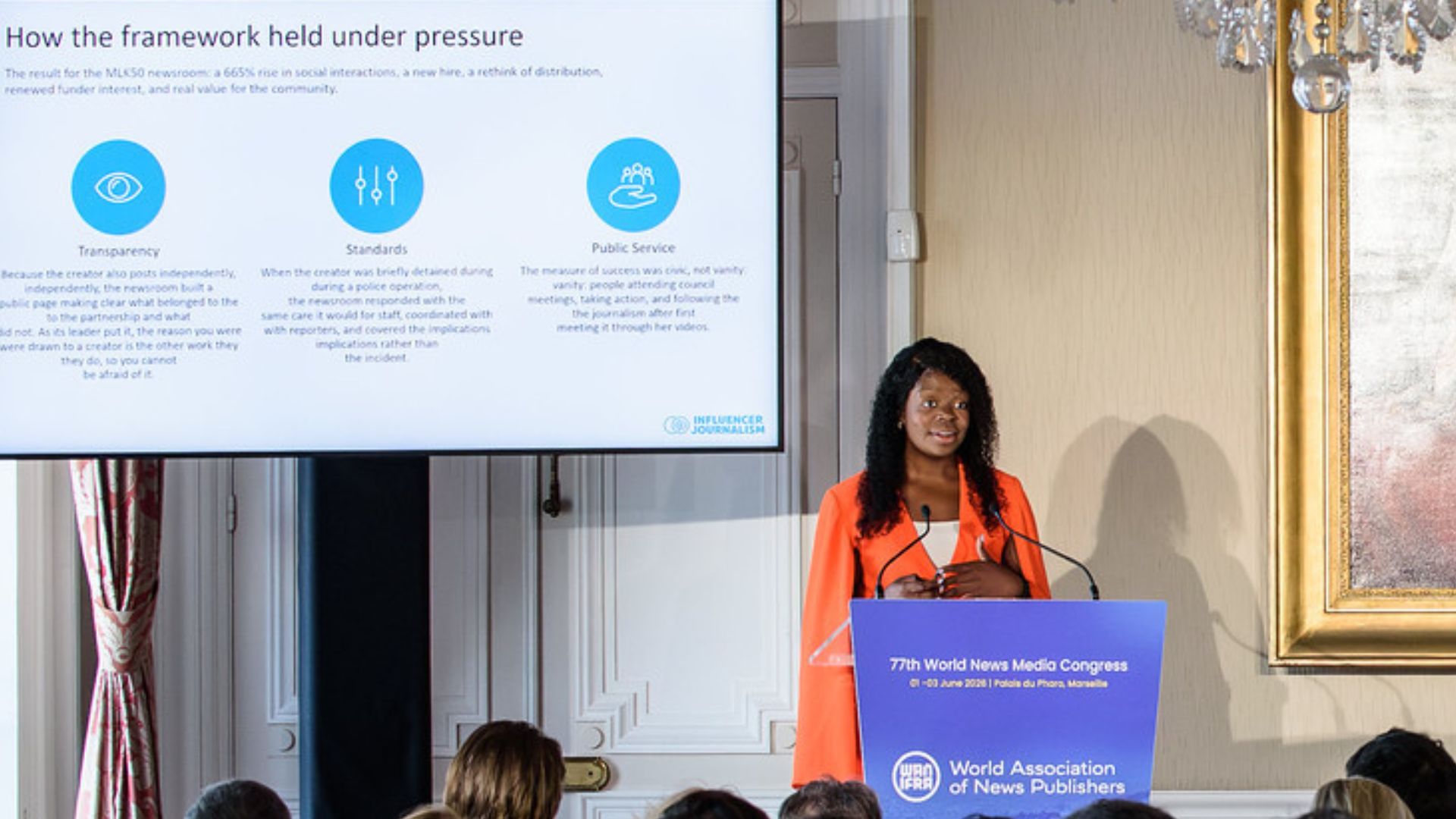
The framework’s solidity was proven when a collaboration was tested: Lacy explained how the MLK50 residency held firm when the creator, Amber Sherman, was briefly detained during a police operation a few months into the programme.
Kickstarting the process: Why, Who, Where and How and What to consider
1 Set Clear Goals
“Typically, when newsrooms reach out to us for a creator, they never are really clear about what they want to do with that partnership,” explained Lacy. “So we always encourage the newsrooms to actually start with the goal – what they want to do/achieve – and then pick the creator.”
Case in point: MLK50, a non-profit news outlet in Memphis, Tennessee appointed a local policy organiser as a creator in residence, to meet the needs of an audience struggling to understand how policy applied to their lives; “they wanted someone who works in this field and can break down these complex issues,” explained Lacy.
2 Map the Landscape
“Mostly, when newsrooms are starting to do this work, they never really understand who to work with. I think the first thing to do is identify the voices in your community; in the beat that you cover there could be potential partners, and I always recommend newsrooms talk to some of the youngest folks in your newsroom to see who they listen to, who they engage with.
Make it count: “We always encourage newsrooms to consider that you don’t always want to partner with the biggest creator, or someone with the largest following; you want to partner with someone that makes the most sense for your feed, eg: Amber Sherman doesn’t have a huge following, less than 30,000 on her social media feeds. But her audience is engaged and global – passionate about this subject – the audience that High Country News wants to reach, so this partnership makes a lot of sense.”
3,4,5 Identify, Connect, Converse
“Typically when we work with newsrooms, we’ll have five to six conversations with creators, even if we end up only working with one or two to start, because we really just want to understand how these partnerships can benefit both sides – and sometimes during these conversations, we find more, unique ways that we can partner with these creators, in ways that we might not have known before,” added Lacy.
“And I think by doing that, you’re able to understand the best practices to do this, and you’re able to build these partnerships.”
See Also: #NewsCreatorExchange: Adriana Lacy on bridging journalism and influence