‘It’s not a transaction, it’s a choice’: Guardian’s Katharine Viner on hope, reader revenue and an enviable ownership model
After all, who would pay for anything they can already get for free?
Well, today, millions of donors and tens of millions of pounds and dollars later, there’s no doubting that decision. There are also some other publishers, like South Africa’s Daily Maverick and just recently, The Salt Lake Tribune in the United States, that have adopted the model.
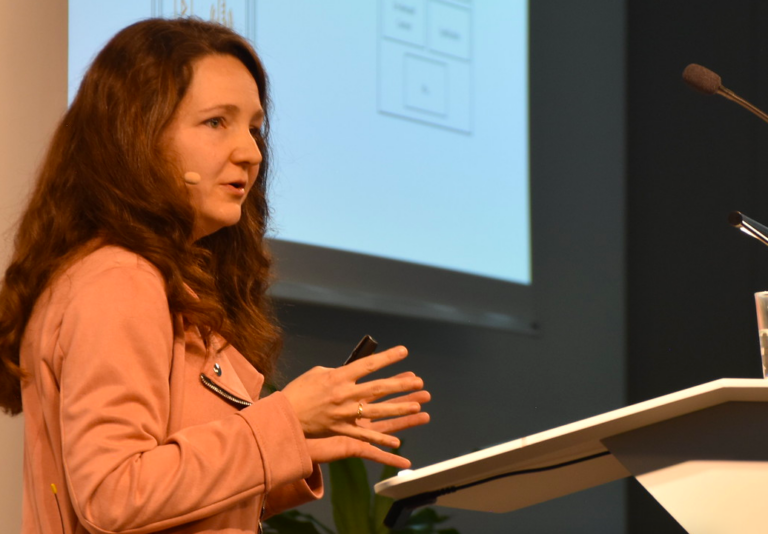
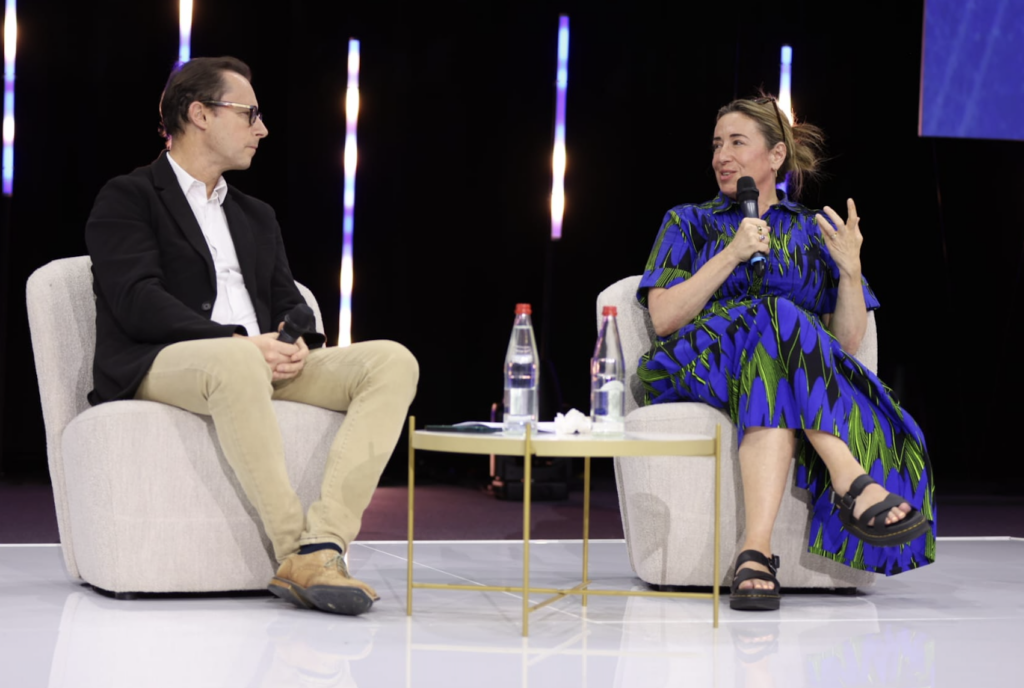
However, on many levels, this past decade has been one “of absolute turmoil in the industry, but also for everyone else,” Katharine Viner, the Guardian’s editor-in-chief, told AFP’s Global News Director Phil Chetwynd during a fireside chat at WAN-IFRA’s World News Media Congress in Marseille on Monday afternoon.
“It’s really a decade of extreme pressure,” Viner added. “I always think it’s important for journalists to see ourselves as citizens. Trying to root ourselves in communities that we report on and how to understand these big global pressures that we report on.”
Those are also two keys to the Guardian’s overall success: roots in the communities they serve, and helping to “nourish” their audiences with the information they need to better understand and deal with the world around them.
Growing the Guardian brand globally
“The way we’ve tried to deal with this decade of change is leaning into our strategy, which is to be much more global. I saw a statistic just this morning that 83 percent of our revenue outside of the UK didn’t exist 10 years ago,” Viner said.
While the Guardian’s roots are in the UK, it has expandede globally during the past 15 years, primarily in the United States, and Australia.
“So we are absolutely growing our business, not just our journalism, but our business out of the UK: We’re much more global, much more digital, leaning into the more reader funded model,” she said.
Leaning into what makes them human – and what makes the Guardian’s journalism human – as well as connecting with people is fundamental to that approach.
Noting a long-read article that Viner wrote just a few weeks ago, Chetwynd asked her if she would expand on her thoughts about “the information crisis that we are in, the context we’re in.”
“It’s a term I took from a book called “Don’t Burn Anyone at the Stake Today,” Viner said, and suggested it as recommended reading to those in the audience.
In it, author Naomi Alderman “talks about the information crisis as the third big crisis,” Viner said. “We are in the midst of the third big information crisis. The first was the invention of writing. The second is the invention of the printing press. I thought that was quite a useful way to frame the understanding of the scale of the crisis. It’s about the idea that first of all we are flooded with information, flooded with facts.”
On top of having far, far more access to all kinds of information than ever before, people have to deal with misinformation on a massive scale as well.
“The things you always understood to be true might not be true. The things you always understood to be fake, might be true. You start to doubt yourself.
“When you layer on top of that, the fact that there are so many bad actors manipulating information to try to undermine what you know, there’s this amazing statistic that the majority now of what is online is synthetic.”
“It’s like the ground is shifting beneath your feet,” she added. “In moments like that, people need organisations that they can trust. Anything to show how different you are from this type of splurge of fake information is worthwhile.”
Reaching new audiences with new ideas, fresh perspectives
One recent major media challenge that the Guardian is dodging is news avoidance, telling Chetwynd: “I’m always reading about news avoidance. I can’t say we’ve seen that in our Guardian numbers though. I think that, on the contrary, people want a trusted source. The challenge for us now is to make sure we give them the information they need to understand the world and in ways they can use, and in ways that they’re familiar with.”
After all, she said, “There’s no point in giving a 4,000 word essay to somebody who only watches videos. I think then we should repackage Guardian into videos for them. To give them the news they need to understand the world and also new ideas and new ways of looking at the world and nourishing journalism.”
In order to deliver this, she said, “facts on their own are not enough. You have to bring stories and new ideas and different context and fresh perspectives to approach people in different ways.”
The advantages of trust ownership
Moving to the Guardian’s financial foundation, The Scott Trust, Chetwynd noted that many publishers are envious of their ownership model.
“I recommend it,” Viner said, “It’s the best ownership model for an editor. For those who don’t know, we are owned by a trust. We don’t have an owner, and we don’t have shareholders other than our trust. There are no shareholders saying ‘You must make money,’ or taking money out. There’s no billionaire owner exploiting, or trying to use the organisation, for influence or money.
“Now I know not all owners are like that, of course. And there are good ones who are not. But I still think the fact that it is codified, and a trust gives you the best protection. Just to give you a couple of examples: One last year, when we were sued for libel, and people might know that the law is very against you in the UK when it comes to libel, but I had the full support of The Scott Trust in fighting that. We were six weeks in the high crown court and we won very comprehensively in a way that I think has had a really good impact on investigative reporting in Britain.”
Another example, she said, is with their reader revenue model.
“When we launched it in 2016, we had this idea to ask readers for money for something that they could get for free, which was utterly ridiculed in the British press and inside the Guardian, in fact, but not by The Scott Trust, who backed our approach and the readers got it. The readers understood it very, very quickly and it quickly became the foundation of what we do all around the world, and that’s actually just recurring revenue. There’s more on top, from all our donations. It’s a really sensational model.”
Noting that such a model won’t work for all news publishers, she expanded on why it works for them: “I think you have to have a really close relationship with your audience – they understand what you are trying to do. And I think a lot of this, we talk about the human community and the community of the Guardian, which is now very big and very global.”
Donations a more resilient model than paywalls
Ultimately, she said, a key reason for the Guardian’s success with reader contributions is because the mindset of those who do donate is quite different from the usual model.
“I think because you don’t have to give us money, you are not a consumer in the traditional sense. You are part of our community, so it’s not a transaction, it’s a choice. That means you have a different relationship with us, and we’ve found that’s actually a more resilient model than I think than paywalls. At the same time, it’s still a very small percentage of regular readers who give us money.”
To encourage more people to pay for the Guardian’s work, Viner said they are trying to make it as easy as possible for people to give them money.
For example, they have a relatively new cooking app called Feast. There is a weekly Guardian print magazine people can buy at newsstands, or take out print subscriptions, “which quite a few people do in the UK,” she said.
“We try to make it as easy as possible for you to give us money while keeping the website open to all, which also has great social value when democracies are under threat and when news is increasingly something that people have to pay for,” Viner said.