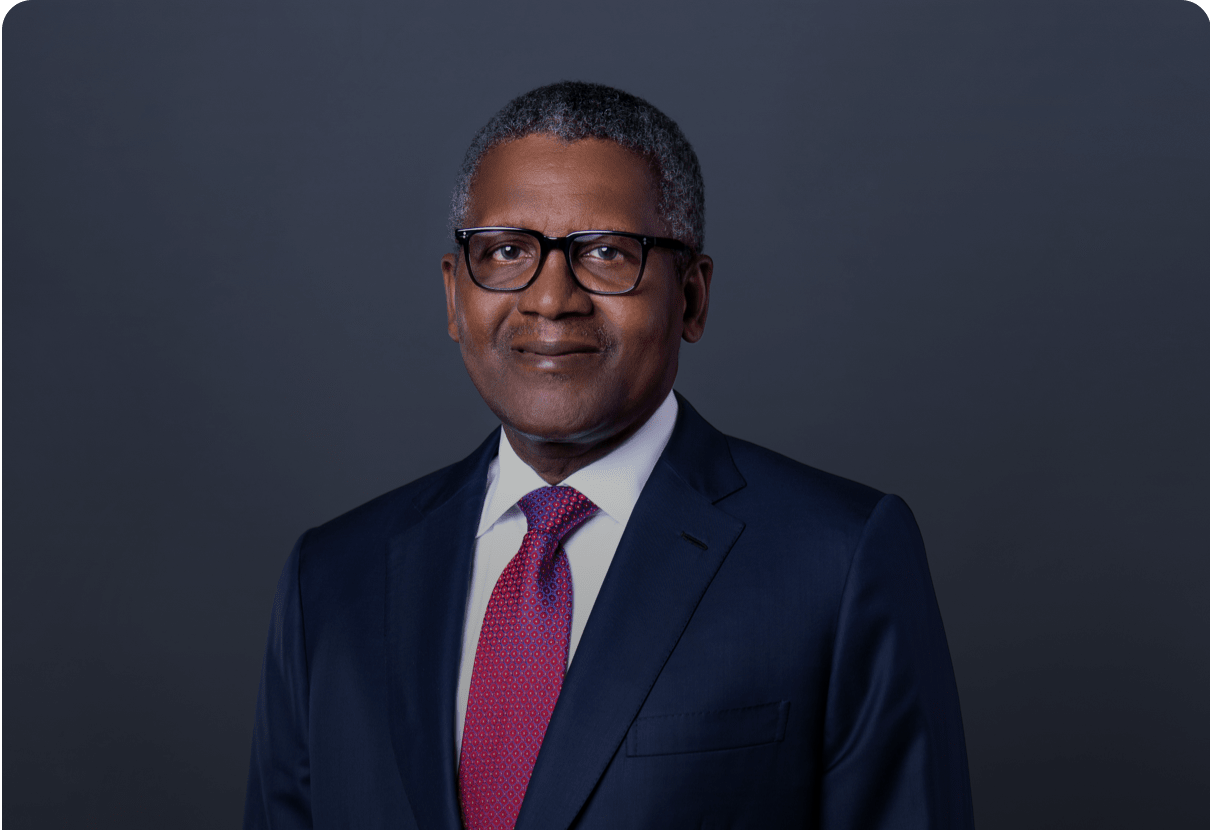
Africa’s Richest Man & $28.5bn Fortune
Aliko Dangote’s net worth is estimated by Finance Monthly at around $28.5 billion in 2026, making him Africa’s richest person and placing him at No. 86 in our current Top 100 richest people in the world.
Dangote appears in the Top 100 under Dangote Cement because the cement business remains the clearest publicly valued anchor of his fortune. His wider wealth, however, also includes the Dangote Petroleum Refinery, fertiliser, sugar, salt, logistics and private industrial assets.
Finance Monthly’s estimate is based on public market values, company ownership disclosures, refinery ownership signals, Nigerian exchange-rate data and a cautious valuation of Dangote’s private industrial assets. It does not use Forbes, Bloomberg or Hurun headline billionaire figures as the basis for the number.
Aliko Dangote Net Worth In 2026
Finance Monthly estimates Aliko Dangote’s net worth at around $28.5 billion in 2026.
Our working calculation is:
Dangote Cement-linked value: $11.8 billion
Dangote Refinery and petrochemicals net equity value: $13.8 billion
Other listed Dangote holdings: $900 million
Fertiliser, logistics, property and private industrial assets: $2.8 billion
Estimated debt, liquidity and private-company adjustment: -$800 million
Estimated Aliko Dangote net worth: $28.5 billion
The calculation separates listed assets from private assets. Dangote Cement can be valued using public market data. The refinery cannot. It is a major industrial project, but project cost, enterprise value and personal equity value are different measures.
That distinction keeps the estimate grounded.
The Dangote Cement Stake Behind The Fortune
Dangote Cement remains the clearest part of Aliko Dangote’s wealth calculation.
The company is one of Africa’s largest cement producers and operates across multiple African markets. Its scale gives Dangote exposure to construction, housing, roads, ports, factories and long-term infrastructure demand across the continent.
For our calculation, Finance Monthly uses the latest available Dangote Cement market value and applies a beneficial ownership approach.
Dangote Cement market value used: ₦18.43 trillion
USD/NGN rate used: about ₦1,367 per $1
Dangote Cement market value in dollars: about $13.5 billion
Dangote Industries stake used: 87.28%
Aliko Dangote direct stake: 0.17%
Estimated Dangote-linked economic exposure: around 87.45%
Dangote Cement-linked value: about $11.8 billion
Calculation:
₦18.43 trillion ÷ ₦1,367 = $13.5 billion
$13.5 billion × 87.45% = $11.8 billion
Dangote Cement is the listed-market anchor of the fortune. It is also the asset most likely to receive a clearer international valuation if Dangote pursues a London listing.
Finance Monthly has already covered Dangote’s London listing plan, which would put part of his industrial empire in front of deeper global capital markets. If international investors value Dangote Cement more generously than the Nigerian market currently does, the listed part of his fortune could be marked higher.
Why The Refinery Changes The Dangote Wealth Calculation
The Dangote Petroleum Refinery is now the asset that can move Aliko Dangote’s net worth most dramatically.
The refinery has a capacity of 650,000 barrels per day, making it Africa’s largest refinery. It was built to reduce Nigeria’s dependence on imported refined fuel and to create a major domestic processing hub for petrol, diesel, aviation fuel and petrochemicals.
For Dangote’s fortune, the refinery creates both upside and uncertainty.
The project is often described as costing around $19 billion to $20 billion. Finance Monthly does not treat that full project cost as personal net worth. Large industrial projects carry debt, working-capital needs, minority ownership, operational risk, expansion costs and liquidity discounts.
Our estimate gives Dangote credit for the refinery’s scale and strategic importance, while avoiding a simple “project cost equals wealth” approach.
Our Dangote Refinery Calculation
Finance Monthly’s working refinery calculation is:
Gross refinery and petrochemicals valuation base: $19.5 billion
Dangote Industries refinery ownership used: 92.75%
Implied Dangote Industries refinery interest: $18.1 billion
Private-company, debt and execution discount: around 24%
Finance Monthly refinery-linked net equity estimate: $13.8 billion
Calculation:
$19.5 billion × 92.75% = $18.09 billion
$18.09 billion × 76% = $13.75 billion
Rounded refinery-linked estimate: $13.8 billion
This keeps the refinery valuation below the commonly cited project-cost range after debt, execution and liquidity adjustments. It also leaves room for uncertainty around margins, crude supply, expansion spending and future ownership changes.
If the refinery lists, sells a minority stake at a clear valuation, or reports stronger cash generation over time, this part of the estimate could rise materially.
Other Dangote Listed Holdings
Dangote Cement is the largest listed holding, but Dangote also has exposure to other publicly traded group companies, including Dangote Sugar Refinery and NASCON Allied Industries.
Dangote Sugar and NASCON are much smaller than Dangote Cement, but they still form part of the wider industrial group. Together, they add another layer to Dangote’s publicly visible wealth.
Finance Monthly assigns an estimated $900 million to these smaller listed interests after applying a Dangote-linked economic exposure and liquidity adjustment.
That is meaningful, but it does not drive the overall fortune. Cement and refining do.
Fertiliser, Logistics, Property And Private Assets
Dangote’s wider private industrial interests also need to be included.
The Dangote industrial complex includes fertiliser, logistics, port-linked infrastructure, trading operations, property-linked assets and other private businesses inside Dangote Industries. These assets are harder to value than listed shares, but excluding them would understate the scale of the group.
Finance Monthly assigns $2.8 billion to these additional private assets.
That allowance recognises the scale of Dangote’s wider industrial platform without double counting assets already captured in the cement and refinery calculations.
Why Aliko Dangote Is Africa’s Richest Person
Aliko Dangote is Africa’s richest person because he controls assets that sit at the centre of African construction, energy and manufacturing demand.
Cement built the foundation of the fortune. Nigeria and other African economies need cement for housing, commercial development, roads, ports and public infrastructure. Dangote Cement gave him a dominant listed asset in a sector tied closely to long-term development.
The refinery then changed the scale of the group. Nigeria has long been a major oil producer while still relying heavily on imported refined fuel. Dangote’s refinery was designed to alter that balance by processing crude domestically and supplying fuel and petrochemicals across Nigeria and export markets.
That gives Dangote a different profile from many billionaires in the Top 100 richest people in the world. His fortune is industrial, asset-heavy and closely linked to African infrastructure.
Is Aliko Dangote Richer Than Zhang Yiming?
No. Finance Monthly estimates Aliko Dangote’s net worth at around $28.5 billion, while Zhang Yiming, China’s richest person, is estimated at around $69.3 billion.
The two fortunes are built in completely different ways. Zhang’s wealth is tied mainly to ByteDance, the private technology company behind TikTok and Douyin. Dangote’s wealth is tied to cement, refining, fertiliser and African industrial infrastructure.
Zhang is much richer on paper, but his fortune depends heavily on a private technology valuation. Dangote’s wealth is more asset-heavy, although it is also exposed to currency, regulation, debt and refinery execution.
You can read Finance Monthly’s full estimate of Zhang Yiming’s ByteDance-linked net worth.
Is Aliko Dangote Richer Than Mukesh Ambani?
No. Finance Monthly estimates Mukesh Ambani’s net worth at around $99.7 billion, far above Dangote’s estimated $28.5 billion.
There are similarities between the two. Both men built fortunes around industrial scale, energy, infrastructure and family-controlled business groups. Ambani’s Reliance Industries, however, is much larger and spans refining, telecoms, retail, digital services and major listed-market value.
Dangote’s refinery has drawn natural comparisons with Reliance’s refining empire because both are large-scale energy assets with national economic importance. The difference is that Reliance is already publicly traded and easier to value. Dangote’s refinery remains private, so Finance Monthly uses a heavier discount.
For comparison, see Finance Monthly’s analysis of Mukesh Ambani as Asia’s richest man.
How Dangote Compares With The World’s Richest Families
Dangote’s wealth is large enough to put him in the global Top 100, but it remains well below the world’s richest family fortunes.
The Walton family, the Hermès family and other dynastic fortunes sit much higher because their wealth is spread across enormous public companies, luxury empires, inherited assets or multi-generational structures. Dangote’s fortune is more concentrated and more directly tied to one founder-led African conglomerate.
That concentration gives him enormous control over the direction of the group. It also means the valuation depends heavily on Nigerian industrial performance, currency movements, cement pricing, refinery margins and access to capital.
For wider context, Finance Monthly’s ranking of the Top 10 richest families in the world shows how far the largest dynastic fortunes sit above even Africa’s richest individual.
The Currency Problem In Dangote’s Net Worth
Currency is one of the most important issues in any Dangote net worth calculation.
Many Dangote assets are valued in Nigerian naira, while global billionaire rankings are shown in U.S. dollars. When the naira weakens, the dollar value of Nigerian-listed holdings falls, even if the local share price rises.
For this article, Finance Monthly uses an exchange rate of around ₦1,367 per $1, based on June 2, 2026 market data.
The exchange-rate effect is direct.
If the naira strengthens, Dangote’s dollar net worth rises.
If the naira weakens, his dollar net worth falls.
That is one reason Dangote’s net worth can move differently from a U.S. technology billionaire’s fortune. A Nigerian share price can rise in local currency terms while the dollar estimate remains flat or falls because of FX pressure.
What Could Push Aliko Dangote’s Net Worth Higher?
The refinery is the biggest upside driver.
If Dangote lists part of the refinery, sells a minority stake at a strong valuation, or reports sustained profits from refining and petrochemicals, Finance Monthly’s $13.8 billion refinery-linked estimate could prove too low.
A London listing could also lift the valuation of his listed industrial assets. Finance Monthly has covered Dangote’s London listing plan, which would give global investors a clearer route into one of Africa’s most important industrial groups. If international investors apply a higher multiple to Dangote Cement than the Nigerian market currently does, the listed portion of his fortune could rise.
A stronger naira would also increase the dollar value of Dangote Cement, Dangote Sugar and NASCON. So would a sustained rise in Dangote Cement’s share price.
Expansion could add another layer. Further investment in refining, petrochemicals, fertiliser and industrial infrastructure may increase the group’s value if funded sensibly and supported by strong cash flow.
What Could Reduce Aliko Dangote’s Net Worth?
The main risks are debt, currency, refinery margins and regulation.
Large refineries are expensive to build and expensive to expand. They need reliable crude supply, strong margins, efficient operations and access to working capital. If margins weaken or expansion costs rise, the refinery’s equity value could be lower than headline project numbers suggest.
Currency remains a major risk. A weaker naira reduces the dollar value of Nigerian-listed assets. It can also increase the burden of dollar-linked debt or imported equipment costs.
Regulation is another factor. Fuel pricing, foreign exchange access, crude supply arrangements, tax policy and government relations can all affect the economics of a refinery in Nigeria.
Dangote Cement also faces normal industrial risks: energy costs, logistics, construction demand, competition, inflation and interest rates.
Finance Monthly’s $28.5 billion estimate leaves room for those risks rather than assuming every Dangote asset can be valued at its most optimistic level.
Finance Monthly’s Aliko Dangote Net Worth Verdict
Finance Monthly estimates Aliko Dangote’s net worth at around $28.5 billion in 2026.
That makes him Africa’s richest person and places him at No. 86 in Finance Monthly’s Top 100 richest people in the world.
Dangote Cement remains the listed-market anchor of the fortune, which is why it appears as his primary wealth source in the Top 100. The full $28.5 billion estimate also reflects the value of the Dangote Refinery and petrochemicals complex, smaller listed holdings and wider private industrial assets.
The key calculation is not “refinery cost plus cement stake.” That would overstate the fortune. Finance Monthly instead uses a net equity estimate for the refinery, converts listed Nigerian assets into dollars and applies a private-company discount where ownership and liquidity are less transparent.
On that basis, $28.5 billion is the more defensible number.
Editor’s Note: Methodology
Finance Monthly’s estimate of Aliko Dangote’s net worth is based on public shareholdings, company market values, private-company valuation signals, refinery ownership reports, Nigerian exchange-rate data and market information available as of June 2, 2026. The figure is an editorial estimate, not an audited personal balance sheet.
The estimate does not rely on Forbes, Bloomberg or Hurun headline billionaire rankings. Finance Monthly’s number is calculated independently from Dangote Cement’s market value, Dangote’s estimated economic exposure, refinery valuation assumptions and wider private industrial assets.
Core calculation:
Dangote Cement-linked value: $11.8 billion
Dangote Refinery and petrochemicals net equity value: $13.8 billion
Other listed Dangote holdings: $900 million
Fertiliser, logistics, property and private industrial assets: $2.8 billion
Estimated debt, liquidity and private-company adjustment: -$800 million
Estimated Aliko Dangote net worth: $28.5 billion
Because a large part of Dangote’s fortune is private, the estimate should be treated as a reasoned valuation rather than a live market price. A refinery IPO, London listing, major stake sale, new debt disclosure, updated Dangote Cement share price or major naira move could change the estimate materially.
FAQ
What is Aliko Dangote’s net worth in 2026?
Finance Monthly estimates Aliko Dangote’s net worth at around $28.5 billion in 2026. The estimate is based on Dangote Cement, the Dangote Refinery, smaller listed holdings and wider private industrial assets.
Is Aliko Dangote the richest man in Africa?
Yes. Aliko Dangote is Africa’s richest person in Finance Monthly’s current ranking. His fortune comes mainly from cement, oil refining, fertiliser and private industrial assets.
How did Aliko Dangote make his money?
Aliko Dangote made his money by building Dangote Group into one of Africa’s largest industrial conglomerates. The group’s key businesses include cement, sugar, salt, fertiliser, logistics and oil refining.
How much is Dangote Cement worth?
Using June 2026 market data, Finance Monthly estimates Dangote Cement’s market value at about ₦18.43 trillion, or roughly $13.5 billion at a ₦1,367 exchange rate.
How much of Dangote Cement does Aliko Dangote own?
Dangote Industries Limited holds 87.28% of Dangote Cement, while Aliko Dangote also holds a small direct stake. Finance Monthly uses an estimated 87.45% Dangote-linked economic exposure for its calculation.
How much is the Dangote Refinery worth?
Finance Monthly uses a $13.8 billion net equity estimate for Dangote’s refinery and petrochemicals exposure. This is below the headline project-cost range after accounting for debt, private-company liquidity, execution risk and ownership structure.
Could a London listing increase Aliko Dangote’s net worth?
Yes. A London listing could give international investors a clearer way to value Dangote Cement or wider Dangote assets. If global markets apply a higher valuation than the Nigerian market currently does, Dangote’s listed wealth could rise.
Is Aliko Dangote richer than Mukesh Ambani?
No. Finance Monthly estimates Aliko Dangote at around $28.5 billion and Mukesh Ambani at around $99.7 billion. Ambani remains far richer because Reliance Industries and his wider family-linked holdings are much larger.
Is Aliko Dangote richer than Zhang Yiming?
No. Finance Monthly estimates Zhang Yiming at around $69.3 billion, compared with Dangote at around $28.5 billion. Zhang’s wealth is tied mainly to ByteDance, while Dangote’s fortune is industrial and asset-heavy.