How Taiwan’s United Daily News Group uses data and AI to reclaim advertising revenue
By Julia Barcelon
“If publishers still have strong journalism, strong brands, and strong audiences, why does advertising revenue still feel so hard to win?”
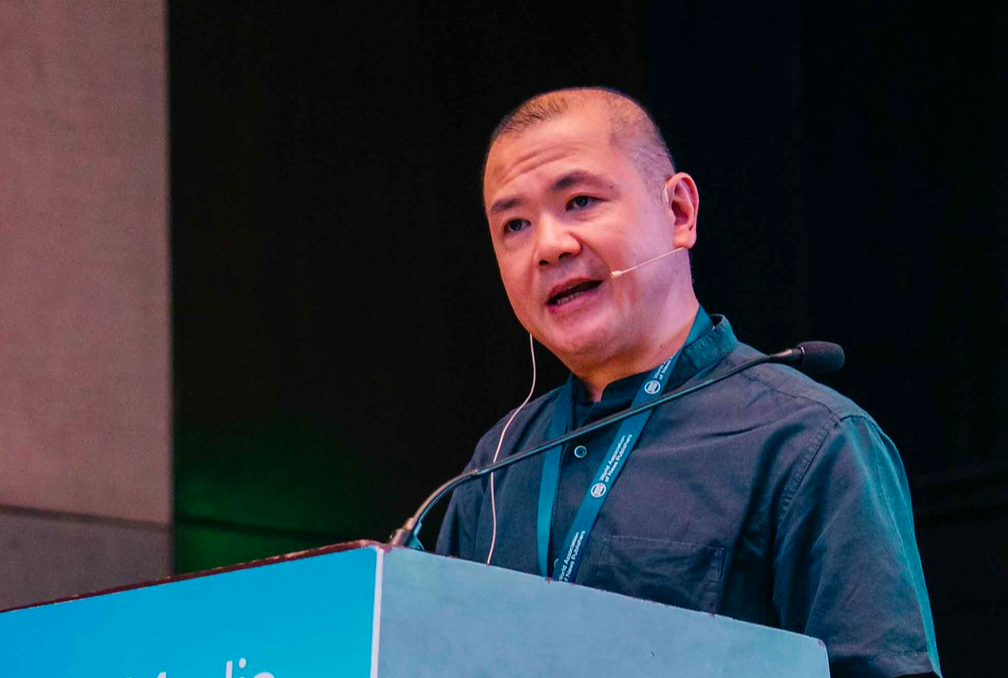
That was the question raised by Anson Mok, the Head of Data Development at United Daily News Group, during WAN-IFRA’s Digital Media Asia conference in Manila as he reflected on the growing challenges facing modern publishers.
For United Daily News Group, the problem is no longer simply about producing content or attracting traffic. Instead, Mok noted, publishers face a more difficult task: turning audience trust and data into measurable business value.
Speaking from the perspective of a media organisation founded in 1951, Mok described how AI has become less of a technology experiment and more of a commercial strategy.
Rather than treating artificial intelligence as industry hype, United Daily News Group has focused on using AI to improve advertising performance, strengthen audience understanding, and create sustainable growth across its platforms.
“Transformation is never about technology,” Mok said. “It’s about people, mindset, and whether an organisation is truly ready to change.”
Some key facts and figures from United Daily News Group. UDNGroup.com
Moving beyond traditional advertising
Advertising has become increasingly performance-driven, measurable, and competitive over the past decade, Mok said. Advertisers now expect precision, accountability, and speed, forcing publishers to rethink how advertising value is created.
For many years, publishers primarily sold advertising inventory. Today, he said, inventory alone is no longer enough. Instead, value comes from insight, relevance, audience understanding, and measurable business outcomes.
That realisation led UDN Group to reposition data and AI as active growth drivers rather than passive support systems.
The company’s AI-supported advertising initiatives have produced measurable commercial results.
Mok shared that targeted advertising campaigns delivered click-through rates more than 230% higher than regular placements, while adoption rates grew significantly between 2023 and 2025.
During that period, the company also executed thousands of advertising cases across more than 136 industry categories.
For Mok, the numbers represent more than technological success. They reflect growing confidence from advertisers who increasingly value media products tied to clear outcomes and actionable insights.
Understanding audiences beyond demographics
Central to the company’s strategy is the belief that audiences should be understood as people rather than impressions or data points.
Using first-party and zero-party data, UDN Group analyses audience behaviour, interests, routines, and engagement patterns to create deeper audience profiles for advertisers.
Mok explained that understanding context, such as lifestyle preferences, shopping behaviour, or travel interests, allows publishers to build more meaningful commercial strategies.
The company applies those insights across multiple industries. In fitness-related campaigns, for example, audience analysis helps advertisers focus on educational content and retention strategies. In categories such as apparel and eyewear, AI identifies lifestyle scenarios that resonate most strongly with consumers.
For Mok, audience understanding has become “commercial infrastructure” rather than simply editorial intelligence.
AI as a business tool
United Daily News Group organises its AI strategy into four areas: Interpretive AI, Predictive AI, Generative AI, and Agentic AI.
Interpretive AI helps analyse fragmented audience behaviour and identify meaningful patterns.
Predictive AI assists in estimating audience response and campaign performance, allowing advertisers to allocate budgets more effectively. Generative AI speeds up workflows by supporting proposal development, content planning, and knowledge organisation.
Agentic AI, meanwhile, focuses on coordinating actions and workflows across teams rather than simply generating content.
Although the technologies differ, Mok emphasised that their purpose remains practical.
AI is valuable, he argued, when it helps publishers make smarter decisions, improve operational speed, and support stronger business outcomes.
From vendor to strategic partner
Mok also argued that publishers must change how they position themselves in the advertising ecosystem. Rather than functioning solely as vendors selling ad space, media organisations should aim to become long-term strategic partners for advertisers.
That shift depends on building trust and confidence – confidence that publishers understand audiences accurately, optimize campaigns intelligently, and deliver measurable results.
To support that approach, UDN Group connects audience signals across websites, newsletters, apps, customer databases, and content systems to create a more unified advertising infrastructure. The integration allows the company to connect audience behaviour directly with commercial strategy and campaign performance.
According to Mok, stronger advertising outcomes emerge when publishers treat data, audience understanding, and business execution as part of one connected value chain.
Building sustainable transformation
Despite the company’s progress, Mok acknowledged that transformation remains ongoing. Adoption growth, however, has become one of the clearest indicators that AI integration is moving beyond experimentation into daily operations.
For Mok, successful transformation depends not only on technology but also on collaboration across editorial, data, sales, product, and leadership teams.
“The future of advertising for publishers will not be won by scale alone,” he said. “It will be won by the ability to connect.”
That connection, he said, means linking trust with intelligence, audience understanding with commercial action, and insight with execution, a process that may ultimately determine how publishers reclaim advertising value in the AI era
About the author: Julia Barcelon is a Literary and Cultural Studies student at the Polytechnic University of the Philippines.