War with Iran and a new nuclear deal both look increasingly likely
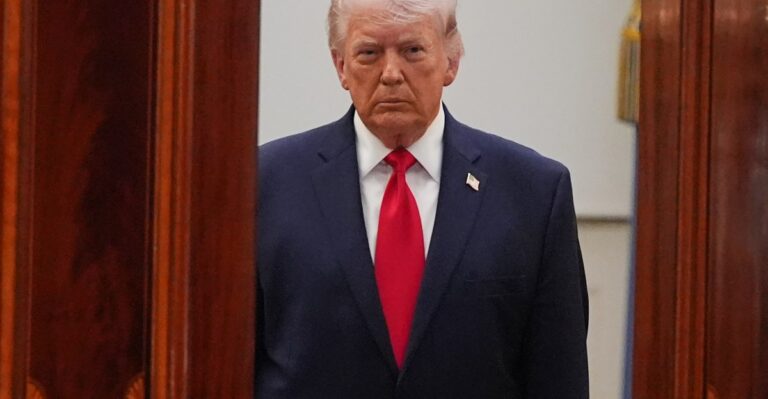
American negotiators are headed to Oman this weekend for a round of high-level talks with Iran over its nuclear program. President Donald Trump dropped the surprise announcement Tuesday during his Oval Office meeting with Benjamin Netanyahu. (Netanyahu was reportedly surprised by the news as well, one of a number of disappointments for the Israeli prime minister at the meeting.)
“We have a very big meeting, and we’ll see what can happen,” Trump said. In an apparent reference to the possibility of military strikes on Iran, he added, “I think everybody agrees that doing a deal would be preferable to doing the obvious. And the obvious is not something that I want to be involved with or, frankly, that Israel wants to be involved with if they can avoid it.”
The prospect of Israeli or US military action against Iran’s nuclear facilities has loomed over the region for years, but has seemed somewhat more likely over the past few months. Iran’s stockpile of near-weapons grade uranium has dramatically grown — meaning the regime is closer than ever to an actual weapon. Israel, meanwhile, feels emboldened after the remarkable military success it has had against Iranian proxies since the October 7, 2023, attacks, not to mention its successful strikes on Iran itself. Trump said on Wednesday that if military strikes do take place, Israel would be the “leader.”
The US has been making aggressive moves as well. Its ongoing strikes against the Houthis in Yemen have been widely seen as a warning to the group’s Iranian patrons about the Trump administration’s willingness to use force, as was the recent decision to relocate a third of America’s stealth bomber fleet to the island of Diego Garcia in the Indian Ocean, within range of Iran.
On the other hand, there are indications that Trump is serious about making a deal. In a letter to Supreme Leader Ayatollah Ali Khamenei in March, Trump gave Iran a two-month deadline to meet an agreement — a clock that apparently starts ticking after this weekend’s talks. And Iran’s president, Masoud Pezeshkian, appears more open to talks than his more hardline predecessor, Ebrahim Raisi, who was killed in a plane crash last year.
“I don’t remember a time when the possibility for both a deal and for war has been as high as it is right now,” Ilan Goldenberg, a former Biden administration Mideast adviser now with the advocacy group J Street, told Vox.
Talks about talks, or something more?
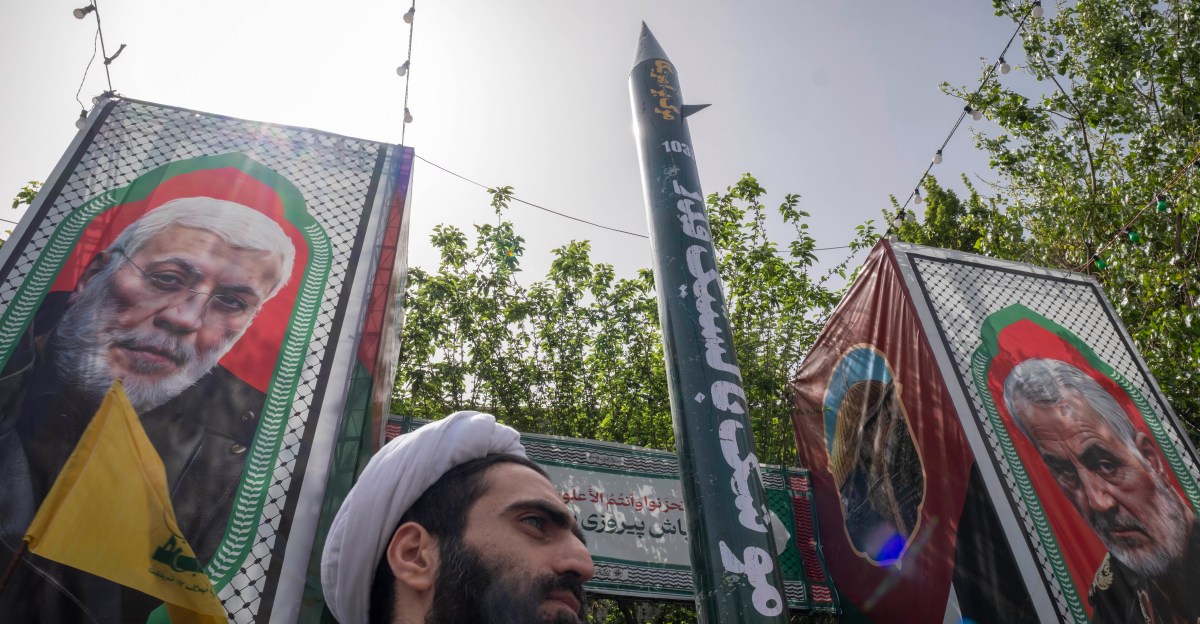
Given the parties involved, it’s fairly remarkable that these talks are taking place at all. It was Trump who, back in 2018, pulled the US out of the last nuclear deal with Iran, which had been negotiated by President Barack Obama. It was also Trump who ordered the 2020 drone strike that killed Gen. Qassem Soleimani, one of the country’s highest-ranking officials. US authorities have also alleged that Iran has plotted to kill Trump, though the Iranian government denies this.
“It’s not easy for the Iranians at all, to be sitting down with him, but I think they’ve crossed that psychological threshold,” said Ali Vaez, Iran Project director at Crisis Group.
For Iran, the talks are the best way of warding off both military strikes and the economic impact of Trump’s newly reapplied “maximum pressure” sanctions.
Since Trump’s announcement, the two sides have been engaged in long-distance negotiations about the negotiations: The Iranian team says there will be only “indirect” talks, with Omani mediators passing notes between the two sides, while Trump has insisted there will be direct talks.
Whatever format the talks take, most experts don’t expect a major breakthrough this meeting. “This isn’t going to be one and done,” said Sanam Vakil, director of the Middle East program at Chatham House. “These kinds of negotiations have been complex in the past, and I expect them to be complex this time.”
Iran will likely seek to determine exactly what sort of deal would be acceptable to the US. The Israeli government and hawks in Washington have been pushing for a “Libya-style” agreement like the one Muammar al-Qaddafi agreed to in 2003. Under this deal, Libya’s nuclear enrichment program was completely dismantled and removed, as opposed to maintained at a limited level under international monitoring as Iran’s was under the 2015 deal. As Netanyahu put it, “We go in, blow up the facilities, and dismantle all the equipment, under American supervision and execution. That’s the ideal scenario.”
Of course, Qaddafi was overthrown and killed eight years later in an international military intervention, so his case has become something of a cautionary tale for governments about the dangers of giving up weapons of mass destruction. Iranian hardliners have spent years warning against repeating Qaddafi’s mistake. Trump may also push for non-nuclear concessions in a deal, including a halt to Iran’s ballistic missile program and the regime’s support for foreign proxies. The Iranian government has resisted these kinds of concessions in the past, which it would likely view as a fundamental threat to the Islamic Republic’s legitimacy.
This week’s back-and-forth over “direct” or “indirect” talks could be a preview of months of procedural talks bogging down the process.
But Behnam Ben Taleblu, senior fellow at the Foundation for Defense of Democracies, a think tank advocating hardline policies against Iran, said we shouldn’t underestimate the pressure the regime is currently under. During rounds of nuclear negotiations in years past, including during the Biden administration, the regime was simply seeking economic relief from sanctions. Today, however, the stakes are “borderline existential.”
Israel’s ability to successfully strike military targets throughout Iran and carry out high-level assassinations in the heart of Tehran have cast doubt on Iran’s ability to defend against a larger attack. The decimation of proxy groups like Hezbollah and the relative ineffectiveness of Iran’s own missile strikes on Israel cast doubt on its ability to retaliate. The economic pressure on Iran will only grow if European countries trigger so-called snap back provisions in the 2015 nuclear deal, restoring the sanctions removed under the agreement, and all indications show that they are willing to do so.
For Taleblu, the risk is that the Iranians simply drag out negotiations that for them function as “a proverbial human shield against Israeli preemptive military action.” (Israel is extremely unlikely to take military action as long as the US and Iran are still in negotiations.) This week’s back-and-forth over “direct” or “indirect” talks could be a preview of months of procedural talks bogging down the process.
And though it would be extremely ironic, considering that it was Trump who tore up what he called “the worst deal in history,” it’s not out of the question that a president who loves making deals could agree to another one that freezes or reduces Iran’s nuclear stockpile rather than eliminating its program altogether. “I do think that there is a fear that the president could be tempted by or the Iranians would try to repackage a modified version of the [2015 agreement],” Taleblu said.
This is an administration that came into office pledging to reduce US military commitments abroad. While there are some traditional GOP Iran hawks in the Trump administration, there are also high-level officials, including Vice President JD Vance, who have expressed wariness about getting drawn into a new military conflict. The recent confirmation fight over Elbridge Colby, Trump’s nominee for the Pentagon’s No. 3 job, became something of a proxy fight between these factions given his past dovish statements on Iran.
During the Obama and first Trump administration,US allies in the Gulf were urging aggressive action against Iran, but such allies are far less bellicose today. Saudi Arabia signed its own normalization deal with Iran in 2023. When Trump visits Saudi Arabia for his first foreign trip next month, he’s likely to hear from a Kingdom that’s more concerned these days about what war would mean for its economy.
In short, this is not the same Trump administration and it’s not operating in the same world, as the first one.
If it did come to military action, the scenarios would become even more unpredictable. Israel has already demonstrated an ability to inflict heavy damage on Iranian military targets, but some experts doubt whether it would be able to entirely wipe out Iran’s nuclear development facilities, some of which are housed deep underground.
The political fallout within Iran is unpredictable as well. While the “Woman, Life, Freedom” protests that broke out in late 2022 demonstrated that there’s a deep well of anti-regime sentiment in Iran, that doesn’t translate to support for Israeli-led military strikes on the regime. “I think there would be a circular rally around the flag effect inside Iran, even from Iranians who dislike the regime,” Vakil said.
Iran’s military setbacks over the past year have undoubtedly made it more vulnerable to an attack on its nuclear program, but for hardliners, they have also underlined why having a nuclear weapon would be valuable as a deterrent. Iran has long preferred to remain a “threshold” nuclear state, using the potential for it to actually develop a bomb as leverage to extract concessions from its rivals, while denying that its nuclear program is for anything other than civilian use at all.
Pezeshkian, its president, still insists Iran is not seeking a nuclear bomb and the US intelligence community has assessed that it is not currently building one. But in recent months, other Iranian officials have become far more open to talking about the value of a nuclear weapon for Iran’s security and the possibility of acquiring one.
“It’s not a taboo subject anymore,” said Vaez from Crisis Group. “It’s really shocking how prevalent and public this debate has become and there are lots of voices who say Iran should go for it.”
The likelihood of war, a diplomatic breakthrough, and an Iranian weapon are therefore all going up. That means that even if nothing historic is decided at this weekend’s talks, it could be our best indication yet of where this crisis is headed.
“Quite literally all options are on the table,” Taleblu said. “Literally anything could happen.”