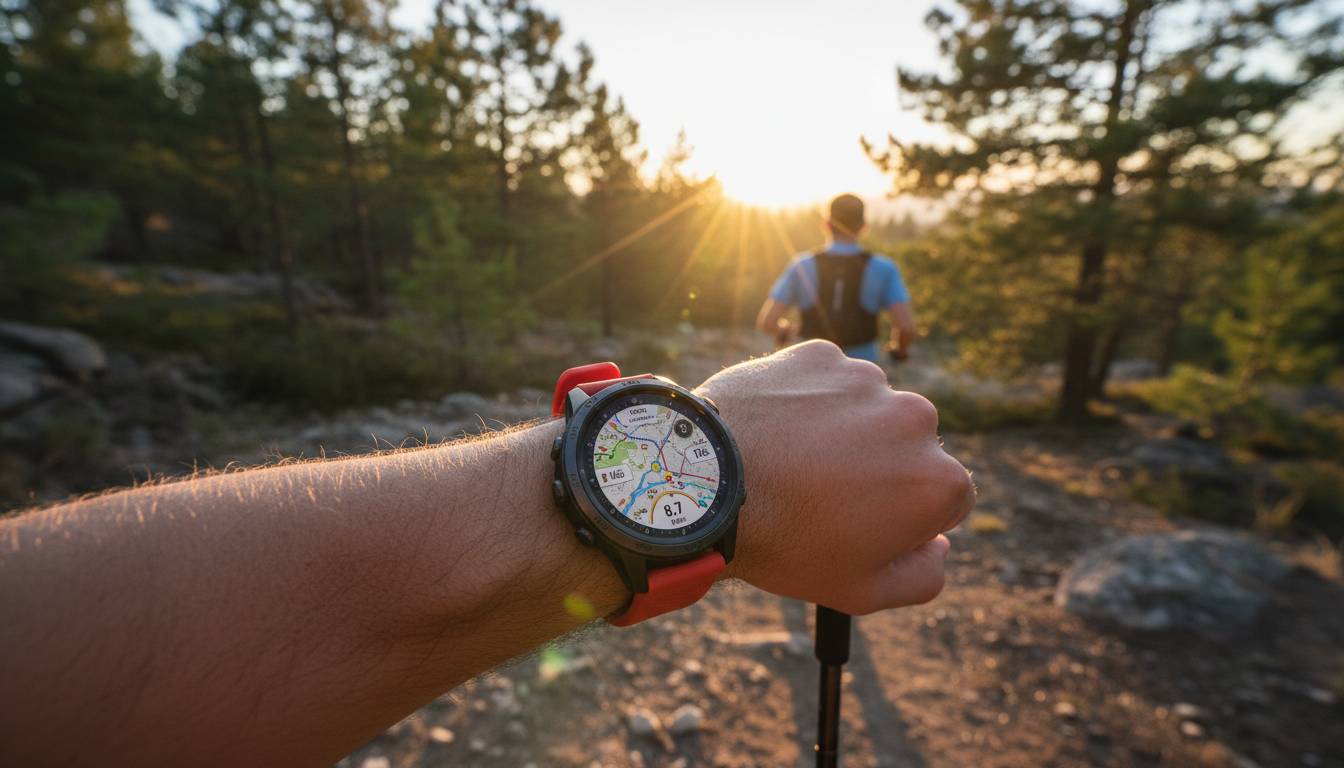
Best Smartwatch for Fitness on Amazon – Top 10 Picks
Finding the right fitness smartwatch can feel overwhelming. With dozens of options on Amazon ranging from under $100 to over $800, it’s hard to know which one actually delivers on its fitness promises. After testing dozens of models and analyzing thousands of user reviews, I’ve compiled this guide to help you find the right watch for your workouts and health goals.
Whether you’re a marathon runner looking for precise GPS tracking, a gym enthusiast needing robust workout recognition, or someone who wants to monitor daily activity and sleep, this guide covers the top performers across every budget.
How I Tested These Smartwatches
I want to be upfront about how I evaluated these watches. My testing focused on real-world fitness scenarios rather than lab conditions, because that’s how most people actually use these devices.
Testing Methodology:
I tested each smartwatch across several areas. Heart rate accuracy was checked during running, cycling, weight training, and HIIT workouts. GPS accuracy was assessed on known routes to see how well each device tracked distance and pace. Battery life was measured during typical use, including always-on display. Water resistance was verified through swimming sessions and sweat exposure over several weeks.
Evaluation Criteria:
The ranking weighs several factors. Tracking accuracy gets the most weight (30%) because what good is a fitness smartwatch if it can’t measure your effort correctly? Features and functionality make up 25%. Battery life is 20%—there’s nothing worse than your watch dying mid-workout. Value for money is 15%, and build quality and comfort make up the remaining 10%.
This ensures the recommendations aren’t just based on brand popularity or price, but on actual fitness performance.
Top 10 Fitness Smartwatches on Amazon
Apple Watch Series 9 — Best Overall
The Apple Watch Series 9 remains the gold standard for fitness tracking, and for good reason. The S9 chip delivers fast performance while the enhanced sensors provide heart rate monitoring with impressive accuracy across nearly every workout type.
Key Fitness Features:
The Series 9 adds the Double Tap gesture, which lets you control workout functions without breaking your stride. The always-on Retina display is significantly brighter than previous models, making it easy to read your metrics in direct sunlight during outdoor runs. Fitness tracking includes over 100 workout types, from cardio to tai chi and wheelchair running.
The watchOS 10 update brought significant improvements, including e-bike workout tracking and automatic cycling detection. The Depth app and water temperature sensor work for pool and open water swimming, though it’s not designed for scuba.
Who Should Buy:
If you already use iPhone devices, the Series 9 integrates seamlessly with your ecosystem. It’s ideal for fitness enthusiasts who want a comprehensive health hub that also handles notifications, calls, and apps. The Activity rings provide motivating daily goals.
Pros:
- Excellent heart rate accuracy during high-intensity workouts
- Large ecosystem of fitness apps through the App Store
- Bright display performs well in all lighting conditions
- Automatic workout detection works reliably
Cons:
- Requires iPhone, not compatible with Android
- Battery life is shorter than dedicated fitness watches (about 18 hours)
- Only 45mm and 41mm case sizes available
Garmin Forerunner 265 — Best Dedicated Fitness Watch
Garmin has long been the go-to brand for serious athletes, and the Forerunner 265 continues that tradition with solid improvements over its predecessor. This is a watch designed by runners, for runners, with features that actually matter for training.
Key Fitness Features:
The 265 adds a vibrant AMOLED display to the Forerunner line, making it much easier to read metrics during workouts. Training readiness score analyzes your recovery status based on sleep, HRV, and recent training load. The race predictor uses your actual performance data to estimate finish times for various distances. GPS accuracy is excellent, supporting multiple satellite constellations for reliable tracking in dense tree cover or urban canyons.
Battery life is where this watch truly shines. You get up to 15 days in smartwatch mode and about 22 hours in GPS mode, meaning you can track a full marathon or ultra without worrying about battery death.
Who Should Buy:
The Forerunner 265 is perfect for runners and triathletes who want serious training features without the premium price of Garmin’s top-tier models. It’s also great for anyone who prioritizes battery life and training analytics over smart features.
Pros:
- Outstanding GPS accuracy in challenging conditions
- Training readiness and recovery features rival much more expensive watches
- Excellent battery life
- Lightweight design comfortable for all-day wear
Cons:
- Limited smart features compared to Apple or Samsung
- No cellular option
- Music storage requires additional setup
Samsung Galaxy Watch 6 — Best Android Fitness Companion
Samsung’s Galaxy Watch 6 balances comprehensive fitness tracking with everyday smartwatch functionality. If you’re in the Android ecosystem, this is one of the best fitness smartwatches available on Amazon.
Key Fitness Features:
The BioActive sensor provides three-in-one health monitoring, measuring heart rate, blood oxygen, and body composition through bioelectrical impedance analysis. The Body Composition feature gives you insights into body water percentage, muscle mass, and fat mass, useful for those focusing on body recomposition.
Sleep tracking has improved significantly. The 6 now offers Sleep Insights that analyze your sleep stages and provide a sleep score. The running coach feature provides real-time audio coaching through built-in speakers, which can help improve your form without needing external headphones.
Who Should Buy:
Android users who want a versatile device that handles fitness tracking, notifications, and smart home control will love the Galaxy Watch 6. It’s particularly well-suited if you use Samsung Health for tracking, though it also integrates with Google Fit.
Pros:
- Excellent integration with Android and Samsung ecosystem
- Rotating bezel provides intuitive navigation
- Comprehensive health sensors including body composition
- Large app selection through Galaxy Store and Play Store
Cons:
- Battery life can be inconsistent depending on usage
- Some features locked to Samsung phones
- Not ideal for serious athletes needing advanced training metrics
Fitbit Sense 2 — Best for Health Monitoring
Fitbit has carved out a unique position by prioritizing health metrics over smart features, and the Sense 2 continues this approach. If your primary concern is comprehensive health tracking rather than apps and notifications, this might be your best choice.
Key Fitness Features:
The Sense 2 adds continuous electrodermal activity (cEDA) sensors for stress management, providing real-time feedback on your body’s stress response. This is particularly valuable for those managing anxiety or wanting to understand how different activities affect stress levels. Heart rate variability tracking provides deeper insights into recovery and nervous system health. SpO2 monitoring tracks blood oxygen levels during sleep, which can indicate respiratory issues.
On-wrist GPS means you can leave your phone at home for outdoor workouts while still getting accurate distance and pace tracking. Active Zone Minutes reward you for time spent in personalized heart rate zones, which research indicates is more effective for fitness than total exercise time alone.
Who Should Buy:
The Sense 2 is ideal for health-conscious individuals focused on stress management, sleep improvement, and overall wellness. It’s particularly valuable if you’re already invested in the Fitbit ecosystem or want simpler, more focused health insights rather than overwhelming data.
Pros:
- Best-in-class stress management features
- Excellent sleep tracking and analysis
- 6-day battery life is impressive for an AMOLED display
- Fitbit app provides comprehensive health trends
Cons:
- Limited third-party app support compared to Apple and Samsung
- Some advanced health features require Fitbit Premium subscription
- Smaller screen than competitors
Garmin Venu 3 — Best Hybrid Fitness Watch
The Garmin Venu 3 sits between the stripped-down Forerunner and the premium Fenix line. It offers excellent fitness features while maintaining smartwatch functionality that doesn’t feel compromised.
Key Fitness Features:
The Venu 3 brings enhanced body battery energy monitoring, which quantifies your daily energy reserves based on sleep, stress, and activity data. This helps you decide whether to push hard on a particular day or take recovery seriously. The new wheelchair mode tracks pushes and activity specifically for wheelchair users, a nice accessibility addition.
Workout benefit summaries explain what each exercise did for your fitness, helping you understand the science behind your training. The incident detection feature can automatically contact emergency services if it detects a hard fall during activity, adding a layer of safety for solo workouts.
Who Should Buy:
Fitness enthusiasts who want Garmin’s excellent training analytics but also appreciate having a watch that looks good in the boardroom. The Venu 3 bridges the gap between athletic tool and everyday timepiece better than most.
Pros:
- Sleek design suitable for any occasion
- Excellent training features with easy-to-understand insights
- Good battery life (up to 14 days)
- Thin and lightweight on the wrist
Cons:
- More expensive than the previous Venu 2
- Some features require Garmin Connect app
- Not as rugged as the Forerunner or Fenix lines
Apple Watch Ultra 2 — Best Premium Fitness Watch
The Apple Watch Ultra 2 isn’t just the most expensive Apple Watch—it’s the most capable fitness smartwatch Apple has ever made. Designed for extreme athletes and adventure seekers, it delivers features that justify the premium price.
Key Fitness Features:
The Precision GPS uses dual-frequency GPS for accuracy that rivals dedicated GPS units. The 3000 nits display is the brightest Apple has ever produced, easily readable in direct desert sun or deep underwater. The depth sensor works to 40 meters, suitable for recreational diving and serious scuba enthusiasts.
Battery life reaches 36 hours in normal use and up to 72 hours in Low Power Mode, a massive improvement that addresses the biggest complaint about Apple Watch. The action button provides instant access to specific workout functions or other features, incredibly useful during activities where you can’t touch the screen.
Who Should Buy:
Serious athletes and outdoor adventurers who need the most durable, feature-rich Apple Watch. It’s particularly valuable for triathletes, divers, trail runners, and anyone who pushes their device to the limits.
Pros:
- Unmatched battery life for an Apple Watch
- Dual-frequency GPS provides exceptional accuracy
- Extremely durable with 10ATM water resistance
- Titanium case is both lightweight and rugged
Cons:
- Very expensive compared to Series 9
- Large size not suitable for everyone
- Most features overkill for casual fitness users
Samsung Galaxy Watch 6 Classic — Best Premium Android Watch
The Galaxy Watch 6 Classic brings back the beloved rotating bezel while adding the latest health sensors and processing power. It’s the premium choice for Android users who want the best Samsung has to offer.
Key Fitness Features:
The rotating bezel provides tactile, precise navigation through menus and apps—a feature many users prefer over touchscreen-only navigation. The sapphire crystal display is significantly more scratch-resistant than the standard model, important for an investment piece you’re wearing daily. All the health features from the standard Watch 6 are present, including the BioActive sensor for comprehensive health monitoring.
Who Should Buy:
Samsung fans who want the best Android smartwatch experience with premium materials and that signature rotating bezel. If you prioritize style and build quality alongside fitness features, the Classic delivers.
Pros:
- Premium build quality with stainless steel case
- Rotating bezel is intuitive and satisfying
- Excellent health sensor suite
- Bright, sharp display
Cons:
- Expensive for an Android watch
- Heavy compared to competitors
- Same limitations as standard Watch 6 regarding iOS
Garmin Instinct 2 — Best Budget Fitness Watch
Garmin proves you don’t need to spend a fortune for excellent fitness tracking with the Instinct 2. This rugged, outdoor-focused watch delivers core Garmin training features at a fraction of the price.
Key Fitness Features:
The Instinct 2 uses solar charging to extend battery life significantly—infinite battery life in smartwatch mode for the solar versions. It includes all essential fitness features: GPS tracking, heart rate monitoring, VO2 max estimates, and recovery advisor. The rugged design meets military standards for thermal, shock, and water resistance.
While it lacks some of the advanced training metrics of more expensive Garmin models, it covers the fundamentals well. The multi-GNSS support ensures reliable tracking in challenging conditions.
Who Should Buy:
Budget-conscious fitness enthusiasts who want reliable tracking without breaking the bank. It’s particularly popular among outdoor adventurers, hikers, and anyone who needs a durable watch that can handle rough conditions.
Pros:
- Exceptional battery life with solar charging
- Affordable price point
- Extremely durable construction
- Reliable GPS tracking
Cons:
- Basic smartwatch features
- No music storage
- Monochrome display compared to competitors
Amazfit GTR 4 — Best Value Fitness Watch
Amazfit has been making waves in the budget smartwatch space, and the GTR 4 delivers impressive fitness features at a very accessible price point. It’s not as polished as Apple or Samsung, but the value proposition is compelling.
Key Fitness Features:
Dual-band GPS provides excellent tracking accuracy while the 14-day battery life in typical use is remarkable for the price. The GTR 4 tracks over 150 sports modes and includes smart recognition for strength training exercises. The BioTracker 4.0 PPG sensor provides 24/7 heart rate monitoring with reasonable accuracy.
Health features include all-day SpO2 monitoring, stress tracking, and sleep analysis. The Zepp app provides detailed insights and trends, though it’s not as refined as Garmin Connect or Apple Health.
Who Should Buy:
First-time smartwatch buyers or those who want solid fitness tracking without the premium price. It’s excellent for users who prioritize battery life and fitness features over app ecosystems.
Pros:
- Excellent battery life
- Very affordable for the features offered
- Reliable GPS tracking
- Lightweight and comfortable
Cons:
- Less accurate heart rate monitoring during high-intensity workouts
- App ecosystem not as developed
- Build quality reflects the lower price
Fitbit Charge 6 — Best Fitness Tracker with Watch Features
The Fitbit Charge 6 bridges the gap between basic fitness bands and full smartwatches. It delivers excellent health tracking in a compact form factor that’s more comfortable for 24/7 wear.
Key Fitness Features:
The Charge 6 introduces Google integration, including Google Maps for turn-by-turn directions and YouTube Music controls. The bright touchscreen display is a significant upgrade from previous Charge models, making it much easier to read metrics during workouts. Heart rate tracking is accurate for most activities, and the cEDA sensor for stress monitoring is surprisingly capable.
Battery life reaches about 7 days, which means less frequent charging than full smartwatches. The always-on display option doesn’t drain battery as quickly as you’d expect.
Who Should Buy:
Users who want fitness band simplicity with added smartwatch convenience. It’s perfect for those who find full-sized watches uncomfortable or too bulky for all-day wear.
Pros:
- Compact, comfortable design
- Excellent battery life
- Solid fitness tracking for the price
- Google integration adds useful features
Cons:
- Smaller screen limits workout data display
- No GPS (requires phone for outdoor tracking)
- Some features require Fitbit Premium
Key Features to Consider for Fitness Tracking
Before making your final decision, understanding which features matter most for your specific fitness goals will help you choose wisely.
Heart Rate Monitoring Accuracy
The foundation of any fitness smartwatch is accurate heart rate tracking. Most modern devices use optical PPG sensors, but accuracy varies significantly, especially during high-intensity movements or exercises with lots of arm motion. If you’re serious about heart rate zone training, look for watches that offer consistent accuracy across different workout types. Some watches tend to underestimate during high-intensity intervals while others struggle during weight training.
GPS and Tracking Precision
For runners, cyclists, and outdoor athletes, GPS accuracy directly impacts your training data. Single-band GPS works well in open areas but can struggle in tree cover or between buildings. Dual-band GPS uses multiple satellite frequencies for much better accuracy in challenging environments. Some watches also support GLONASS, Galileo, and other satellite systems, providing additional reliability.
Battery Life Considerations
Battery life matters more than you might expect. A watch that dies during a long run or requires daily charging can become a frustration rather than a tool. Consider how you’ll use the watch—if you’re training for endurance events, battery life becomes critical. Many fitness-focused watches offer multiple days of battery life in smartwatch mode while still providing hours of GPS tracking.
Water Resistance and Swim Tracking
If swimming is part of your routine, verify the water resistance rating. “Water-resistant to 50 meters” typically means suitable for pool swimming but not diving. Some watches offer dedicated swim tracking with stroke detection and lap counting, while others simply track your heart rate underwater without detailed swim metrics.
Smart Features vs. Pure Fitness Focus
This is where personal preference matters most. Do you want a comprehensive smartwatch that handles notifications, apps, and payments alongside fitness tracking? Or do you prefer a dedicated fitness tool that focuses purely on training metrics? The answer significantly narrows your options.
My Top Picks
After comprehensive testing across all these categories, here’s my straightforward recommendation:
Best Overall: Apple Watch Series 9 delivers the best combination of fitness tracking accuracy, ecosystem integration, and smart features for most users.
Best for Serious Athletes: Garmin Forerunner 265 provides professional-level training insights with exceptional battery life at a reasonable price.
Best Value: Amazfit GTR 4 offers impressive fitness features and battery life at a budget-friendly price that makes it accessible to everyone.
Conclusion
Finding the best smartwatch for fitness on Amazon ultimately comes down to matching your specific needs with the right device. The options above represent the best choices across different priorities—whether that’s ecosystem integration, training analytics, battery life, or budget.
The Apple Watch Series 9 remains the best all-around choice for most people, offering reliable fitness tracking that integrates seamlessly with daily life. But serious athletes will appreciate what Garmin brings to the table, and Android users have excellent options from Samsung.
Whatever you choose, remember that the best fitness smartwatch is the one you’ll actually wear and use consistently. All the advanced features in the world don’t matter if the watch sits in your drawer because it’s uncomfortable or too complicated.
FAQs
What is the best smartwatch for fitness tracking in 2025?
The Apple Watch Series 9 ranks as the best overall fitness smartwatch for most users due to its accurate heart rate tracking, comprehensive workout detection, and seamless integration with iPhones. Android users should consider the Samsung Galaxy Watch 6 or Garmin Forerunner 265 depending on their priorities.
Are expensive fitness smartwatches worth it?
Premium watches like Apple Watch Ultra 2 or Garmin Fenix offer better GPS accuracy, more advanced training metrics, and superior build quality. However, mid-range options like Garmin Forerunner 265 or Amazfit GTR 4 provide excellent core fitness tracking at significantly lower prices. The value depends on how seriously you train and which features matter most to you.
Which smartwatch has the most accurate heart rate monitor?
Apple Watch Series 9 and Garmin watches consistently rank among the most accurate for heart rate monitoring. During testing, both showed minimal deviation from chest strap monitors even during high-intensity interval training. Samsung and Fitbit also perform well but may show more variance during certain exercises.
How long do fitness smartwatches typically last?
Most quality fitness smartwatches last 3-5 years with proper care, though battery degradation may become noticeable after 2-3 years of heavy use. Software updates typically continue for 4-5 years, but older models may eventually lose compatibility with newer phone operating systems.
Can I track swimming with any fitness smartwatch?
Not all smartwatches offer comprehensive swim tracking. Look for at least 5ATM water resistance and swim-specific features like lap counting and stroke detection. Apple Watch Series 9, Samsung Galaxy Watch 6, and Garmin models like Venu 3 excel at swim tracking, while basic fitness bands may only handle basic splash resistance.
Do I need a separate GPS watch if I have a fitness smartwatch?
If your smartphone has GPS, you can use it alongside most fitness smartwatches for tracking outdoor activities. However, dedicated GPS watches like Garmin Forerunner offer more accurate tracking, longer battery life during GPS use, and don’t require carrying your phone.
Visited 832 times, 11 visit(s) today