
Why Trump’s Tariffs Are Raising Costs for US Businesses
In Brief
- Outcome: US metal tariffs are increasing costs for domestic producers while imported goods remain competitive.
- Mechanism: Tariffs target raw materials, not finished products, creating a cost imbalance.
- Implication: US businesses absorb higher costs while foreign competitors gain a pricing advantage.
This policy was meant to protect US industry. It may be doing the opposite.
Most tariffs are designed to shield domestic businesses from foreign competition. In this case, the opposite effect is beginning to emerge, and the consequences are not limited to trade policy or manufacturing headlines.
When Donald Trump strengthened tariffs on steel, aluminum, and copper, the stated goal was to reinforce US industry and reduce reliance on foreign supply. However, the immediate impact has been an increase in production costs for US manufacturers, while imported finished goods continue to compete on price.
This matters because it feeds directly into how products are priced, how margins are managed, and how competitive advantage shifts across supply chains. What appears to be a protective measure is, in practice, exposing a structural weakness in how the policy is applied.
Most people assume tariffs make foreign goods more expensive and domestic goods more competitive. In reality, that only holds true when tariffs are applied at the right point in the system.
Why this is happening
The issue is not the existence of tariffs, but where they are applied.
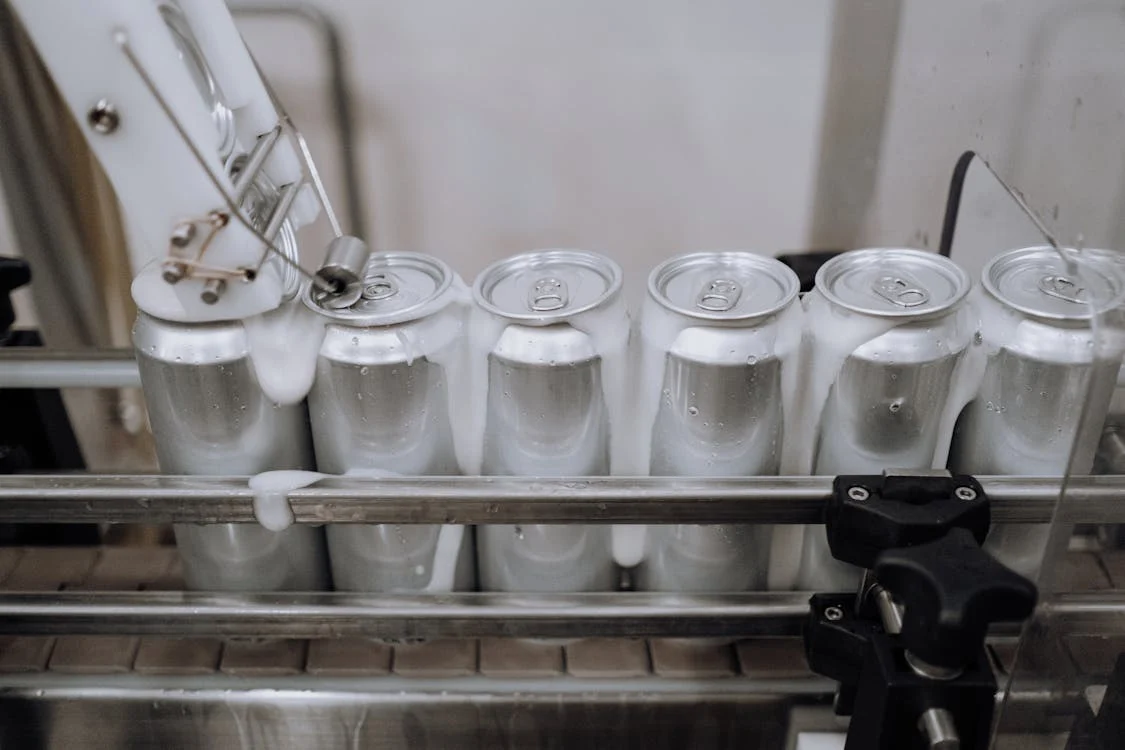
The current policy targets imported raw materials such as aluminum and tinplate steel, which are essential inputs for US manufacturers producing canned goods and beverages. At the same time, many imported finished products do not face equivalent tariff pressure.
This creates a clear imbalance. US producers pay more to manufacture their goods because their inputs are more expensive, while foreign producers can continue exporting finished products without carrying those same cost increases.
Industry groups such as the Can Manufacturers Institute have highlighted this dynamic, arguing that the policy effectively raises domestic production costs while allowing imported goods to remain competitive on supermarket shelves.
What looks like protection at the policy level becomes pressure at the operational level.
The mechanism most people miss
Tariffs do not operate evenly across a supply chain. They apply selectively, and that selectivity determines who actually bears the cost.
In this case, the burden falls on domestic manufacturers because the tariffs increase the cost of the materials they rely on. Meanwhile, imported finished goods bypass much of that cost pressure, allowing them to maintain or even improve their price competitiveness.
What this means in practice is that US producers are squeezed between rising input costs and market pricing constraints. They cannot easily pass those costs on to consumers without losing market share, especially in price-sensitive categories like food and beverages.
This is where financial pressure actually concentrates. Margins tighten, pricing flexibility disappears, and competitive positioning weakens.
The common assumption is that tariffs punish foreign producers. In reality, when applied at the wrong stage, they can place the heaviest burden on domestic businesses instead.
What businesses and policymakers get wrong
The central misunderstanding is that tariffs automatically protect domestic industry. They do not. Their impact depends entirely on how they interact with global supply chains.
Three factors explain the disconnect.
First, modern manufacturing is deeply dependent on global inputs. In the case of canned goods, a significant portion of tinplate steel used in US production is sourced internationally. Increasing the cost of those inputs raises the cost of domestic production almost immediately.
Second, competitive markets limit the ability of companies to pass on higher costs. Retailers and consumers respond quickly to price changes, which means producers often absorb the increase rather than risk losing volume.
Third, policy design often focuses on visible targets, such as imports of raw materials, rather than the full system in which those materials are used. This creates situations where the intended protection does not reach the part of the market that actually determines competitiveness.
Organizations like the Brewers Association have raised similar concerns, noting that tariffs on aluminum packaging increase costs for domestic producers while imported products continue to enter the market under more favorable conditions.
Why this matters beyond manufacturing
The implications extend well beyond the canning or brewing industries.
Higher input costs for manufacturers can translate into higher prices for consumers, reduced investment in domestic production, and a gradual shift in market share toward imported goods. Over time, this can weaken the very sectors the policy is intended to support.
For business leaders, the lesson is not simply about tariffs. It is about how external policy decisions interact with internal cost structures and competitive dynamics. A change in one part of the system can create unintended pressure elsewhere, particularly when supply chains are globally integrated.
For policymakers, the risk is more direct. A policy designed to support domestic industry can produce the opposite outcome if it does not align with how value is actually created and priced in the market.
What this means in practice is that effectiveness depends less on the strength of the intervention and more on its precision.
What this reveals
This situation highlights a broader truth about economic policy and business systems. Outcomes are determined not by intention, but by where pressure is applied within a complex structure.
When costs are increased at the input level but not at the point of final competition, the advantage shifts toward those who can avoid those costs. In this case, that advantage is moving toward foreign producers rather than domestic ones.
This reveals that policies designed to protect industry can weaken it if they target the wrong layer of the system.


