The Architecture of Enterprise Cloud Infrastructure: Performance, Governance, and Scalability in Modern Computing
The global computing landscape has undergone a profound structural shift over the past two decades. Legacy corporate IT departments once relied almost exclusively on localized, on-premises data centers filled with physical server racks, standalone storage arrays, and dedicated network switches. Managing these environments required massive upfront capital expenditure, long procurement cycles, and continuous physical maintenance. As commercial operations scaled globally and real-time data processing became a foundational necessity, the rigid limitations of traditional hardware architecture became an operational bottleneck. Modern digital operations demand a fluid computational foundation capable of expanding or contracting resources instantly to match fluctuating workload volumes.
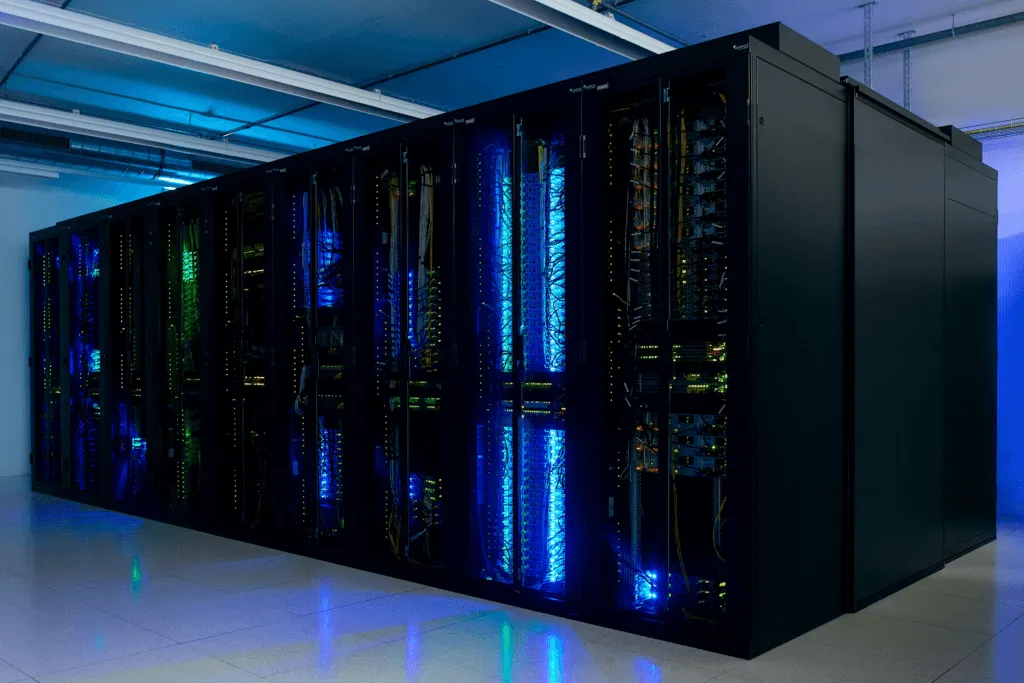
This systemic requirement catalyzed the transition toward centralized, highly virtualized compute environments. Rather than binding software applications to specific physical machines, contemporary system design abstracts raw hardware resources through sophisticated software layers. This abstraction allows organizations to pool processing power, memory, and storage capacity into scalable virtual infrastructure that can be provisioned dynamically across disparate regions.
The Structural Evolution of Corporate Computing Environments
The transition from physical infrastructure to virtualized environments represents a fundamental change in how raw compute assets are managed. At the core of this transformation is the hypervisor, a specialized software layer that divides a physical server’s host hardware into multiple isolated virtual machines. Each virtual environment operates independently with its own operating system, virtual central processing units, dedicated memory allocations, and virtual network interfaces. This multi-tenant physical framework drastically improves hardware utilization rates, replacing underutilized physical servers running at small fractions of their capacity with dense, optimized clusters.
As enterprise architecture mature, virtualization expanded beyond single-server consolidation into massive multi-node clusters managed by automated orchestration platforms. In these sophisticated topologies, hardware failures are abstracted away from the application layer. If a underlying physical node experiences a hardware fault, virtual workloads automatically migrate to operational nodes within milliseconds without causing service disruption. This resilience allows businesses to run mission-critical software continuously while decoupling application reliability from individual physical components.
Mechanical Frameworks and Performance Metrics of Scalable Compute Nodes
Evaluating computational performance in virtualized environments requires an understanding of hardware architecture and resource management. Compute performance depends not only on raw clock speeds, but on how efficiently virtual machines interface with the underlying physical processors, system memory, and storage fabric. High-performance enterprise deployment relies on advanced Non-Uniform Memory Access architectures that optimize how processor cores access physical RAM, reducing latency across multi-socket system boards.
Storage performance is equally critical. Modern data-intensive applications, including real-time analytics engines and high-concurrency databases, require extremely high input and output operations per second paired with ultra-low latency. Consequently, contemporary compute nodes utilize flash storage connected via Non-Volatile Memory Express protocols directly over the Peripheral Component Interconnect Express bus. By bypassing legacy storage controller bottlenecks, these architectures deliver massive data throughput. When paired with high-speed virtual network fabrics operating at hundred-gigabit bandwidths, compute nodes can stream data across clusters with performance metrics that closely rival direct physical hardware access. Organizations seeking to balance computational agility with operational predictability rely on high-performance enterprise cloud servers to process complex workloads, isolate mission-critical applications, and maintain seamless uptime across global networks.
Security Paradigms and Threat Mitigation in Shared Infrastructure
Operating virtualized compute infrastructure across shared hardware introduces unique security considerations that differ significantly from traditional isolated physical networks. In a multi-tenant or multi-workload environment, security architectures must operate under the assumption that boundary perimeters are permeable and that internal network traffic requires continuous validation. This perspective forms the foundation of modern zero-trust security frameworks.
A primary technical objective in virtualized computing is enforcing absolute hardware-level isolation between virtual instances. Modern server processors feature hardware-assisted virtualization extensions that create strict memory boundaries, preventing one virtual machine from inspecting or modifying the memory state of a neighboring instance. Advanced hardware encryption features go a step further by encrypting data stored in system RAM using keys generated directly inside the processor, guarding against physical memory extraction and unauthorized hypervisor access.
At the network layer, micro-segmentation abstracts firewall policies away from physical topology. System administrators can establish granular, identity-based security rules around individual workloads regardless of where they physically reside in a server cluster. Traffic between adjacent virtual machines is monitored and filtered continuously, preventing lateral threat movement in the event that a single application container or virtual machine is compromised.
Regulatory Compliance, Data Sovereignty, and Governance Protocols
As digital infrastructure becomes increasingly globalized, regulatory compliance and data sovereignty have emerged as critical architectural mandates. International legal frameworks dictate strict parameters regarding how personal data, financial records, and medical information must be collected, stored, and processed. Operating across multi-jurisdictional boundaries requires organizations to enforce strict controls over the physical location of their underlying data stores.
Data sovereignty mandates dictate that data remains subject to the privacy laws and governance structures of the specific country or region where it is physically collected or stored. For enterprise system designers, this means compute clusters and storage pools must be bound to distinct geographical zones. High-availability architectures must be carefully configured so that automated failover or data replication mechanisms do not accidentally transfer regulated datasets across international borders into non-compliant jurisdictions.
Achieving compliance with rigorous standards such as SOC 2, ISO 27001, HIPAA, and GDPR requires continuous automated auditing. System logs, access requests, configuration changes, and cryptographic key accesses must be recorded in immutable, tamper-evident audit trails. Automated policy engines continuously scan virtual configurations to identify misconfigurations, unpatched operating systems, or unauthorized access attempts, ensuring that the operational baseline continuously aligns with legal and regulatory mandates.
Hybrid Strategies and High-Availability Disaster Recovery Architectures
Few modern enterprises operate on a single, monolithic infrastructure model. Instead, most organizations deploy hybrid and multi-cloud strategies that combine private on-premises infrastructure with dedicated hosted environments and public compute platforms. This hybrid approach enables businesses to retain legacy systems or ultra-sensitive workloads within private boundaries while leveraging the vast, elastic capacity of distributed cloud networks for dynamic, unpredictable workloads.
Designing high-availability disaster recovery systems within hybrid topologies requires sophisticated data replication and failover planning. Traditional disaster recovery relied on manual failovers to secondary backup data centers, often resulting in hours or days of downtime. Modern cloud recovery frameworks utilize real-time block-level replication and automated DNS routing adjustments to achieve near-zero recovery time objectives and recovery point objectives.
In an active-active disaster recovery configuration, identical compute workloads run concurrently across multiple geographically separated data centers. Traffic balancers distribute incoming user requests across these nodes based on latency, server load, and operational health. If a natural disaster, power outage, or major network disruption renders an entire regional data center inaccessible, global traffic is seamlessly redirected to operational nodes without human intervention, maintaining service continuity even during catastrophic physical events.
Financial Optimization and Dynamic Resource Allocation
While operational agility and technical scalability drive the adoption of virtualized infrastructure, effective financial governance remains essential for long-term sustainability. The financial model of enterprise computing has shifted from capital expenditure models focused on hardware depreciation schedules toward operational expenditure models based on active resource consumption. However, without strict governance, the ease of provisioning virtual compute capacity can lead to resource sprawl and unmanaged expenditure.
To address this challenge, organizations implement formal Financial Operations, commonly known as FinOps, frameworks. FinOps combines engineering, finance, and operational teams to establish accountability over compute costs. Automated monitoring tools track real-time CPU, memory, and disk utilization metrics across all active virtual nodes. Machine learning algorithms analyze historical usage patterns to identify idle or underutilized instances, recommending right-sizing adjustments or automated shutdown schedules for non-production environments during off-peak hours.
Furthermore, dynamic auto-scaling policies ensure that infrastructure expenses scale directly with actual business demand. Rather than provisioning hardware to handle annual peak traffic spikes year-round, auto-scaling groups automatically spin up additional compute instances when CPU or memory thresholds are breached, and terminate those surplus instances as traffic subsides. This elastic resource management minimizes wasted capacity, aligning infrastructural investment with precise computational requirements.
AI Acceleration and Edge Computing Integrations
Looking toward the future, the demands placed on enterprise infrastructure are accelerating rapidly due to the integration of artificial intelligence, machine learning, and edge computing architectures. High-density computational workloads, such as training large language models or executing complex predictive analytics, require specialized hardware accelerators, including Graphics Processing Units and Tensor Processing Units. Modern compute infrastructure is adapting to support these high-draw, high-thermal units, providing dedicated interconnects that allow thousands of GPU cores to operate as a single unified computing matrix.
Simultaneously, the rise of Internet of Things devices and latency-sensitive enterprise applications is driving computational resources outward from central data centers toward the network edge. Edge compute nodes process raw data in close physical proximity to where it is generated—whether on a factory floor, inside a medical facility, or within an autonomous transit network. By processing data locally and transmitting only aggregated insights back to centralized servers, edge infrastructure drastically reduces network latency and bandwidth consumption.
As quantum computing capabilities advance, enterprise infrastructure must also evolve to adopt quantum-resistant cryptographic algorithms. Protecting long-term historical data against future decryption threats requires migrating current public-key cryptography to lattice-based post-quantum algorithms. By continuously integrating cutting-edge hardware acceleration, edge distribution models, and post-quantum security frameworks, enterprise compute infrastructure remains the essential engine driving global commerce, scientific research, and technological innovation.