From gaming streams to breaking news: How digital natives are redefining local journalism at The Baltimore Banner
When The Baltimore Banner launched in 2022 under the stewardship of the Venetoulis Institute for Local Journalism, it entered a competitive media landscape with a clear mandate: deliver reliable, trusted journalism to the people of Baltimore.
Within two years, the results spoke volumes. By 2024, the nonprofit newsroom had built a subscriber base of 55,000, contributing 45% toward a robust $13 million revenue mix spanning subscriptions (45%), advertising (35%) and philanthropy (22%).
In 2025, its commitment to investigative reporting has already earned national recognition, including a Polk award for opioid coverage and a Pulitzer for local reporting. In September, CEO Bob Cohen outlinined accelerated expansion plans – including the recruitment of additional local reporters and editors – proving The Banner is scaling both impact and ambition.
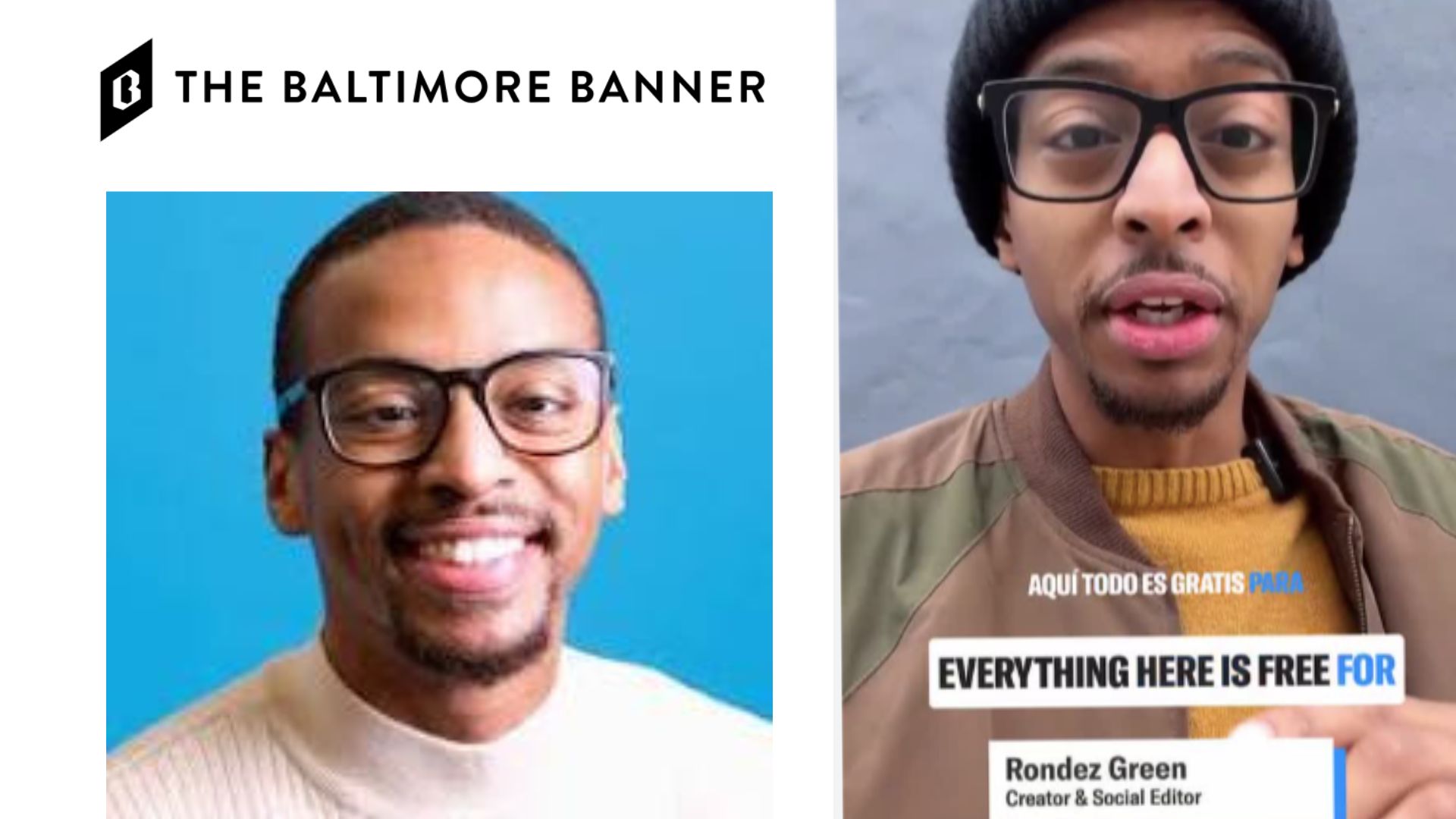
At the heart of this growth story is an unexpected but increasingly vital newsroom role: the digital-native content creator. And few embody this evolution better than creative digital storyteller and theatrical artist Rondez Green.
A digital native meets local journalism
Green’s journey into journalism did not begin in a newsroom – it began on YouTube and Twitch.
As a teenager, he built a loyal online following around gaming. Over time, his livestreams evolved into thoughtful commentary on social and political issues, particularly within the gaming and technology industries. His audience began to expect more than entertainment; they expected verification, nuance and clarity.
“I realised people were looking to me as a trusted source,” he reflects. “Someone who would fact-find, relay verifiable information and provide nuanced commentary that’s based in reality – and digestible.”
That credibility translated into opportunity when Major League Gaming recruited him to host the eSports Report. The role marked a turning point. After working a string of jobs – “I’ve been a cashier at a $1 store; scrubbed toilets at the restaurant that I was bartending at… I’ve worked in warehouses, served vegan fare…” – Green was able to pay his way through college from digital storytelling.
So when he spotted the job posting from The Banner on LinkedIn last October, the connection felt immediate. “This sounds exactly like what I already do for free!” he recalls.
A new kind of newsroom role
Today, Green is fully embedded within The Banner’s newsroom as part of a new cohort of digital content creators.
His remit goes beyond traditional reporting: “In addition to being immersed in the community, it’s not just about showing up to places where everyone else is at, but also going to places where no one else wants to be; for example: the largest sewage spill in US history.”
Getting out of his comfort zone – from covering music, arts, culture and “nerd culture” to hard news such as civic emergencies has proven invigorating: “There’s something deeply satisfying,” he says, “about knowing someone at home feels comforted by getting accurate updates – understanding what’s happening and how they can act on it.”
His approach to news is inherently connected. Local stories do not exist in isolation; global supply chains, national politics and international developments ripple into Baltimore neighbourhoods. For Green, contextualising those links is central to building trust.
“What’s happening locally is connected to something happening in another country – whether it’s a product you use or a policy decision. Knowing that matters.”
Performance meets public service
Green’s background in performance shapes his journalism. A community theatre artist who has appeared in several Maryland musicals, he is also part of a digital comedy troupe producing fantasy and comedy content across social platforms. Speaking to live audiences – on stage, on campus, online – has enhanced his fluency, confidence and presence. And, says Green, in the newsroom, that translates into accessible storytelling.
He admits that censorship was one of his biggest initial concerns: “Are they going to expect me to censor what I have to say and how I feel?”
Instead, he found the opposite: “The audience engagement team helps expand and strengthen my stories,” he explains. “It’s about adding depth, more fact-finding, more information – not limiting opinion, but grounding it.”
The Baltimore Banner’s willingness to embed creative digital natives at the heart of its newsroom is echoing across newsrooms the world over, reflecting a hybrid model of personality-driven, rigorous reporting of news backed by traditional standards.
The relationship is symbiotic and mutually beneficial: Content creators bring their communities, newsrooms add expertise and institutional backing.