Asked and Answered: Journalism’s value and how to show it
Since its inception in 2018, World News Day has advocated for journalists and newsrooms to tackle the crisis of trust by showing their worth. In fact, the inaugural event featured citizens whose lives had been positively impacted by investigations sharing their stories alongside the journalists who reported on it.
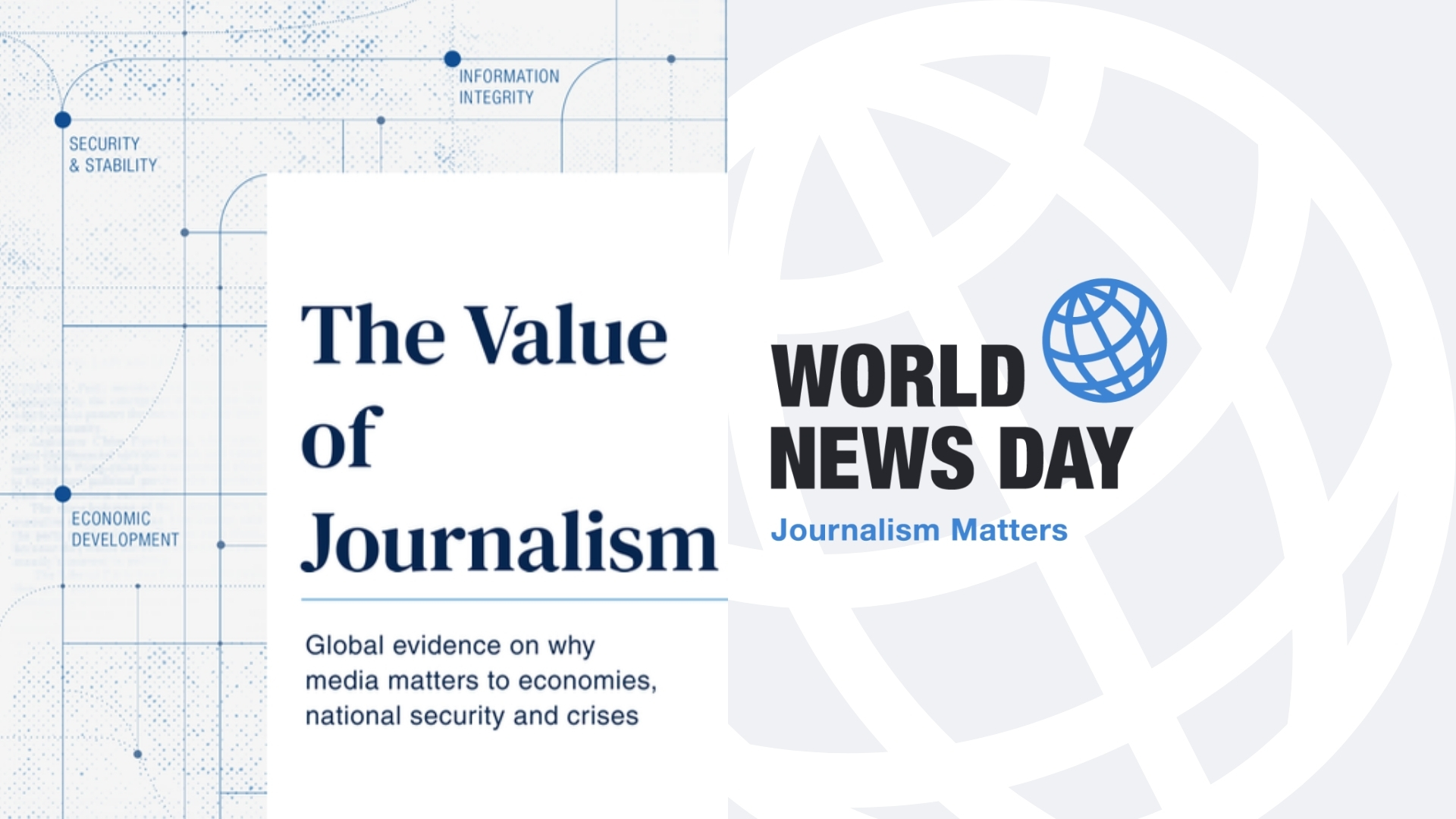
As journalism’s existential crisis has deepened, there is even greater need to do so. This year, we have data to strengthen claims, thanks to a comprehensive report: The Value of Journalism: Global evidence on why media matters to economics, national security and crises.
The report on the value of journalism quantifies just how much of a public good journalism actually is. Commissioned by DW Akademie, the International Fund for Public Interest Media, and UNESCO, the report outlines “why media matters to economies, national security and crises.”
The study found, amongst others, that:
- Disinformation costs an estimated US$350-520 billion a year; it also threatens security by increasing the risk of conflict and war due to interference by malicious actors.
- Conversely, investigative journalism delivers strong returns: “Every US$1 spent on journalism can result in more than $100 in savings to the public through reclaimed funds, improved public services and reduced corruption,” reads the report.
As the report notes, journalism and press freedom are under attack – even as the data shows that it can save lives during crises. This World News Day, we’re using all available tools to help spread the message that journalism, by helping people know the facts and understand what matters, is valuable.
And, proving the adage that “necessity breeds invention,” newsrooms across the world – mostly under-resourced, under limited freedoms – are adapting to meet the myriad challenges of our times, with initiatives that celebrate fact-based journalism, fight misinformation, and build trust with audiences.
See how they’re doing it, and how you can, too.
The Ask: Highlight consequential journalism
In the US, National Public Radio (NPR)’s The Story Behind The Story series is a weekly live show with correspondents going behind the news to explain how they do their journalism, while ProPublica’s Impact Report, published three times a year, names the specific recalls, court rulings and legislative changes its investigations triggered.
The Ask: Newsroom-branded, interactive fact-checking games/quizzes
Released earlier this year, Predatorgate is a 30-minute video game based on an investigation into the Predator spyware scandal in Greece by Inside Story, featuring the journalist Thanasis Koukakis, as a colleague whose phone has been targeted for surveillance. A GIJN feature on the origins of the game also explores various other initiatives news outlets around the world into taking investigative stories to the broader gaming community.
The Ask: Media literacy workshops
Rappler’s civic engagement arm, MovePH, has run a recurring media and information literacy series since 2023 through the #FactsFirstPH initiative. In 2024, it launched RappLearn, a free ongoing platform built by practising journalists that offers various courses, including a free, self-directed online Media and Information Literacy Course to promote digital literacy, critical thinking and civil society-media collaboration, amongst other skills.
The Ask: Community initiatives
Le Monde’s Festival du Monde opens the paper’s offices to the public annually, with directors giving tours.
- Earlier this year PublicSource, a nonprofit newsroom in Pittsburgh, ran “You Have the Floor,” seven small-group listening events across seven days in different neighbourhoods, asking the community what it wants and needs from local news.
- Voices, a collaborative initiative of leading watchdog groups, co-founded by the European Union and billed as “the first European Festival of Journalism and Media Freedom,” is an itinerant annual initiative that engages with different communities in cities across Europe to emphasise media freedom and media literacy as essential elements for functioning societies. The fourth festival takes place in Thessaloniki, Greece, from 26-28 November.
The Ask: Utilise advertising and visual assets
Reporters Without Borders‘ long-running pro-bono campaigns with agencies worldwide are the best-documented example of visual work illustrating threats to press freedom, with award-winning, provocative print ads. The Washington Post’s Freedom Desk – formerly the Press Freedom Partnership, launched after journalist Jamal Khashoggi’s murder – shows how a newsroom can deploy its own marketing and ad capabilities to champion press freedom.
WATCH: Reporters Without Borders’ Reporters Airlines campaign