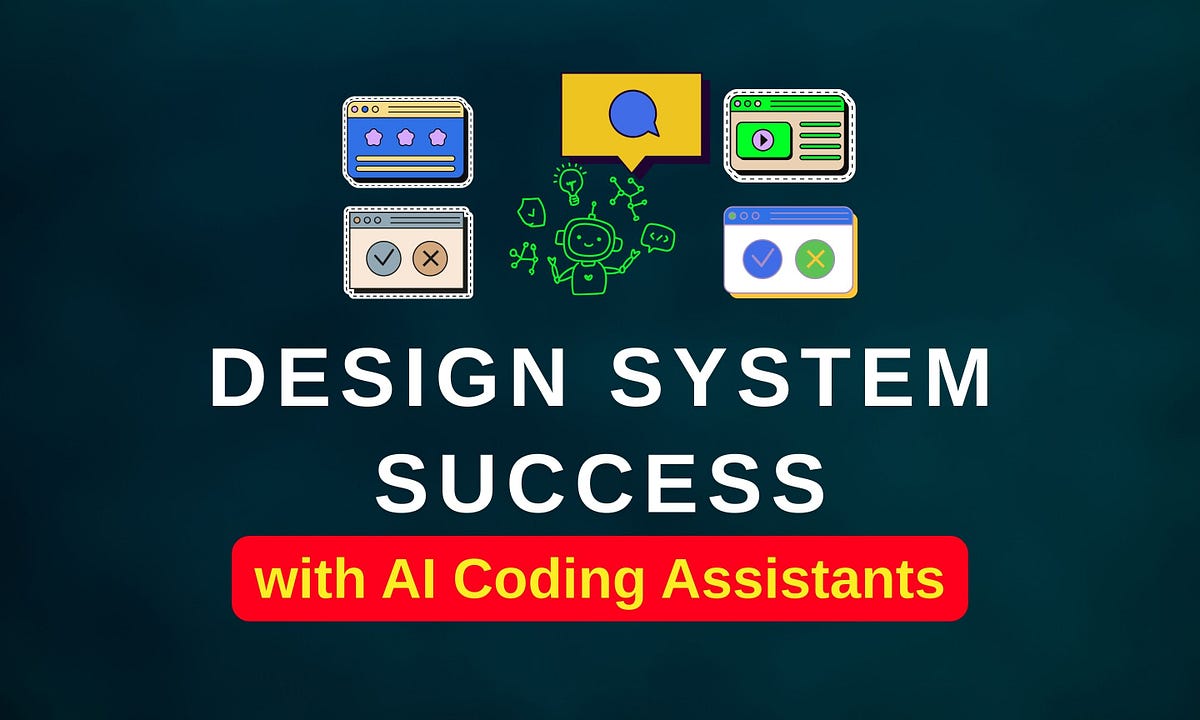
Design System Success with AI Coding Assistants | by Mike Chen | Mar, 2025
When your design system is composed of individually versioned components, you can test and validate each one in isolation:
Once a component passes testing, you can export it — along with its version, documentation, and test results — to a remote repository. This means:
- Consistent access: Projects across your organization can import tested, validated components.
- Controlled upgrades: If the AI or a developer updates a component, teams can decide whether to adopt the new version.
- Traceable history: You can track who changed what, when, and why.
Testing Advantage: “Validated components give developers confidence that the AI’s recommended usage won’t break design standards in other projects.”
A successful design system is rarely built by a single team. Involving diverse stakeholders — UX designers, QA testers, junior devs — can enhance creativity, catch errors sooner, and spread ownership of the design system. Effective collaboration involves:
Collaboration Model Insight: “By sharing ownership, you create a living system where contributions and improvements are continuous, not bottlenecked by a single design team.”
Open-Source-Like Governance
You can think of your organization’s design system as an internal open-source project. Individuals outside the core design system team can:
- File issues or feature requests if they spot inconsistent usage.
- Submit merge requests with code improvements for components.
- Discuss or vote on major changes or new components.
This transparent governance fosters a sense of shared responsibility. Teams no longer wait on a single specialized group to fix design issues; they can directly contribute to or guide the AI’s future suggestions.
AI coding assistants can be a powerful ally in scaling your design system, but only if they consistently apply your established rules and patterns. By focusing on modular, composable components, providing thorough and AI-friendly documentation, leveraging specialized AI tools, rigorously testing and validating each component, and encouraging collaborative governance, you’ll transform the AI from a sometimes-risky helper into a reliable partner.
In doing so, your design system evolves organically, reflecting your organization’s growing needs while maintaining the cohesive, polished user experience that sets your products apart. Embrace these best practices and watch your AI assistant become a crucial catalyst for design consistency, efficiency, and innovation.
Thanks for reading!