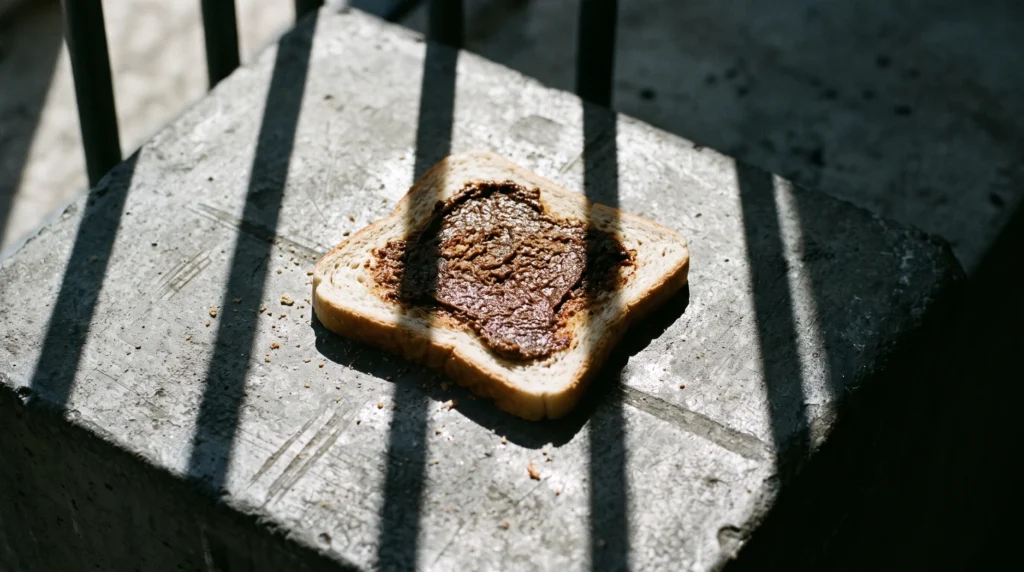
Australian Court Rules Vegemite Ban Proportionate Despite Status as Cultural Icon
A justice of the Supreme Court of Victoria has ruled that prison security requirements outweigh an inmate’s right to consume Vegemite, dismissing a legal challenge that argued the ban on the yeast extract breached human rights. On Monday, October 26, 2026, Justice Claire Harris delivered a 47-page judgment concluding that while the ban does limit certain cultural rights, it remains a proportionate measure to maintain order within the correctional system.
The legal challenge was brought by 55-year-old Andre McKechnie, who is currently serving a life sentence for the 1994 murder of property developer Otto Kuhne. McKechnie contended that the prohibition of the iconic Australian spread violated his rights under the Victorian Charter of Human Rights and Responsibilities Act 2006, specifically his right to enjoy his culture as an Australian.
delivered the 47-page judgment in the .
In her ruling, Justice Harris acknowledged the unique status of the product, describing Vegemite as a food “strongly and traditionally associated” with Australian identity and a “legitimate cultural icon.” However, the court found that the security risks identified by prison authorities justified the restriction. All 12 prisons in Victoria have banned the spread since 2006 due to two primary security concerns.
Security Risks and Illicit Activity
Correctional authorities testified that the pungent odor of Vegemite is frequently used by inmates to mask the scent of illicit drugs from detection dogs. Beyond its use as a olfactory decoy, officials argued that the spread facilitates the production of “hooch,” or prison-made alcohol. Although commercial Vegemite does not contain live yeast, its high concentration of B vitamins and nutrients can act as a catalyst or nutrient source for fermentation when combined with sugar and water.
McKechnie’s legal team argued that the ban was an arbitrary breach of rights, pointing to the fact that Vegemite remains permitted in New South Wales prisons. This discrepancy formed a central part of the plaintiff’s argument that the security risks in Victoria were overstated or could be managed through less restrictive means. Currently, Victoria, Queensland, South Australia, and Tasmania maintain bans on the product, while New South Wales continues to allow it.
Justice Harris ultimately determined that the decision to maintain the ban was not an “arbitrary” one. The court ruled that the security objectives—preventing the smuggling of contraband and the production of illicit substances—were significant enough to justify the “proportionate” limitation of McKechnie’s cultural rights. The judgment marks the end of a multi-year effort by the inmate to have the breakfast staple returned to prison commissaries across the state.