Brut’s blueprint to connect young journalists with young audiences
This article originally appeared in our World News Media Congress 2026 report. Read more about it, and WAN-IFRA Members can download the full report on our Knowledge Hub.
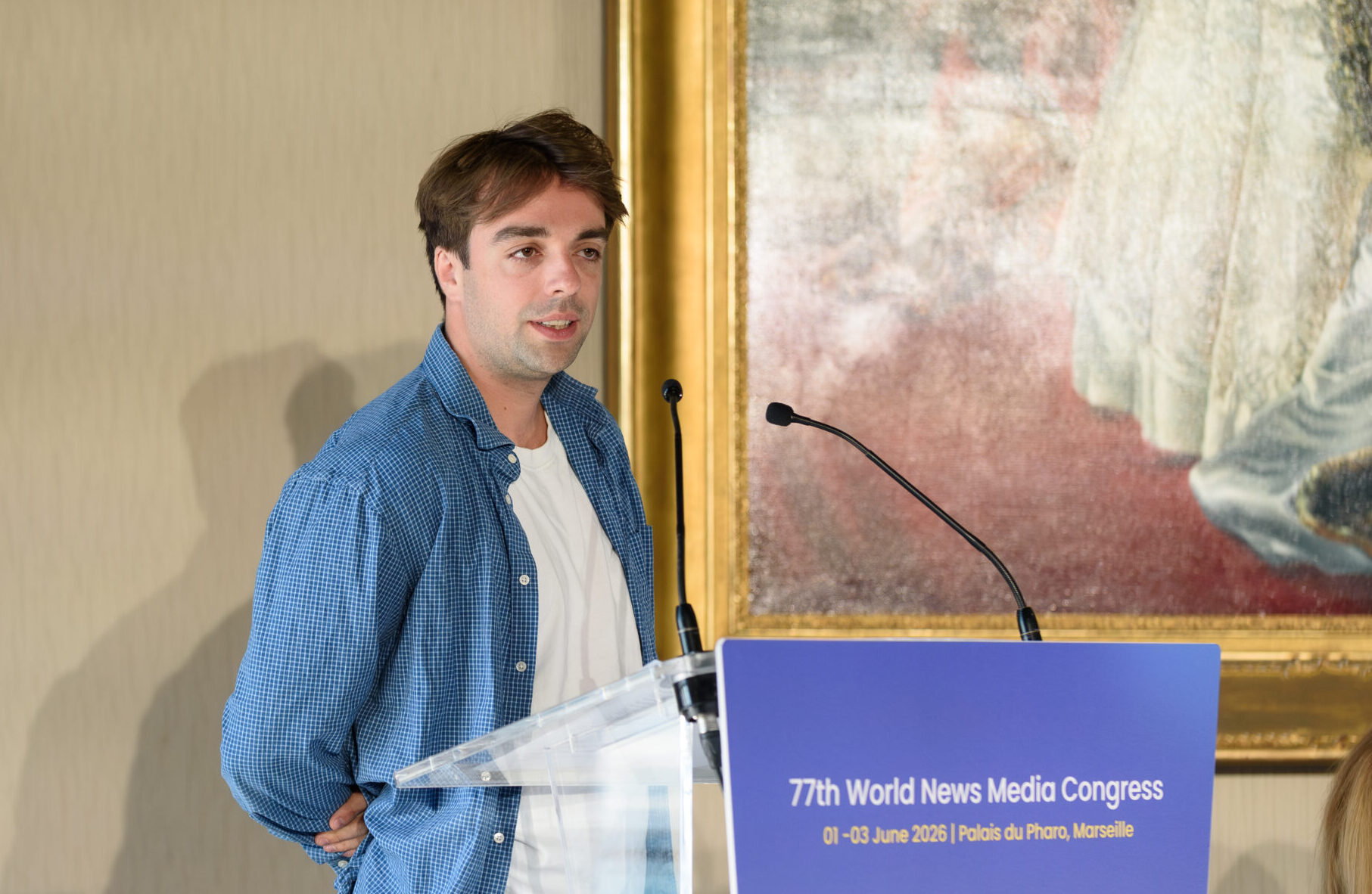
“From day one, Brut made a choice. We would be a video-native media only,” said Etienne Mélou, Long-Form Editor-in-Chief and Producer at Brut.
Since its creation in 2016, the French digital publisher has stayed true to its original strategy of focusing on video-based journalism and distributing it on social media, even if its use of channels has expanded.
“We first started on Facebook, and now we are on every platform. […] TikTok, YouTube, Snapchat, everything,” Mélou said.
Another early decision that has been essential was to create a “young newsroom, to speak to a young audience,” he said.
“When Brut was launched, many younger audiences felt disconnected from traditional media. They didn’t necessarily see themselves represented in the topics being covered or in the way news was delivered. Brut filled that gap,” he said.
“We didn’t simply distribute traditional journalism on social platforms. We built a completely different way of informing people. We adapted journalism to the habits of social audiences, instead of asking audiences to adapt to us.”
“Many people believed social media and serious journalism couldn’t coexist. And now Brut sits alongside some of the largest and most established news organisations in the world” in terms of views on social media, he said.
Having started in France, the company has expanded internationally and now has a global reach, with offices in India and the US and a significant audience in Africa.
Read more: Brut India bet on platform users over news consumers – and it paid off
’Representation matters’
Despite its modern digital distribution strategy, Brut’s success actually rests on an almost old-fashioned concept: trust. Mélou said this is “probably the most valuable asset” for a media company today, especially on social media.
While studies show that only 31 percent of French people trust traditional news media, Brut’s own research shows that 86 percent believe that their videos are trustworthy.
Part of this is down to Brut’s aim to “change the faces of news,” Mélou said.
“Representation matters. Young audiences want to see people who understand their realities,” he said.
“That’s why journalist-led formats have become increasingly important for us. Young people speaking to young people creates identification and trust.”
True multimedia journalists
Mélou said that all Brut’s journalists are “multi-skilled” and can write, shoot, edit and publish content, which has allowed the company to reduce the layers required for video production.
Previously, the Brut’s newsroom was organised based on content formats: in short-form, mid-form and long-form teams. But early this year, the focus shifted more on journalist-led content, with the newsroom now being divided into the news team and the creator team.
The reason for this is YouTube, which is “probably the most exciting platform today, but also one of the most challenging,” Mélou said.
Because YouTube is built around creators, a news organisation on the platform is at a disadvantage and needs to adapt its strategy to compete, given that YouTube’s algorithm favours personalities, entertain-
ment and direct relationships with audiences.
This has led Brut to refine its definition of success on YouTube, which “isn’t only about views” but also about engagement and long-term community-building, Mélou said.
“We’d rather have a highly engaged community than a video that simply generates a spike in the traffic and then disappears.”
’Journalist-creator’ strategy
Brut’s answer to this conundrum is a “journalist-creator” strategy: each journalist has their own format, a distinct tone of voice and a particular area of expertise, ranging from geopolitics to sports. Each journalist also focuses on developing their own direct relationship with their community.
“People come to Brut for our journalism, but they also come for the journalists themselves. And I think that’s one of the biggest shifts happening in media today, especially for media on social platforms,” Mélou said.
He emphasised the importance of video format, which he sees as a crucial asset for news publishers to build engaged communities in the digital sphere.
“Video is not just a format, it’s a powerful tool to make journalism more accessible, more engaging, and more human.”
“And in a media environment where attention is fragmented and trust is increasingly difficult to earn, I believe it’s one of the biggest advantages that any newsroom can have.”