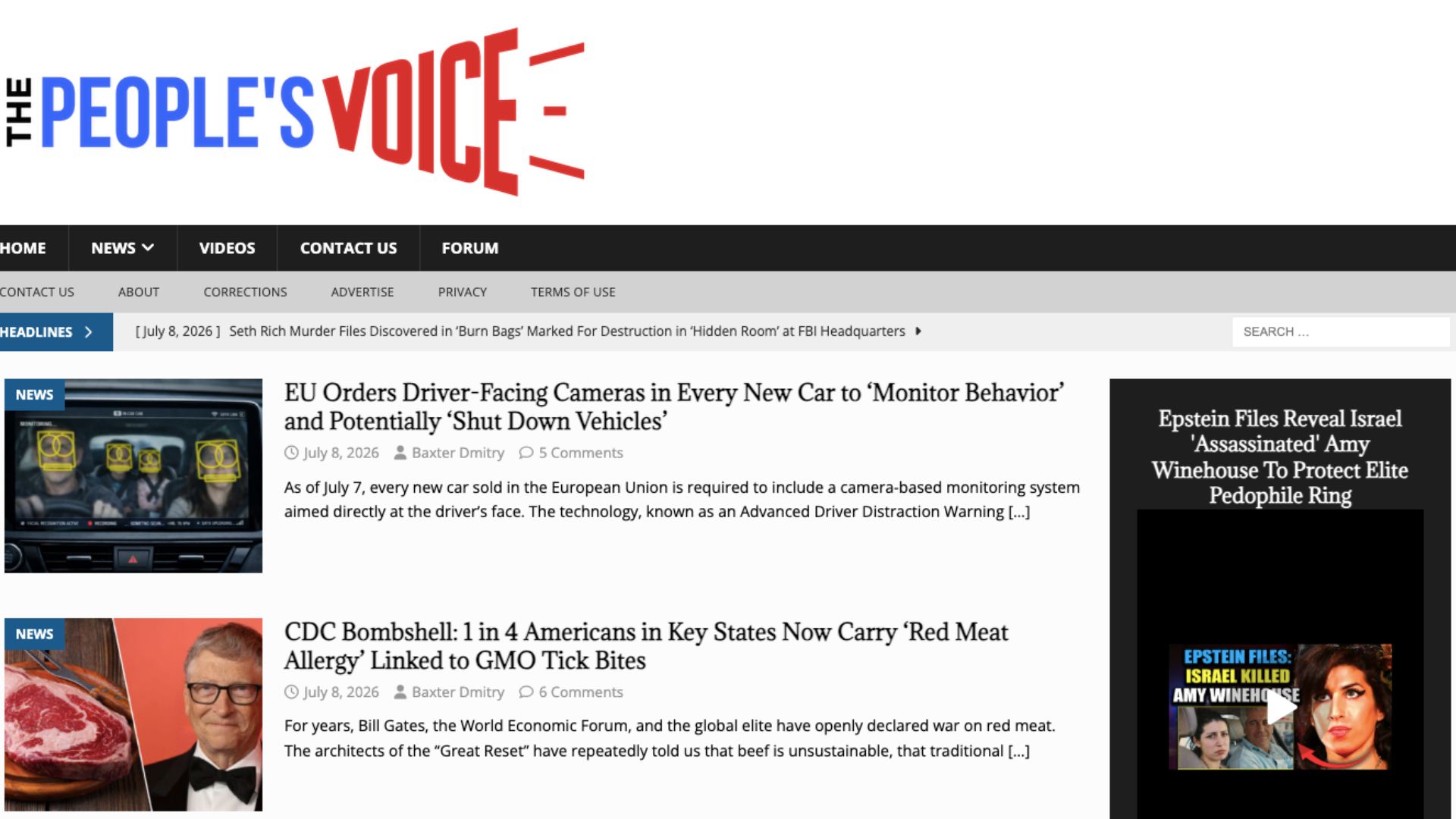
He’s found 15,000+ fake AI news sites. Here’s what you need to know…
Jean-Marc Manach started receiving Google Alerts at the beginning of 2024, which sent him to news sites he’d never heard of – and discovered their journalists didn’t exist. “Their articles were either translated into French from relevant news sites (like Politico or Euronews), or AI-generated to paraphrase articles written by real journalists to avoid being accused of ‘duplicate content,’” he reveals.
By May 2024, Manach – a seasoned OSINT investigative journalist and media educator working for Next.ink, a French pre-player – had identified about 75 AI-generated news sites and, working with some of his students, discovered that at least 25 percent of them were made up of plagiarised news articles.
By September, the list had grown to more than 250 – and as the pace accelerated, he sought help from the fact-checkers of Liberation.fr, Checknews: “In December, the list surpassed 500 GenAI news sites, and 1,000 in February 2025, when we published our first articles,” says Manach.
Publication was delayed because at the time, more than 40 French media launched a judicial complaint against a GenAI news site that plagiarised some 6,000 articles – a day.
Global information tracker NewsGuard claims the number of AI-enabled fake news sites – operated by little or no human supervision – increased tenfold in 2023.
To date, NewsGuard’s team has identified 3,749 AI Content Farm news and information websites spanning 16 languages (Arabic, Chinese, Czech, Dutch, English, French, German, Indonesian, Italian, Korean, Portuguese, Russian, Spanish, Tagalog, Thai, and Turkish).
Manach has discovered 15,000 GenAI news sites in French alone – ”Plus about 1,500 in English; 200+ in German; 130 in Spanish, and dozens in other languages” – as he tracks, not only those created to spread disinformation, but also those (“the majority”) developed to make money by featuring ads.
Suspect sources: Who does this?
Most sites have been launched by SEO professionals: “At first, to target Google Discover, as it became the main traffic driver for news sites, allowing some of them to earn hundreds or thousands of dollars a day.”
According to Manach, more than 75 percent of those GenAI news sites have been launched by less than 300 editors, “mostly solo or micro enterprises; about 100 of them manage link farms of more than 20 news sites, some of them more than 100, or even more than 10 000 (for netlinking/SEO/GEO purposes).
More media companies also “dope/augment” their journalists’ capabilities – or even replace them: “One of the three main French internet media groups recently announced that it would fire 40 percent of its employees, and we’ve discovered that on some of its websites, 50 percent of the journalists didn’t actually exist and were AI-generated.”
He’s also seen a single journalist publish 500 articles, per day, with several different versions of the same stories, in order to maximise the probability of being recommended on Discover or MSN portal.
Generating confusion – and cashing in
More and more “real” media companies and journalists are also turning to GenAI content, as this lets them publish multiple more articles a day, every day. “Two of the biggest French news editors also rely heavily on GenAI, having launched GEO (generative engine optimisation) business lines to sell branded services designed for mention in LLM and by AI chatbots.
Google Discover recommendations are the primary target. “Last summer, almost 20 percent of the 1,000 news sites most recommended by Discover were AI-generated, as were 33 percent of the Top120 technology news sites recommended by Google News,” notes Manach.
People are succumbing to this alarming abuse and pollution of the information ecosystem: “In December, Mediametrie discovered that the 250 most recommended GenAI news sites were visited, each month, by 15-16 million people (a quarter of all French citizens) – and that 75 percent of them were 50 years old or more,” adds Manach, who has written some 50 articles on this issue. “In April, those numbers grew to 23 million people per month, to include almost 40 percent of French people.”
The deception can pay handsome dividends: “Two of these editors even earned more than $2 million in only three months with one site on Discover, in English, as Google’s recommendation algorithm failed to understand that people were spending more time on a deceptive article because they were doing so to scrutinise and write complaints to the editors,” notes Manach, “and not because they liked its content.”
Ringing the alarm
As an internet investigative, OSINT and fact-checking journalist with more than three decades of specialisation, Manach is ringing the alarm because of the unprecedented speed, scope and impact of his discoveries: “I’ve seen a single SEO professional publish thousands of articles a day, reaching more people than all of the main French media companies, with articles falsely accusing some hypermarkets of selling carcinogenic meat, rotten food washed with bleach or refrozen, and other clickbait titles “hallucinated” by the AI he was using.
“I’ve also seen real human journalists write articles spreading fake news hallucinated by some GenAI news sites, and local news sites plagiarised by GenAI news sites developed by self-proclaimed ‘media startups’…
‘GenAI news sites are spreading several different fake versions about real news events in order to confuse people, and we must face it and fight back.’
Spotting the tell-tale signs
Manach admits that it’s getting more and more difficult to identify AI-generated text and images: “I’ve never used automatic AI detectors, as their statistical methods send too many false positives and false negatives; some even create fake LinkedIn profiles to white-wash their GenAI journalists.”
He follows forensic, intelligence and OSINT professional practices: “I look more at metadata than at content, trying to find a body of evidence/bundle of indicators faisceau d’indices (with my own eyes):
- How many articles are published by the same authors, in which timeframe/hours, and does this journalist exist?
- Who’s the editor in the legal mentions, and is it a real media company, with how many other news sites attached to it?
- How many other domain names are attached to its owner in the WHOIS database, and/or using the same advertising ID (as most GenAI editors rely on link farms)?
- Are the article frameworks over-reliant on formatting, FAQ, and tones that resemble more of GenAI content than human-written articles?
Left unchecked, the problem will only compound, reckons Manach, pointing to a Next.ink user response to a vibe-coded warning message alerting them to GenAI news sites: the list contained about 40 percent of sites the user visited. With AI policy, regulation and enforcement of laws still very much in question, the onus is on news media to become “safe places” for people looking for verified news in this polluted information ecosystem, advises Manach.
As the AI Act requires AI generated content to be labelled as such, and as none of those sites are transparent about their use of generative AI, Next.ink have also developed a free browser extension to show an alert box when its users visit those AI-generated news sites.
See also: NewsGuard’s Quarterly AI False Claim Monitor – May 2026
And: Nearly 50 news websites are ‘AI-generated’, a study says. Would I be able to tell?
Tools: Reporter’s Guide to Detecting AI-Generated Content