Politico is turning geopolitical complexity into its biggest subscription opportunity
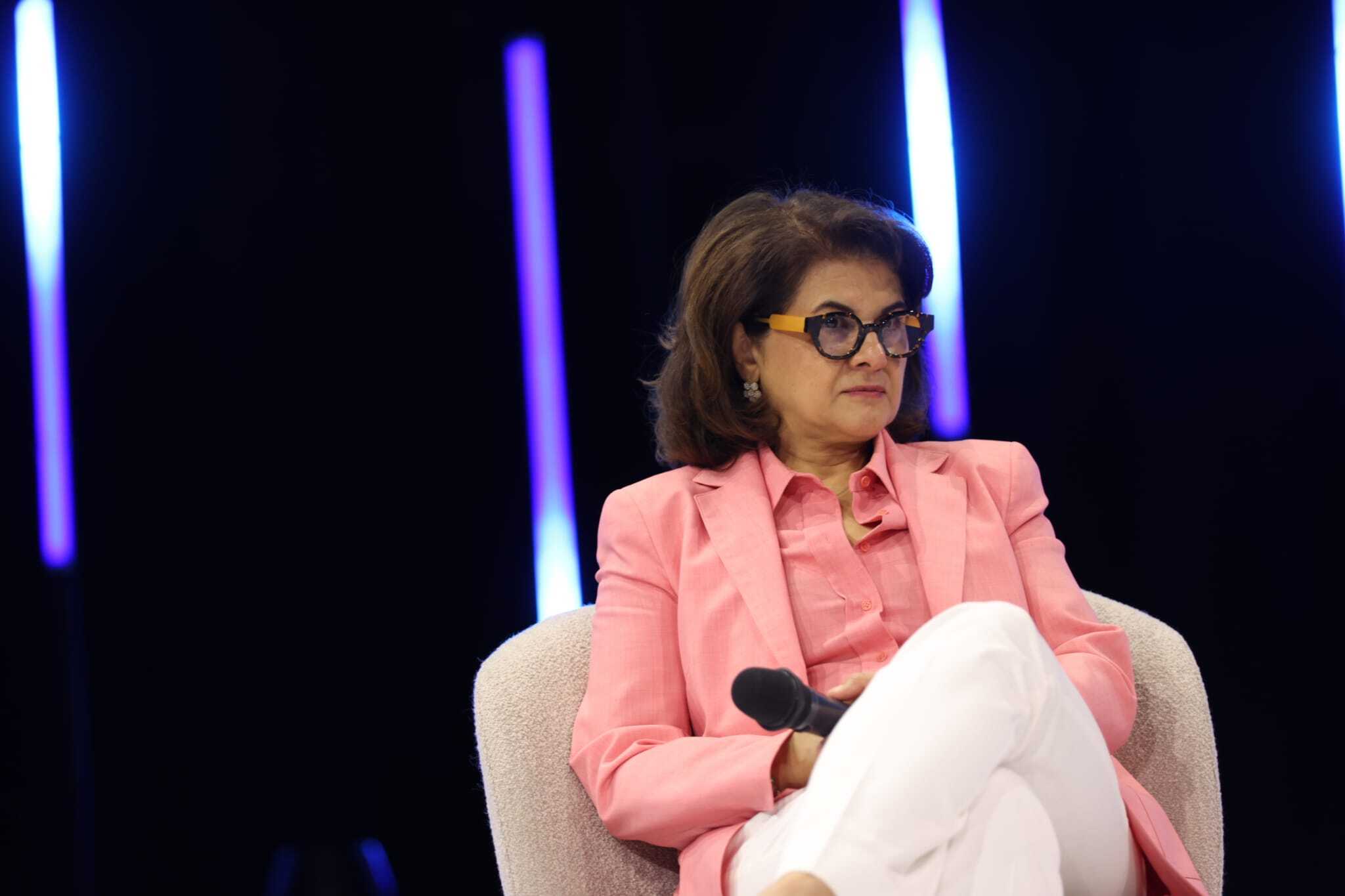
For Goli Sheikholeslami, CEO of Politico, that is not a threat, but an opening. “Even amid the disruption AI creates, this is a moment filled with opportunity for Politico,” she said.
She identified three key opportunities:
- Original and trusted journalism is becoming more valuable, not less.
- In an agentic world, news organisations can expand to serve new audiences in new ways.
- The demand for in-person human connection is growing as AI takes over more and more of daily life.
Sheikholeslami laid out that case at WAN-IFRA’s World News Media Congress this week in Marseille.
Much of the internet today is AI generated, and as that share rises, original, reported, verified intelligence – the kind that helps people make important decisions – is becoming more valuable.
“Navigating complexity with trusted intelligence is at the core of Politico’s success. The scarce resource will not be information, it will be trust,” she said.
Decoding power, one capital at a time
Politico was founded in 2007 with the singular goal of covering policy, politics and power in Washington DC.
Today, it employs more than 1,000 journalists and publishing professionals across eight power centres – Washington DC, Brussels, London, Paris, Berlin, Sacramento, New York and Ottawa – with Madrid and Canberra to follow later this year.
“We are clear-eyed about who we serve,” Sheikholeslami said. “The most influential people who need our journalism to understand how politics and policy impact them, their business, and the world.”
More than 60 percent of Politico’s revenue comes from professional subscriptions, a business born in 2011 to decode the Affordable Care Act. The law spanned thousands of pages and involved dozens of regulatory agencies.
The people who needed to understand it: lobbyists, hospital executives, pharmaceutical companies, state officials, also needed someone to translate the action in real time. Politico did that, then quickly learned the same need extended to everything Congress touched.
By 2015, the model had scaled to Brussels and the institutions of the European Union, and then to every other capital that followed.
The value proposition has only sharpened as geopolitics has moved to the centre of every major business and investment decision.
“When the United States announces new tariffs, we can cover the reaction and next moves from Ottawa to Brussels to Berlin,” she said, “and for an executive whose profitability depends on the tariff rate you can easily see why they would pay to have that trusted intelligence first and at their fingertips.”
Policy reporting as a market signal
“We have had one major epiphany about this era,” Sheikholeslami said. “Politico’s journalism is not only content to be read, watched and listened to, but intelligence and data that can serve entirely new audiences.”
That means expanding from policy professionals to investment professionals.
“Portfolio managers need to quickly infer what matters as a market signal from the deep reporting Politico’s journalists are already doing,” she noted.
“Increasingly, these professionals expect intelligence to flow directly into the workflows they rely on – whether an internal research system or an AI assistant synthesising information in real time. Through AI-powered integrations, Politico intends to deliver its journalism and data directly into those workflows,” Sheikholeslami added.
The reporting remains the foundation.
“Original journalism reported, verified and contextualised by humans remains the core product,” she said.
Politico pioneered the email newsletter because it understood that valuable information only matters if it reaches audiences in the format that best fits their work and life. The same philosophy, she said, guides the company today.
Betting big on live events
“The greatest surprise has been that more people are seeking scarce human experiences that create trust and bring people together,” Sheikholeslami said.
As digital experiences become automated, Politico has built a product around that instinct.
The Politico Hub, its signature live format deployed on the sidelines of major world events, is, “both a stage for live journalism and a space for meaningful human connection over food and drink.”
“As AI makes generic and often useless information more abundant, the premium shifts to trusted brands that can convene the right people in the right room for the right conversation,” she said.
Sheikholeslami was unambiguous about its place in the business. “This is not adjacent to the business. It is central to the business.”
Each event reinforces the next: deepening audience trust, editorial authority and commercial value simultaneously.
Building AI into the journalism
Politico is embedding technology directly into the newsroom, not as a side function or an isolated lab experiment, but sitting next to the reporting, the editors and the urgency of the news cycle.
“Instead of cutting back in an AI era Politico is investing more in our journalism and we are pairing that investment with transformative technology that empowers our journalists.”
The strongest media companies, she concluded, will not just survive AI.
“There will be more demand for trusted journalism, more opportunities to deliver that journalism to more people and more interest in in-person events than ever before.”