Changing the narrative for 3 May, World Press Freedom Day
WAN-IFRA’s global advocacy is a backstop for declining press freedom everywhere. It is vital to speak out against the most egregious crimes, particularly when those with the political and economic power to reverse the trend remain silent or inactive.
A case in point: our Lebanese colleague Amal Khalil, a member of the 2016 Women In News Leadership Accelerator programme, our first in the MENA region, killed in an Israeli airstrike on 22 April. Multiple reports indicated shelling and direct fire prevented emergency teams from reaching her.
Obstructing rescue operations constitutes a violation of international humanitarian law, a war crime. A full, transparent investigation is needed to understand what happened and to bring those responsible to justice, but Israel’s track record of holding its own military forces to account is woeful.
Such indifference simply underlines the broader necessity of our work. Frustration at the lack of action, disrespect for norms, or failures in the rule of law shouldn’t obscure the many positives that come from the industry’s daily engagement in defence of its rights.
Instead, we need to celebrate the impact that is achievable, if for no other reason than it serves to strengthen our call for justice for Amal and the thousands of colleagues who have given their lives in pursuit of journalism.
Fighting for the means
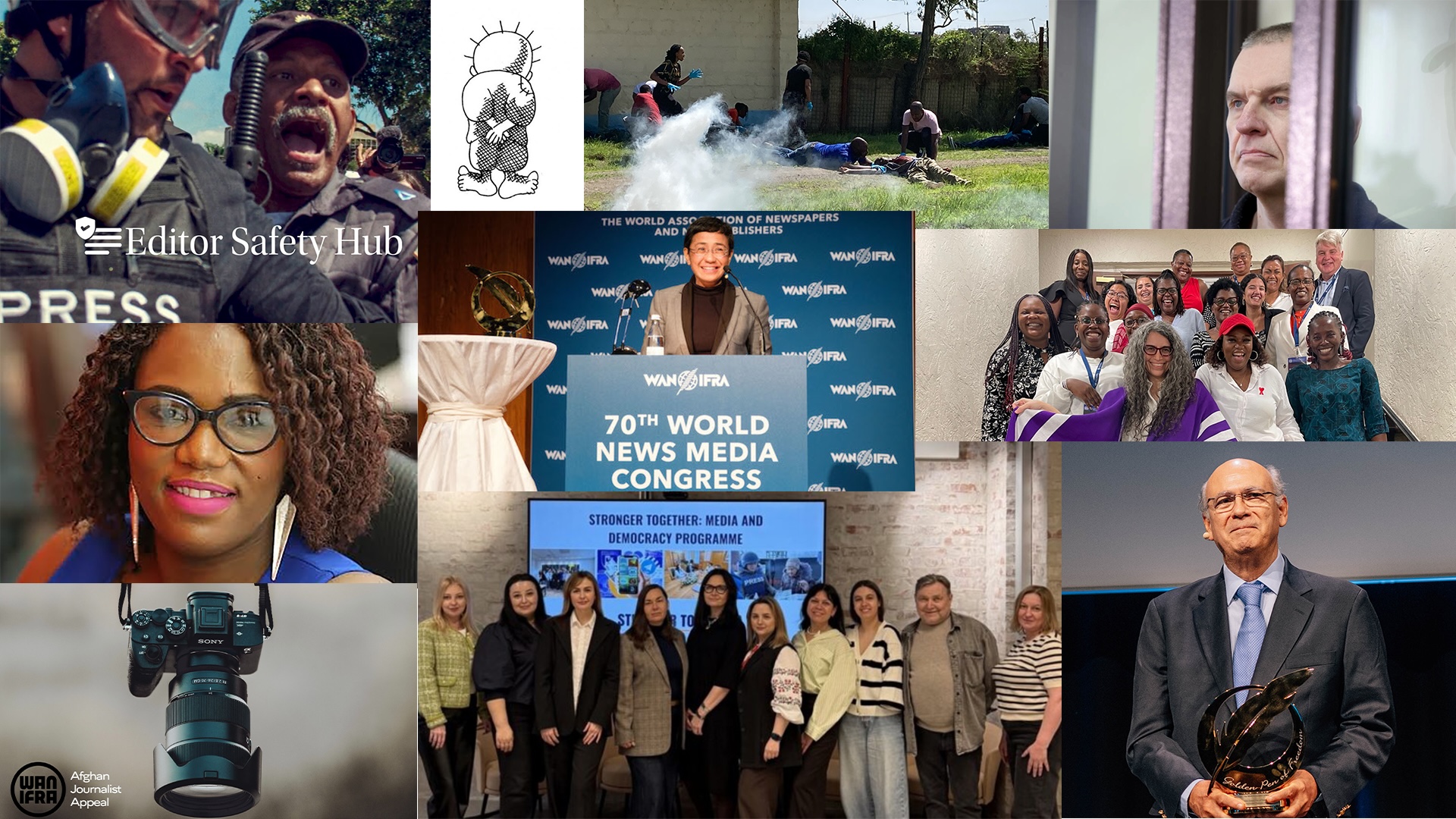
For this World Press Freedom Day, and in the hope of writing something positive, we’ve done something different. WAN-IFRA colleagues shared a snapshot of their work and, despite the length of the resulting piece, the picture woven together represents only a fraction of our global impact.
This is partly due to WAN-IFRA’s sheer scope, a fact that reflects the complexity and scale of the industry’s current challenges. WAN-IFRA occupies a unique position as an international trade organisation and representative body with a clear human rights mandate.
Our premise is that independent media can only thrive if the economic conditions underpinning a free press are addressed alongside advocacy, policy, capacity and technical issues.
These are all ingredients that contribute to a viable media industry; indeed, press freedom and media viability are two sides of the same coin. As such, the entire organisation is geared towards a holistic vision of strengthening independent media businesses and the journalism they produce.
To guide this collective search for answers, WAN-IFRA commits in the region of €7.5M annually to an industry-wide portfolio of work that responds to the challenges and opportunities facing a free press, wherever they are holding the line among the 120+ countries represented in our membership.
It’s an approach that works: close to 100 new organisations joined WAN-IFRA’s membership community this past year. Over 11,000 professionals attended our events either in person or online, and over 30,000 subscribed to our newsletters. But it’s also tried and tested: 30% of our members have been with us for more than 20 years, some for nearly 50.
Nothing epitomises this collective spirit more than World News Day, a global campaign (held annually on 28th September) that celebrates quality journalism and highlights its critical role in society.
Led by WAN-IFRA’s World Editors Forum, it brings together news organisations worldwide to collectively demonstrate the value of fact-based, independent journalism to the public. A thousand newsrooms participated in 2025, reinforcing independent journalism and helping audiences better understand how it works. For an industry notoriously averse to self-acknowledgement, the campaign unashamedly celebrates the positive impact of the craft.
Futureshock
Dealing with “the next disruptor” is another great unifier. While the recipe for achieving – and sustaining – viability differs between each newsroom, WAN-IFRA brings data and knowledge to members regardless of their stage of progress. How we lead on Artificial Intelligence is a prime example.
Preparing news media organisations to develop increasingly sophisticated and empowered responses to AI disruption is critical for future newsroom management and business direction alike. They will shape the industry and define what we are defending, potentially for generations to come: of the 13 research reports WAN-IFRA published in 2025, six highlighted AI’s growing impact.
Showcasing the immense challenges and opportunities that AI presents, we provide easy access to best practices, what is working and what is not, for the media to benchmark.
Crucially, our Digital Revenue Network team delivers programmes that have encouraged news organisations worldwide to generate revenue using AI. The goal is for this to become significant enough to support original reporting – critical to producing high-impact journalism. WAN-IFRA’s AI Content Monetisation Playbook spells out relevant actions that news media publishers of all sizes should prepare to take to begin that journey.
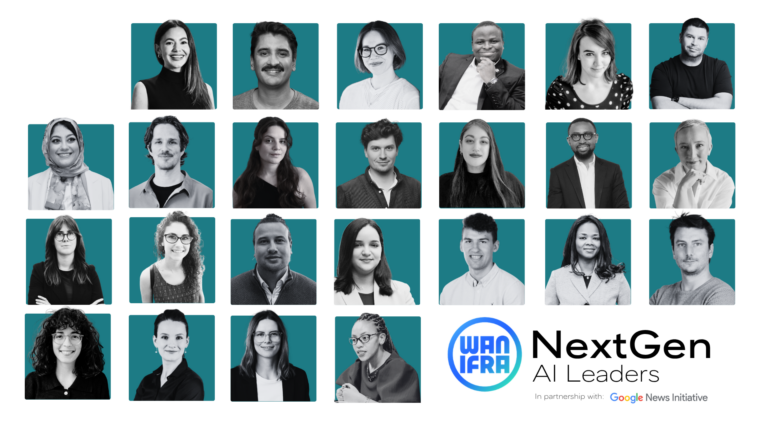
So far, AI Accelerators have allowed 162 news organisations and more than 700 participants across Latin America, Europe, South Asia and the Asia-Pacific regions to accelerate development of content recommendation, personalisation, and production tools and services. Likewise, a NextGen AI Leaders programme is currently helping 24 young leaders from Finland to South Africa gain skills to drive transformation and product development in their organisations.
Over 500 media professionals regularly engage in our online AI in Media Community, and by partnering with trailblazing providers and emerging initiatives WAN-IFRA is supporting collective industry action to engage with and shape the technology, not be consumed by it.
In parallel, enabling collaboration and strengthening sustainable, future-ready journalism by accelerating innovation is key. Our Innovate Local online community has over 430 contributors, while WAN-IFRA’s Data Science Expert Group welcomes over 400 members.
And our structured innovation programme – designed by WAN-IFRA’s Global Alliance for Media Innovation – connects media organisations with start-ups and tech companies to co-develop solutions that tackle real-world industry challenges. Increased product adoption and faster innovation cycles give WAN-IFRA members access to new technologies, experimentation frameworks, and partnerships they otherwise wouldn’t build alone. It’s about being ready for whatever the next phase of disruption has in store for us, while remaining laser-focused on protecting the journalism that will rise to meet it.
Protecting rights along the value chain
Despite a strong focus on the industry’s AI future, physical news products remain critical for a free press to reach its audience in many parts of the world. With print still the largest platform for revenue (43.6% globally, according to our latest World Press Trends Outlook report), this freedom can be meaningless if the “last mile” of distribution is blocked by economic barriers.
In response, over the past year, WAN-IFRA’s Distripress team has intervened in critical market disruptions to ensure international news remains physically available to the public. In the United Arab Emirates, WAN-IFRA challenged “all or nothing” licensing fees that threaten the economic sustainability of over 400 international titles. In Croatia, we are fighting a discriminatory state-owned distribution model where international titles are charged four times higher than local ones – a structure that contravenes EU market competition laws.
Equally, with print journalism having spent years defending what it says, it now needs to be unequivocal about what it costs the planet to produce. WAN-IFRA’s role is to ensure the conversation is grounded in evidence so that we avoid retiring a format that remains a vital lifeline for so many to access daily news and information.
Our forthcoming report on how the print and publishing industry aligns with the Paris Climate Agreement’s 1.5°C goal will impact the entire print supply chain – from paper mills and printers, to publishers and environmentally conscious readers. It provides members with data-driven evidence to dispel myths and demonstrate the industry’s commitment to a circular economy.
WAN-IFRA in India also conducted greenhouse gas emission audits at printing facilities with a combined 69,000 tonnes of annual newsprint output. Providing carbon intensity benchmarking and practical reduction roadmaps, the process is a response to increasing demands by advertisers, regulators, and audiences for proof of green, responsible, and ultimately more environmentally sustainable publishing.
Trust that new audiences can rely on
The same long-term thinking is reflected in our work addressing media literacy and the next generation of news consumers. Trusted, human-created content for young people directly supports literacy, mental health, and critical thinking outcomes. In response, our magazine publishers’ association, FIPP, is pioneering a global initiative to unite publishers around high-quality, trusted media for children and young people.
Not only does it promise to open new revenue streams and distribution channels, but the initiative also provides a framework for publishers who have not yet entered the kids’ media space to explore how existing content and archives can be repurposed or adapted. It advances the case for quality publishing with regulators and partners, and demonstrates that the industry has both the will and the means to serve audiences beyond its current reach.
Stronger media in times of crisis
To achieve these aspirational goals with all the pressures currently facing the industry, strengthening institutional resilience is not optional. It is essential. Demonstrating the urgency of this approach in the most vulnerable markets, our Media Freedom teams provide structured investments in long-term sustainability for independent media operating in high-risk environments, where the physical and economic conditions are often at their most threatening.
Our Stronger Together initiative focuses on reinforcing organisational systems, investigative capacity, safety standards, and cross-border collaboration for Ukrainian media. Delivered in partnership with member associations in Norway (MBL) and Ukraine (AIRPPU), the results are measurable: participating newsrooms have produced over one hundred investigative stories reaching more than one million readers. Dozens of media organisations have also improved internal management systems and strategic processes. And needless to say, all of this has been achieved by local media operating in a time of war, facing impossible hardships.
WAN-IFRA also targets the ecosystems in which independent media operate, and in particular media forced into political exile, by improving operational resilience, editorial quality and factors that lead to sustainability.
Our role in the EU-funded BRAVE initiative, a nine-member consortium led by BBC Media Action, is to support Myanmar media outlets in exile through technical grants, targeted training, and tailored mentorships. We also deliver a comprehensive global programme of peer-to-peer training across 20+ countries.
Building a safe, inclusive news industry
WAN-IFRA’s Media Freedom portfolio is also underpinned by a commitment to address the structural issues that restrict a free, equitable, and inclusive press. Gender inequality and unsafe working environments continue to limit participation and leadership across the media sector: our response is WAN-IFRA’s global Women In News (WIN) programme.
Building on more than 15 years of global experience, WIN is increasingly focused on scaling impact through targeted support to women-led and women-owned media organisations in more than 30 countries.
Working across Africa, the Arab region, Southeast Asia, and Ukraine, and with a pilot phase in Latin America operated by our Americas office in Bogota, the core premise is simple: media sustainability, safety, and inclusive leadership are deeply interconnected, and must be addressed together to drive meaningful change.
1800+ media professionals are supported annually through training, mentoring, and leadership programmes. Over 70 media organisations are engaged and supported to strengthen revenue models, operational systems, and editorial practices. Close to a thousand alumni are now active in a growing global network sustaining collaboration and peer learning.
And research covering 21 countries provides one of the most comprehensive datasets on sexual harassment in the media industry globally.
Altogether, WAN-IFRA WIN contributes to more inclusive and representative media systems, stronger and more sustainable media organisations, and increased public trust through credible, diverse journalism. The work is not only about supporting individuals or organisations, but also reinforcing the role of independent media as a cornerstone of more equal, democratic societies.
Building the policy responses to match
A major challenge to this vision is the alarming fact that women journalists are faced with increasing forms of technology-facilitated gender-based violence that diminishes their ability to report. The numbers are deeply concerning: 70% of women journalists and activists in the EU report having experienced online violence in the course of their work, while 9% of women are targeted with abusive gender-based language online.
Our Global Policy team’s EU-funded C.H.A.S.E. project speaks directly to this threat. Multi-country research across Cyprus, France, Greece, and Italy, combined with an AI-powered detection tool for real-time identification, provides the media with practical capacity to identify and counter online hate speech targeting women and gender-diverse individuals.
This is accompanied by a voluntary Code of Conduct, a human rights-based comprehensive legal and technical framework designed to address online gender-based violence that is aligned with EU legal standards, including the Digital Services Act, and overseen by an independent annual monitoring framework.
Through C.H.A.S.E., WAN-IFRA demonstrates that technical solutions for online safety exist and can complement legal frameworks, contributing to a safer, more inclusive European digital public sphere. Defending press freedom means defending the safety of every journalist: WAN-IFRA and its members are not simply observing that challenge, but actively building the infrastructure to meet it.
Back to the beginning
Despite these positive efforts to stand up for the future of journalism, some negatives do bear repeating. The rising number of journalists killed (130 in 2025, according to CPJ), the shocking level of global impunity around those killings (85-90%, according to the UN), and the soaring numbers (332) currently in jail for their work.
Year on year, the profession is hit with more danger, injustice, and criminalisation.
Like many democratic institutions currently, the media is under severe attack. But its vital role safeguarding democracy is at best significantly undervalued, at worst deliberately undermined.
To reverse the pattern, targeting journalists needs to stop. Independent media must be considered a valued asset for society – and protected as such. We need to see more investment, better access to quality training and support for all media professionals, and stronger industry bodies that can confidently advocate and clearly articulate the sector’s needs.
Political will and meaningful action need to align. Alongside its practical assistance, WAN-IFRA will continue to sound the alarm and speak out on behalf of the universal principles that guide us.
And because press freedom seems to hit rock bottom each year, perhaps we are coming to terms with the idea that it can always get worse – a resigned sort of doom spiral. Given the state of the world in 2026, it’s no surprise, but this is a dangerous mindset: it numbs us to the outrage, makes comfort out of chaos, and means we are less likely to speak out. Ultimately, this is how the enemies of a free press prefer to keep things.
Instead, we need to hold onto the truth that one day, it will get better. Our industry, in principled solidarity, with invention and endeavour, will make it so.