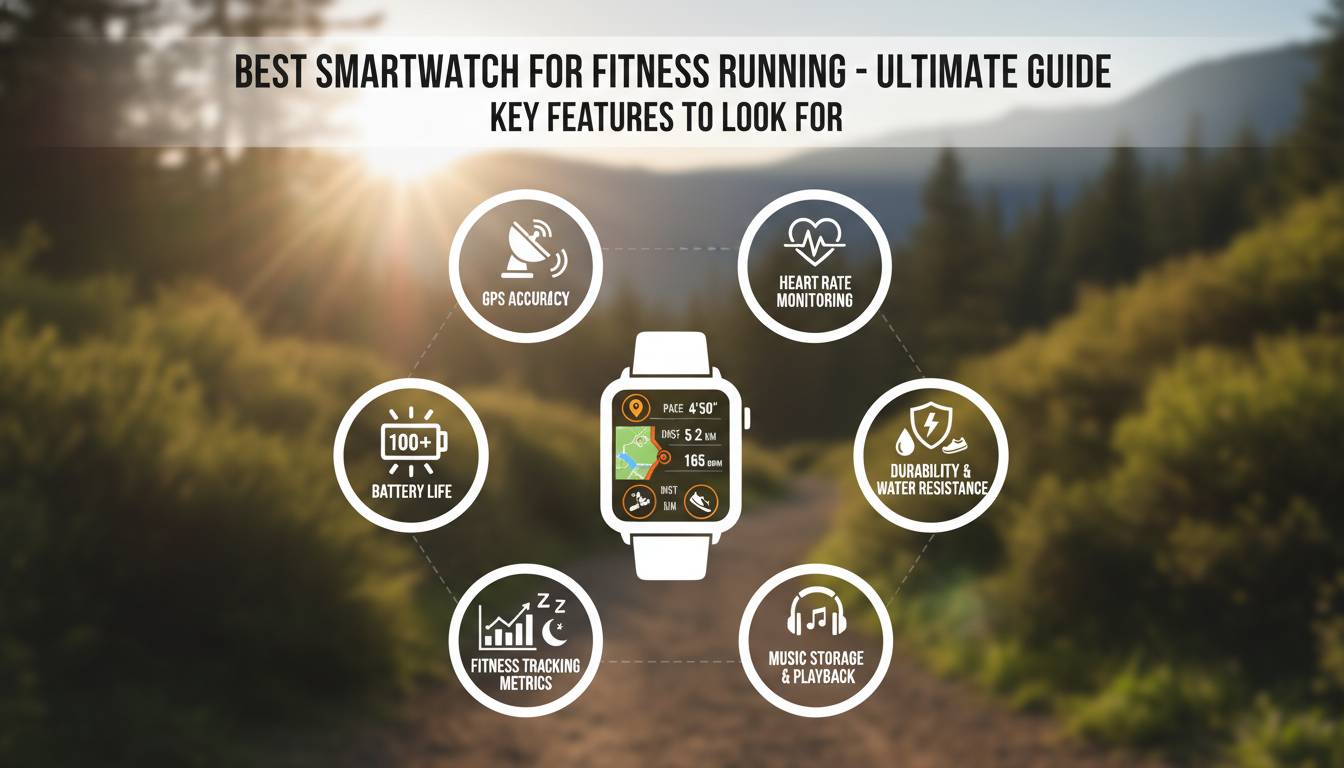
Best Smartwatch for Fitness Running – Ultimate Guide
Finding the right smartwatch makes running easier to track. Whether you’re training for your first 5K or logging marathons, the best running smartwatch gives you GPS accuracy, detailed metrics, and battery life that lasts through long runs without constant charging. After testing dozens of models, these are the top picks that actually deliver.
How We Test Running Smartwatches
Our evaluation focuses on the metrics that matter for training. We test GPS accuracy across varied terrain—urban streets, trail paths, and open parks—comparing recorded distances against known benchmarks. Battery life gets tested during actual long runs and multi-day training blocks, not just manufacturer claims. We check heart rate monitoring consistency during interval sessions and recovery runs, examining how each device performs as intensity changes.
We also consider ecosystem integration: how seamlessly each watch works with platforms like Strava, Garmin Connect, and Apple Health. Screen readability in direct sunlight, comfort during extended wear, and the learning curve of each device’s interface all factor into our final assessments. Every recommendation reflects how these watches perform in real training, not just specifications on paper.
Best Overall: Garmin Forerunner 965
The Garmin Forerunner 965 is the most complete running smartwatch available. It combines the lightweight comfort runners need with advanced features for serious athletes.
This watch has multi-band GPS with SatIQ technology, automatically selecting the best satellite system for your environment while conserving battery. The AMOLED display offers clear readability and color mapping for your training data. Training readiness, recovery suggestions, and load management features help prevent overtraining.
The Forerunner 965 includes topographic maps for trail runners and course navigation that guides you back if you wander off course. Battery life reaches up to 23 days in smartwatch mode and 31 hours in GPS mode, practical for ultra-marathon training blocks.
Pros:
- Excellent GPS accuracy in challenging environments
- Bright AMOLED screen easy to read in sunlight
- Comprehensive training analytics with load tracking
- Lightweight titanium case won’t weigh you down
Cons:
- Premium price point ($599)
- Some features require Garmin Connect subscription
- Steeper learning curve than simpler fitness trackers
Best Battery Life: Garmin Fenix 7X Pro
When your runs stretch into hours or multi-day events, battery capacity becomes critical. The Garmin Fenix 7X Pro delivers exceptional endurance with its large 51mm case and solar-charging capability.
In GPS mode, the Fenix 7X Pro lasts up to 77 hours—more than enough for 100-mile ultramarathons or multi-day adventure races. Solar charging adds roughly 10% battery gain during outdoor training, extending an already impressive baseline. The MIP (memory-in-pixel) display remains readable in direct sunlight, unlike AMOLED screens that can wash out outdoors.
Beyond running, this watch handles swimming, cycling, hiking, and skiing with full multisport tracking. Topographic maps with trendline popularity data help runners discover new routes, while the built-in LED flashlight proves unexpectedly useful for early morning or evening runs.
Pros:
- Legendary battery life extending to weeks
- Solar charging extends runtime during outdoor use
- Rugged build rated for 10ATM water resistance
- Multisport capabilities for triathletes
Cons:
- Large 51mm case feels bulky for some wrists
- Heavier than dedicated running watches
- Higher price tag at $899
- MIP display less vibrant than AMOLED alternatives
Best Value: Garmin Forerunner 265
The Garmin Forerunner 265 brings most of the advanced training features found in the premium 965 model at a more accessible price point. This makes it our top recommendation for runners who want serious functionality without breaking the bank.
Its 46mm case has a vibrant AMOLED touchscreen that remains clear during outdoor runs. The multi-band GPS delivers accuracy comparable to watches costing twice as much. Training readiness scores, recovery tracking, and daily suggested workouts help guide your training without requiring a subscription.
Battery life reaches up to 15 days in smartwatch mode and 24 hours in GPS mode—sufficient for most runners and capable of handling ultramarathon distances with battery to spare. The Forerunner 265 integrates fully with Garmin Connect and Strava, so your training data flows between platforms.
Pros:
- Excellent value at $449
- Near-premium features without the premium price
- Bright AMOLED display performs well outdoors
- Comfortable lightweight design
Cons:
- No built-in maps (course navigation limited)
- Smaller display than 965
- Solar charging not available on this model
- Titanium bezel only available on 265S Music version
Best for Apple Users: Apple Watch Ultra 2
Apple’s second-generation Ultra watch has become a legitimate running powerhouse, though it requires commitment to the Apple ecosystem to deliver its full value.
The Ultra 2 features precision dual-frequency GPS that rivals dedicated Garmin units in accuracy. The 49mm titanium case houses the brightest Apple Watch display ever, making it usable in direct sunlight. The Action button allows quick access to workout tracking without fiddling with touchscreen controls mid-run.
Battery life has improved significantly—up to 36 hours in normal use and 72 hours in Low Power Mode. While still shorter than Garmin’s ultra-running capabilities, this represents a meaningful upgrade for Apple users accustomed to daily charging. The depth gauge and temperature sensors add capabilities that open-water swimmers and adventure athletes appreciate.
Pros:
- Best GPS accuracy in Apple ecosystem
- Exceptional build quality with military-grade durability
- Seamless integration with iPhone and Apple Health
- Bright display outperforms previous Apple Watch models
Cons:
- Requires iPhone—completely incompatible with Android
- Battery life still trails dedicated running watches
- Heavier than standard Apple Watch models
- Limited third-party sport app support compared to Garmin
Best Lightweight Option: Coros Pace 2
For runners who obsess over every gram, the Coros Pace 2 remains the lightest GPS running watch available without sacrificing meaningful functionality. At just 29 grams (with strap), it practically disappears on your wrist.
The Pace 2 delivers 20 days of battery life in daily use and 30 hours in full GPS mode. That endurance puts it in serious contention with watches costing significantly more. The digital crown navigation makes scrolling through workout data intuitive, even with sweaty fingers mid-run.
Training load analysis, recovery recommendations, and vertical oscillation monitoring provide the insights runners need to improve. Coros has built a loyal following among serious runners by delivering professional-grade metrics at a competitive price. The EvoLab training system improves through regular firmware updates.
Pros:
- Exceptionally lightweight at 29 grams
- Outstanding battery life for the price
- Excellent value at $299
- Accurate GPS and heart rate monitoring
Cons:
- No onboard music storage
- Smaller display than competitors
- Less developed app ecosystem compared to Garmin
- Basic smartphone notifications
Best for Recovery Tracking: Whoop 4.0
Whoop approaches fitness tracking differently than traditional smartwatch manufacturers, focusing on recovery science and strain management rather than GPS features or workout tracking.
The Whoop 4.0 worn as a band on your upper arm continuously monitors heart rate variability (HRV), skin temperature, and blood oxygen. This data feeds into a daily “recovery score” telling you whether your body is primed for hard training or needs rest. The “strain coach” feature guides you toward optimal effort based on your recovery status.
The trade-off is clear: the Whoop has no built-in GPS, requiring you to carry your phone for distance tracking. There’s no display for quick glance data during runs. However, for runners prioritizing training optimization over navigation, the recovery insights prove valuable. The subscription model ($239 annually after hardware purchase) includes continuous app updates and new features.
Pros:
- Best-in-class recovery and HRV tracking
- Comfortable band design doesn’t interfere with running
- Detailed strain analysis helps prevent overtraining
- Sleep tracking exceeds most competitors
Cons:
- No GPS—requires phone for distance tracking
- No display means phone dependency for all data
- Annual subscription adds ongoing cost
- Less intuitive for casual users
Best for Trail Running: Garmin Instinct 2X
Trail runners need rugged reliability and features that road-focused watches overlook. The Garmin Instinct 2X delivers these capabilities at a price that won’t empty your wallet.
This watch meets MIL-STD-810H standards for thermal, shock, and water resistance. The fiber-reinforced polymer case withstands the impacts of technical trail running. Multi-band GPS with SatIQ provides accuracy in canyon walls and dense tree cover where standard GPS struggles. The built-in LED flashlight illuminates your path during pre-dawn trail starts or night runs.
Battery life extends to 40 days in smartwatch mode and 60 hours in GPS mode with solar charging adding meaningful runtime during outdoor use. Altimeter, barometer, and compass sensors support navigation in environments where cell service disappears. The Instinct 2X also adds dedicated running features that weren’t present in earlier Instinct models, including VO2 max estimates and trail run metrics.
Pros:
- Rugged design built for abuse
- Solar charging significantly extends battery
- Excellent GPS in challenging environments
- Affordable at $399
Cons:
- Basic monochrome display
- Limited advanced training features compared to Forerunner line
- Heavier and larger than road-focused alternatives
- No AMOLED option available
Best for Android Users: Samsung Galaxy Watch 6
Android users have fewer dedicated running watch options than Apple or Garmin ecosystems, but the Samsung Galaxy Watch 6 delivers solid running functionality with the versatility of a full smartwatch experience.
The Galaxy Watch 6 offers accurate GPS tracking and comprehensive heart rate monitoring. Samsung Health provides workout tracking with detailed post-run analysis. The rotating bezel adds a tactile interface that works well during runs when touchscreen response degrades with sweat.
Integration with Google services and Samsung’s own ecosystem makes this versatile for daily use beyond running. Battery life reaches approximately 40 hours with always-on display enabled—shorter than Garmin but competitive with other full smartwatches. The Galaxy Watch 6 Classic with sapphire crystal and titanium case offers enhanced durability for runners seeking premium materials.
Pros:
- Best full smartwatch experience for Android users
- Rotating bezel provides reliable controls during exercise
- Excellent display quality and Samsung ecosystem integration
- Competitive pricing at $329
Cons:
- Running features less advanced than Garmin or Coros
- Battery life requires daily charging for heavy use
- Less optimized for serious athletes than dedicated running watches
- Limited third-party sport app selection
Running Smartwatch Comparison Table
Model
Price
Battery Life (GPS)
Weight
GPS Type
Water Resistance
Garmin Forerunner 965
$599
31 hours
53g
Multi-band
5ATM
Garmin Fenix 7X Pro
$899
77 hours
87g
Multi-band
10ATM
Garmin Forerunner 265
$449
24 hours
47g
Multi-band
5ATM
Apple Watch Ultra 2
$799
36 hours
61g
Dual-frequency
10ATM
Coros Pace 2
$299
30 hours
29g
Single
5ATM
Whoop 4.0
$239+subscription
N/A
24g
None
1ATM
Garmin Instinct 2X
$399
60 hours
67g
Multi-band
10ATM
Samsung Galaxy Watch 6
$329
20 hours
44g
Single
5ATM
How to Choose a Running Smartwatch
Selecting the right running watch depends on your specific needs and training goals. Consider these key factors before making your decision.
GPS Accuracy Matters More Than You Think
Multi-band GPS (available on Garmin’s higher-end models and Apple Watch Ultra 2) provides better accuracy in challenging environments like urban canyons, dense forests, or mountainous terrain. If your runs take you places where satellite signals struggle, this feature prevents distance drift that undermines training data. For straightforward road running, single-frequency GPS performs adequately at lower price points.
Battery Life Should Match Your Longest Runs
Nothing derails a long run like a dead watch. If you’re training for marathons or ultras, prioritize models offering 20+ hours of GPS battery life. The Garmin Fenix 7X Pro and Coros Pace 2 excel here. Daily runners with 5K to 10K training sessions can accept shorter battery life in exchange for features like AMOLED displays or smartphone integration.
Training Features Vary Dramatically
Basic watches track distance, pace, and heart rate. Advanced models add VO2 max estimation, lactate threshold detection, training load analysis, and recovery recommendations. If you’re following a structured training plan or trying to improve performance, these features justify higher prices. Casual runners may find simpler devices more than sufficient.
Ecosystem Compatibility Determines Usability
Garmin watches integrate deeply with Garmin Connect and work well with Strava. Apple Watch requires iPhone and ties into Apple Health. Android users face more limited dedicated running watch options, though Samsung and Coros provide solid alternatives. Choose a watch that fits your existing technology stack to avoid data silos and compatibility frustrations.
FAQs
What is the best smartwatch for running in 2024?
The Garmin Forerunner 965 offers the best overall combination of GPS accuracy, training features, battery life, and value for most runners. However, the best choice depends on your specific needs—Apple users committed to iOS might prefer the Apple Watch Ultra 2, while budget-conscious runners get excellent value from the Garmin Forerunner 265.
Do I really need a GPS running watch?
If you track distance, pace, or routes, GPS provides essential accuracy. Phone apps can handle basic tracking, but dedicated watches offer better accuracy, longer battery life, and deeper training insights. For runners serious about improving performance or training for events, a dedicated GPS watch delivers meaningful advantages.
How long do running smartwatches typically last?
With proper care, a quality running smartwatch lasts 3-5 years. Battery degradation eventually reduces capacity, and software updates may eventually drop older models. Garmin and Apple both support their watches for several years with major software updates.
Is the Apple Watch good for running?
The Apple Watch Ultra 2 works well for running, offering excellent GPS accuracy and good battery life. Standard Apple Watch models also handle running adequately, though shorter battery life limits them for long runs. However, Apple Watch requires iPhone and lacks the dedicated training analytics that Garmin and Coros provide.
Should I buy a used or refurbished running watch?
Buying used can save money, but verify the watch hasn’t been exposed to water damage (check for corrosion in the charging ports) and that the seller can confirm the GPS accuracy. Most manufacturers don’t transfer warranties to second owners, so consider buying newer rather than risk reliability issues.
Do I need a smartwatch or can I use a fitness band?
Fitness bands like the Xiaomi Band 8 or Fitbit Charge 6 track steps, heart rate, and basic workouts but lack GPS. You’ll need your phone nearby for distance tracking. Dedicated running watches include built-in GPS, more accurate sensors, and advanced training features that serious runners need.
Final Verdict
Choosing the best running smartwatch comes down to matching features to your training needs and budget. The Garmin Forerunner 965 earns our top recommendation as the most complete package for dedicated runners—it delivers professional-grade GPS accuracy, comprehensive training insights, and practical battery life at a premium but reasonable price.
For runners on tighter budgets, the Garmin Forerunner 265 provides remarkable value, offering nearly all the training features that matter at a significantly lower price. Ultramarathoners and adventure seekers should look to the Garmin Fenix 7X Pro for its unmatched battery life and rugged reliability.
The Apple Watch Ultra 2 has earned its place as the premium option for iOS users willing to accept slightly shorter battery life in exchange for the best full smartwatch experience available. Meanwhile, the Coros Pace 2 remains the weight-conscious runner’s choice, delivering essential features at the lowest price point in our guide.
Whatever you choose, any of these watches will elevate your training through better data and consistent tracking. The hardest step is getting out the door—the right watch just makes it easier to understand what happened when you did.
Visited 861 times, 6 visit(s) today